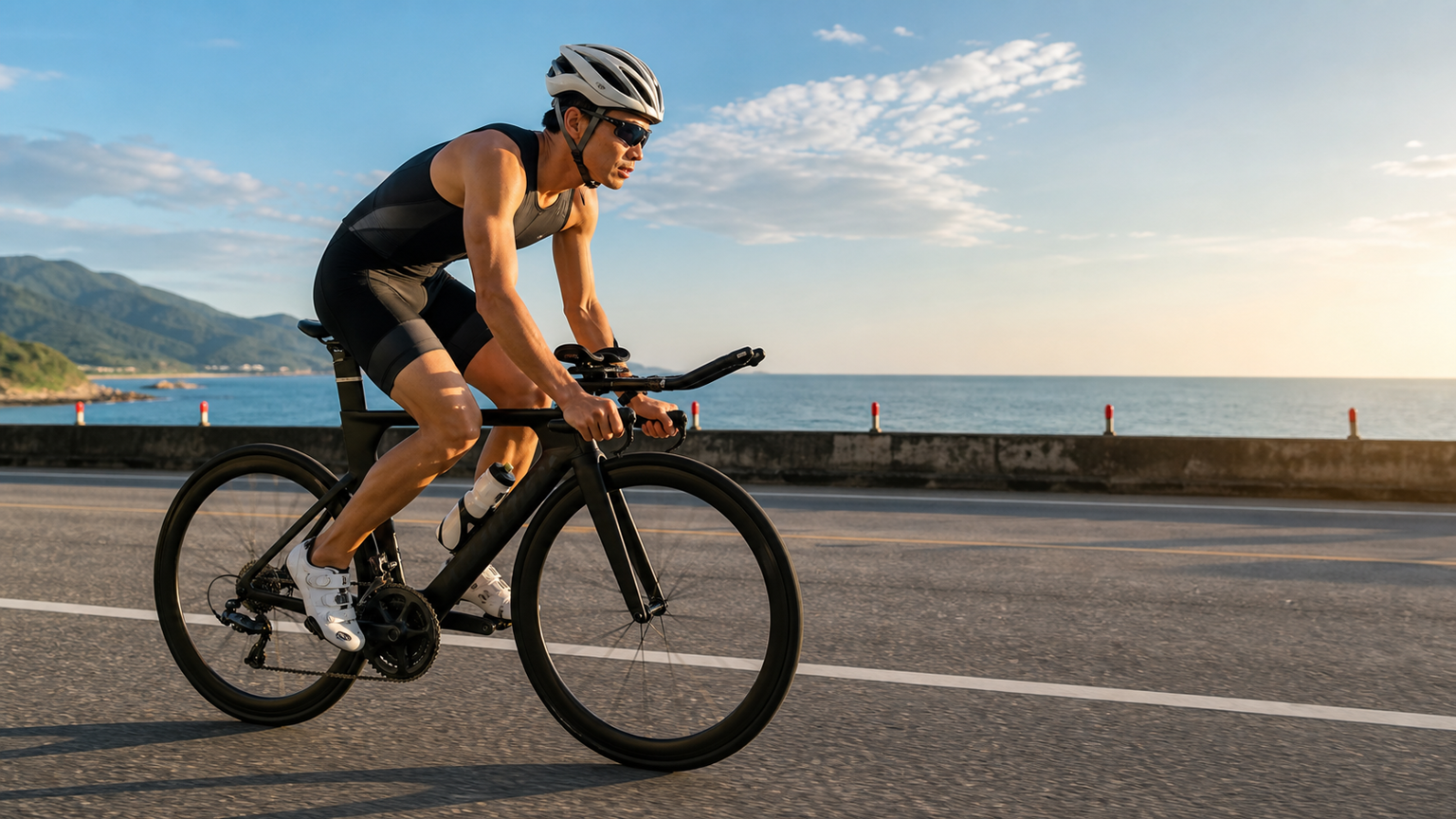
Cadence: The Dial Between Muscles and Cardio
At the same power output, a high cadence (e.g., 95rpm) leans toward cardiovascular load while sparing the muscles; a low cadence with a big gear (e.g., 75rpm) leans toward muscular load while sparing the cardiovascular system. Because triathletes must run after dismounting, cadence strategy differs from pure cycling races.
Cadence and Load Trade-offs
| Cadence | Cardiovascular Load | Leg Muscular Load | Significance for Triathletes |
|---|---|---|---|
| High (90–95+) | Higher | Lower | Preserves quads for the run |
| Medium (80–90) | Balanced | Balanced | Sweet spot for most triathletes |
| Low (70–80) | Lower | Higher | Usable on climbs, harms the run on flats |
Why Triathletes Lean Toward Medium-High Cadence
Grinding at a low cadence may spare the cardiovascular system, but it deeply recruits the quads—which are exactly the muscles you need for the run after dismounting. Triathletes tend to favor 85–92rpm to “save” the legs for the marathon, even if it costs a bit more cardiovascular effort.
Terrain Adjustments
Maintain your target cadence on flats; on steep climbs, you can briefly drop to 70–80rpm to spare the cardiovascular system, but keep it as short as possible—don’t let the quads stay overloaded for extended periods.
Individual Optimal Cadence
There is no one-size-fits-all number. Use a “dismount-and-run test” at the same power output across different cadences: whichever cadence lets you run most smoothly after dismounting and gets your heart rate back to baseline fastest—that is your optimal triathlon cadence.
Training Prescription
Once a week, do a cadence variation workout: at race power, alternate 5 minutes @95rpm / 5 minutes @80rpm to expand your cadence adaptability range, giving you flexibility to handle terrain on race day.
Use the “Dismount-and-Run Test” to Determine Your Personal Optimal Cadence
At the same power output, a high cadence (90–95+rpm) leans toward cardiovascular load while sparing the quads; a low cadence with a big gear (70–80rpm) leans toward muscular load and deeply recruits the quads. Because triathletes must run a marathon after dismounting, they tend to favor 85–92rpm to “save” the quads. There is no one-size-fits-all number for your personal optimal cadence—the most reliable method is to do a dismount-and-run test at the same power output across different cadences: whichever cadence lets you run most smoothly after dismounting and gets your heart rate back to baseline fastest—that is your optimal triathlon cadence.
Cadence and Load Trade-offs
| Cadence | Cardiovascular Load | Quad Load | Significance for Triathletes |
|---|---|---|---|
| High 90–95+ | Higher | Lower | Preserves legs for the run |
| Medium 80–90 | Balanced | Balanced | Sweet spot for most triathletes |
| Low 70–80 | Lower | Higher | Use only briefly on steep climbs |
Common Mistake: Copying the Grinding Strategy of Pure Time Trialists
Pure TT riders can grind at a low cadence for extended periods to chase those few watts—triathletes cannot—those quads still have a marathon to run. The most typical mistake is grinding at 75rpm with a big gear on flats too; the bike data looks great, but the run segment collapses because the quads are drained. Once a week, do “alternating 5 min @95rpm / 5 min @80rpm at race power” to expand your cadence adaptability range; the principle is: err on the higher side, treating your quads like savings you only withdraw during the run segment.
Pure time trialists can grind for those few watts—triathletes cannot—your legs still have a marathon to run. My principle is simple: err on the higher side of cadence, treating your quads like savings to spend sparingly, and only withdraw them during the run segment.
Related Reading
- Gear Shifting Strategy in Time Trials: The Logic of Choosing High Cadence vs. Big Gear
- Cadence Strategy for Climbing: High Cadence vs. Low Cadence on Mountain Roads
- Small Gear High Cadence vs. Big Gear Low Cadence: The Scientific Choice of Climbing Cadence
- The Effect of Cadence on Oxygen Consumption: Finding Your Optimal Cadence
西進武嶺 免費訓練分析服務 Intervals | 練不夠還是練過頭?你哪一種類型選手?AI模型告訴你! | 備戰神器 | 公路車 訓練 | CT Yeh
4 年前
#公路車 #Vo2Max #最大攝氧量 測驗 體驗 | 心肺測試
6 年前
2025 自行車錶排行榜 兩萬車友大數據 / Garmin Bryton 排名會大洗牌嗎? / 全新的碼表前身分析 /公路車 / CT Yeh
1 年前
2026 車錶排行榜!誰是最多車友正在使用?練家子最愛哪款?🏆 (2萬名車友數據) / 公路車 / CT Yeh
5 個月前
福隆鐵人團練隨拍
8 年前
#公路車 #Fitting 靠人工智慧APP 幫你調整單車
6 年前
全台首發!邁金P715踏板功率計!市場價格撼動者再出招 / 功率對比實測 / FAVERO ASSIOMA 可參考! / 公路車 / CT Yeh
1 年前
單車 一日北高 ( 雙城 ) 肥宅雙人瘋狂行 紀錄片 REACTO
10 年前