East vs. West Wuling: A Full Comparison of Difficulty, Scenery, and Soul on Two Very Different Roads
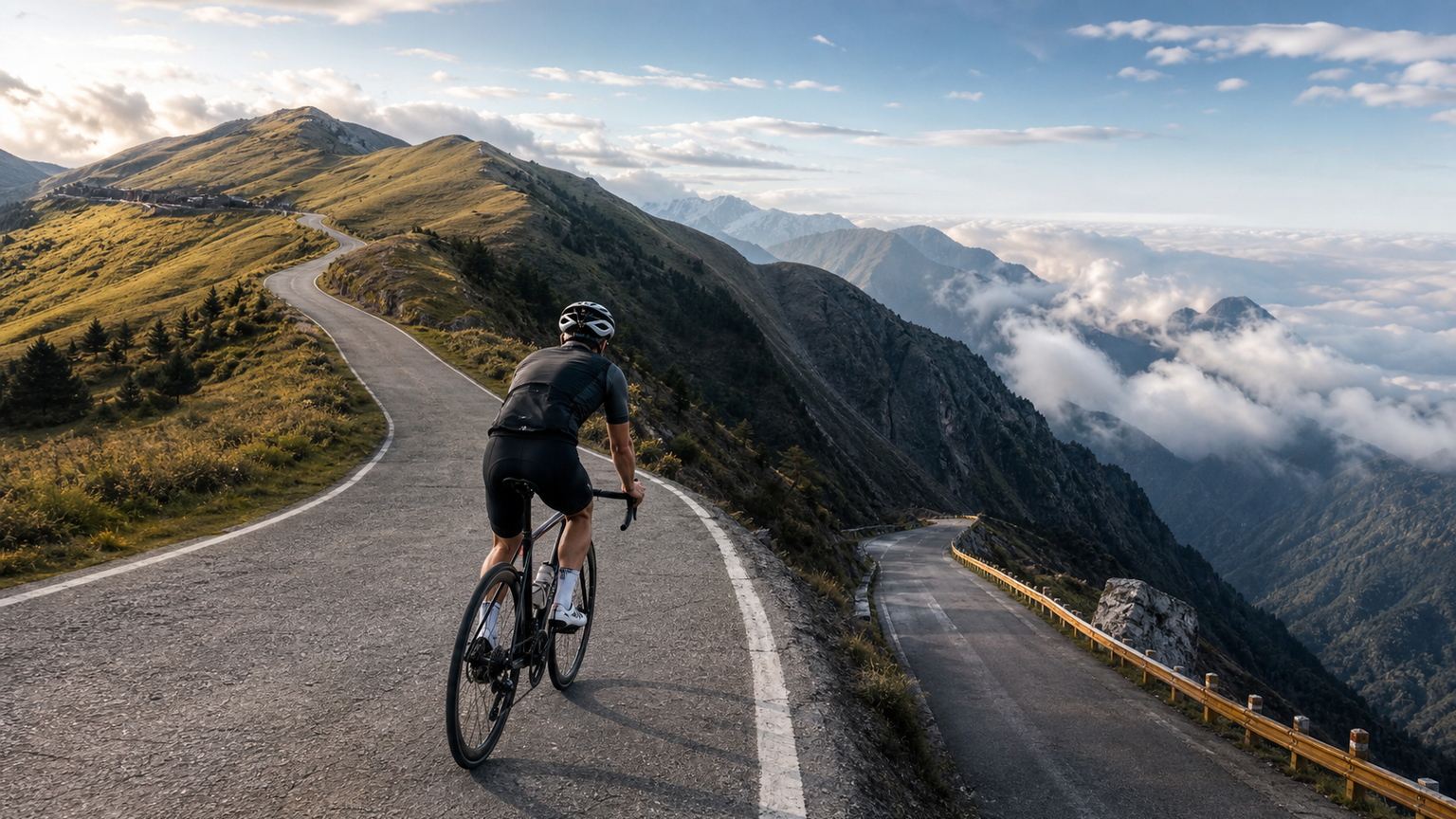
Introduction
Wuling, at an elevation of 3,275 meters, is the highest point on Taiwan’s road network — practically the ultimate pilgrimage for every road cyclist on the island. But what many people don’t realize is that there are two completely different routes leading to Wuling: the “West Approach,” climbing up from Puli and Wushe in Nantou, and the “East Approach,” coming from Taroko, Tianxiang, and Lishan in Hualien.
I completed both the East and West Approaches within two years of each other, and each was a completely different experience — physically and mentally. This article is my honest comparison notes.
Basic Route Comparison
| Comparison | West Wuling | East Wuling |
|---|---|---|
| Starting Point | Puli (approx. 440m elevation) | Taroko (approx. 20m elevation) |
| Total Distance | approx. 53km | approx. 95km |
| Total Elevation Gain | approx. 2,800m | approx. 3,200m |
| Max Gradient | approx. 10% | approx. 11% |
| Fueling Difficulty | Moderate (shops in Wushe and Cingjing) | High (extremely sparse after Tianxiang) |
| Finish Time (intermediate rider) | 4–6 hours | 7–10 hours |
| Main Crux | Sustained climbing after Hehuan Mountain Lodge | The sheer distance and the isolation before Lishan |
The West Approach: Familiar Suffering, With Company Along the Way
The West Approach is the choice most people make for their first attempt at Wuling, for a simple reason: shorter distance, more fueling options, and plenty of escape routes if you need to bail partway through.
Starting from Puli, the first 20 kilometers have relatively gentle gradients, giving your body plenty of time to warm up. Past Wushe, the climb starts to bite, but along the way there are shops at Cingjing Farm and fueling stops at Lushan Hot Springs — every few kilometers you get a chance to stop, refuel, and gather a bit of reassurance.
The real test of the West Approach begins after Hehuan Mountain Lodge (approx. 2,860m elevation). The gradient steepens sharply, oxygen thins out, and altitude sickness makes every pedal stroke harder than it was at 2,000 meters. But even here, you’ll occasionally see fellow riders who just passed you along the roadside, and tour buses often stop at spots that sell snacks. You’re never truly “alone.”
The scenery on the West Approach is spectacular — the golden hues of the Hehuan grasslands, the arrow bamboo groves near Songxue Lodge, the sea of clouds at dawn — every scene is worthy of a wallpaper. But at its core, the West Approach is a “protected extreme challenge” — a solitude with company nearby.
The East Approach: True Wilderness, True Solitude
The East Approach was a somewhat reckless decision made about six months after completing the West Approach. A friend told me, “The East Approach is the real Wuling.” I didn’t understand what that meant at the time — not until I finished the ride.
Starting from Taroko, the towering cliffs of the Liwu River Gorge rise on either side, so spectacular that you forget you’re even cycling. Before Tianxiang, the road conditions are good and the gradient is gentle — it almost feels like you’re enjoying a leisurely ride. But past Tianxiang, the tourists disappear, the fueling stops disappear, and even fellow traffic heading your way thins out until it’s almost just you.
The section from Guanyuan (approx. 2,587m elevation) down to Lishan (approx. 2,000m elevation) — descending first, then climbing again — is the most mentally crushing trap on the East Approach. After struggling all the way up, you have to descend several hundred meters, only to climb back up again. Every descent is vertical distance you’ll have to reclaim later.
In the final 40 kilometers past Lishan, the gradient steepens again, and your legs have already ridden over 50 kilometers. It feels like your bank account is already overdrawn, and you’re still being asked to swipe your card.
The solitude of the East Approach is real solitude. Two hours without seeing a single fellow rider, three hours without a single shop — just the mountains, just the road, just you and your bike. But precisely because of this solitude, the moment you reach Wuling, the intensity of emotion far exceeds what the West Approach delivers.
Practical Tips
- For your first attempt, choose the West Approach: Complete fueling options, plenty of escape routes, and lower psychological pressure make it easier to build confidence and finishing experience.
- Pack plenty of food for the East Approach: The roughly 80 kilometers between Tianxiang and Wuling have extremely sparse fueling options. It’s recommended to carry over 2,000 kcal of food (energy gels, jujube cake, and rice balls all work well).
- Start early in the morning for the East Approach: Departing from Taroko at 4 a.m. lets you avoid the afternoon thunderstorms brought by summer convective cloud systems, making it safer to arrive at Wuling before noon.
- Both routes have their own beauty: If time and stamina allow, riding both at least once is the only way to say you’ve truly experienced the complete Wuling.
Conclusion
The West Approach taught me how to face a known difficulty; the East Approach taught me how to face an unknown solitude.
Both routes lead to the same summit sign, but the feeling of standing in front of that sign is different each time. One is “I finally made it.” The other is “I didn’t know if I could hold on this far.”
Which one is more precious? I think — both are.
Related Reading
#北橫 + #北進武嶺 最硬的員工旅遊 EP1 | #公路車 #拉拉山 | 明池 | 武嶺 | 武陵農場 | 雲海 | Taiwan Cycling Route Wulin
6 年前
大禹嶺 到 武嶺牌樓 全程前後實況錄影 | 北進武嶺 | 東進武嶺 | KOM | 訓練台 | 坡度分析 | Taiwan KOM Last 10 km HARD | 公路車
6 年前
2023 夏季KOM 參賽實況 / 穿越空拍視角 / 整車都凸台 / 太魯閣峽谷x合歡山絕美大景 / 東進武嶺 / Taiwan KOM Challenge / 公路車 / CT Yeh
3 年前
台灣登山王之路 KOM 全程參賽4K臨空錄影 PART1 穿越峽谷地形! #東進武嶺 太魯閣 / 燕子口 / 天祥 / 西寶 PART1 (公路車 / CT Yeh)
3 年前
西進武嶺 世界紀錄挑戰!破2:30 ?!一群人推著一個夢上山 直播精華版 / ft. 張翰允 & 台視主播魏于恬 & KPLUS / #cycling 公路車 CT Yeh
2 個月前
#東進武嶺 全程實況錄影 5小時半 #夏季KOM #太魯閣 Taiwan KOM Challenge Reality Video Taroko scenery
7 年前
風櫃嘴時間 預測西進武嶺時間?13000名車友統計數據分析告訴你 !
5 年前
#公路車 #西進武嶺 配速配瓦實驗 坡度分析 四小時內攻略 建大盃 NeverStop #西進武嶺攻略
6 年前