Introduction
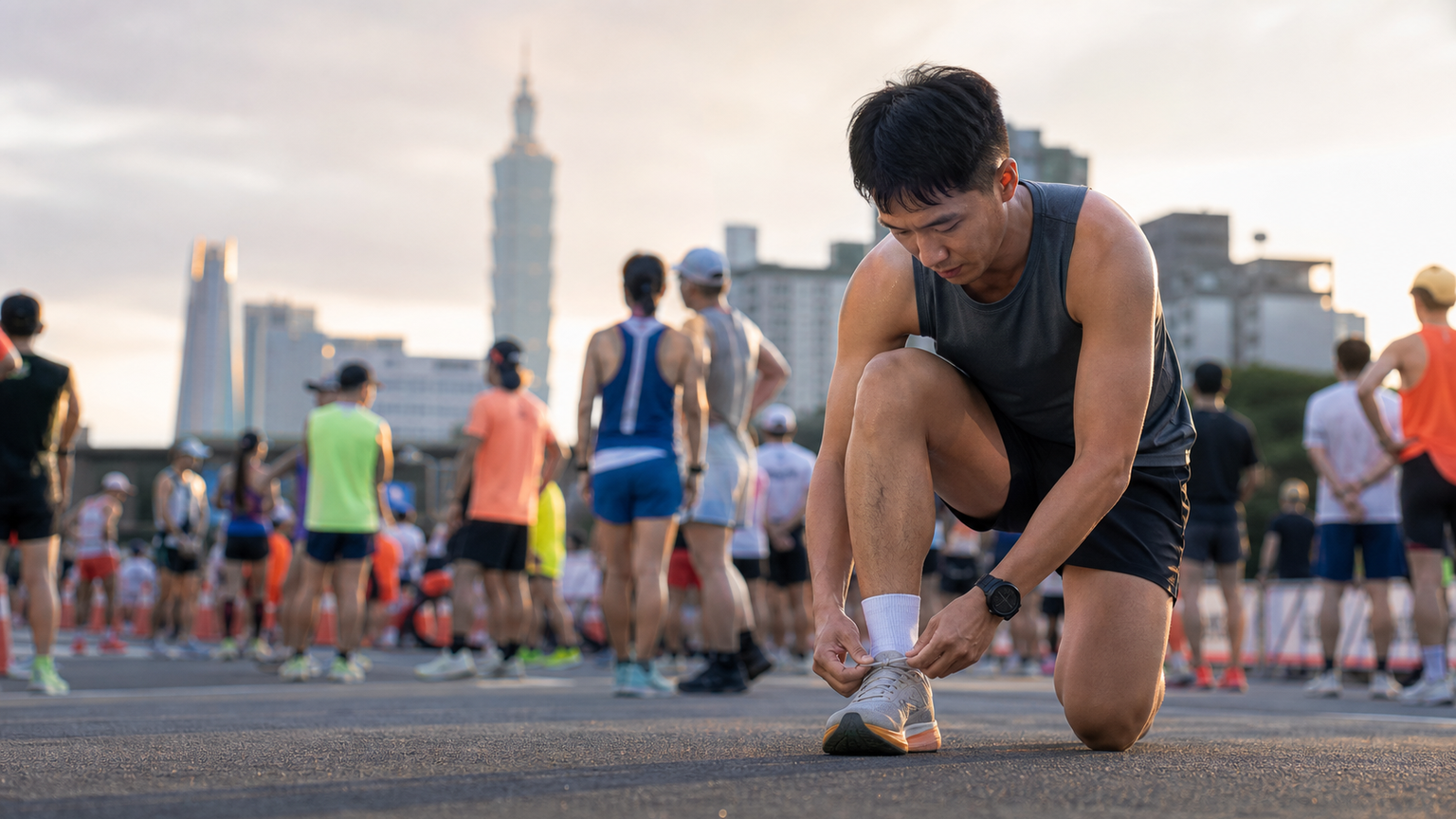
Tossing and turning the night before a race, stomach churning before the start, heart rate far higher than usual during warm-up—these are all too familiar symptoms of pre-race anxiety for runners. Many believe anxiety is the enemy of performance and must be completely eliminated. However, sports psychology research tells us a different story: moderate anxiety is actually fuel for performance.
The problem isn’t anxiety itself, but how you interpret and manage it.
The Physiological Mechanism of Anxiety
When you stand at the starting line, your brain’s amygdala detects a “threat” (the race challenge) and immediately activates the sympathetic nervous system: adrenaline secretion increases, heart rate accelerates, blood flow is directed to muscle groups, and the digestive system slows down. This is the well-known “fight or flight” response.
Sports psychologists distinguish between two components of anxiety:
| Anxiety Type | Description | Impact on Performance |
|---|---|---|
| Cognitive anxiety | Fear of failure, negative thoughts | Usually harmful, affects decision-making |
| Somatic anxiety | Rapid heartbeat, sweaty palms | Helpful for activation when moderate |
| State anxiety | Temporary anxiety triggered by the current situation | Manageable, adjustable |
| Trait anxiety | An individual’s stable tendency toward anxiety | Requires long-term training to adjust |
British psychologist Lew Hardy’s “catastrophe theory” points out that when cognitive anxiety is high, a slightly higher level of somatic activation can enhance performance, but if activation becomes excessive, performance collapses abruptly rather than declining gradually—this is the psychological mechanism behind many runners “blowing up” after being overly nervous before a race.
Common Triggers of Pre-Race Anxiety
Common anxiety-triggering situations for Taiwanese runners include:
- Pace pressure: Setting a sub-4 or sub-330 goal and worrying about failing to achieve it
- Weather variables: Seeing a high-temperature forecast or sudden rain before departure, throwing the entire plan into disarray
- Social comparison: Seeing others’ PRs in running group chats and feeling pressured
- Gear anxiety: Worrying about whether new shoes and nutrition strategy are fully prepared
- Unknown course: Participating in a race for the first time, unfamiliar with the route’s elevation changes
- Physical abnormalities: A cold or minor injury in the week before the race, affecting confidence
Scientifically Validated Anxiety Management Strategies
1. Reappraisal
Research from Harvard University shows that simply changing “I’m nervous” to “I’m excited” can significantly improve performance. This isn’t self-deception, but rather leveraging the fact that anxiety and excitement share the same physiological activation foundation. Before the start, tell yourself: “This racing heartbeat is my body preparing for the race.”
2. Diaphragmatic Breathing and Biofeedback
Slow diaphragmatic breathing (inhale for 4 seconds, hold for 2 seconds, exhale for 6 seconds) stimulates the vagus nerve, lowering heart rate and cortisol levels. It’s recommended to do 5–10 minutes of breathing exercises 30–60 minutes before the start.
3. Situational Exposure Training
Regularly simulate race conditions during training: wear race gear, start at the same time, and follow the complete pre-race routine. Familiarity can significantly reduce uncertainty-related anxiety on race day.
4. The “Controllable Factors List” Exercise
The day before the race, write down two columns: “Things I can control” (pace, nutrition, sleep) and “Things I cannot control” (weather, others’ performance, course conditions). Deliberately focus your mental resources on controllable factors and practice letting go of what you cannot control.
5. Anchoring Memory Technique
Recall a moment from training or a race when you felt your best—the more specific the details, the better (weather, breathing rhythm, pace at the time). Repeatedly revisiting this memory before the race can summon a confident state and reduce anxiety caused by uncertainty.
Practical Advice
- Establish a pre-race standard operating procedure (SOP): From dinner the night before, bedtime rituals, to breakfast on race day, standardize every detail to reduce decision fatigue
- Stay away from social media 48 hours before the race: Avoid seeing others’ pre-race gear posts or catching anxiety from others’ emotions
- Prepare an “anxiety first-aid phrase”: Design a sentence that can quickly stabilize yourself, such as “I’ve trained for six months, I’m ready”
- Allow yourself to be nervous: Accept the presence of anxiety rather than resist it—resistance only intensifies it
Conclusion
Pre-race anxiety is your body saying: “This matters to me.” Its presence is proof that you care about this race. Learning to coexist with anxiety, rather than eliminate it, is the psychological skill of a mature runner. Next time you stand at the starting line, when that familiar nervousness rises, try saying to it: “Thank you, I’m ready.”
Related Reading
- Race Anxiety Management: Breathing and Relaxation Techniques Before the Start
- Pre-Race Anxiety Management: How to Transform Starting-Line Nerves into Motivation
- Pre-Race Anxiety Management: Psychological Stabilization Techniques for the 10 Minutes Before the Start
- The Complete Guide to Race Anxiety: Practical Methods for Physiological Responses, Pre-Race Rituals, Breathing, and Attention Regulation
西進武嶺 免費訓練分析服務 Intervals | 練不夠還是練過頭?你哪一種類型選手?AI模型告訴你! | 備戰神器 | 公路車 訓練 | CT Yeh
4 年前
西進武嶺 自製新版AI配速表產生器 x 賽前攻略 抱佛腳! 沒有功率計也可以產生配速表嗎?有什麼其他眉角賽前要注意的呢? | 西進武嶺 / 東進武嶺 KOM 攻略 | 公路車 | CT Yeh
4 年前
戰略) Zwift Race 如何咬在第一集團 如何評估自己要開多少推力 (請開1.5倍速看)
7 年前
[教學] Premiere 影片 手震 修正 教學 防抖 單眼 影像 GoPro 穩定 Video Stabilization
8 年前
FTL 與 SYB 車隊專訪 西進武嶺 實用攻略分享! 2小時 如何練?!你不知道的眉角!新手準備武嶺必看 EP1 | 實力派女車友 | 精華版 | 公路車 | CTYeh
4 年前
CT 喇低賽) 武嶺牽車 才是王道 西進牽車四小時內秘訣 攝手位置 如何判斷 防抽筋小秘訣
7 年前
Live) 備戰2019彰化經典百K 賽前攻略 (已完賽請看新影片
7 年前
CT 喇低賽) 單車 比賽總是沒照片? 攝影師的觀點大公開 姿勢就是力量! 請加速1.25倍收看
7 年前