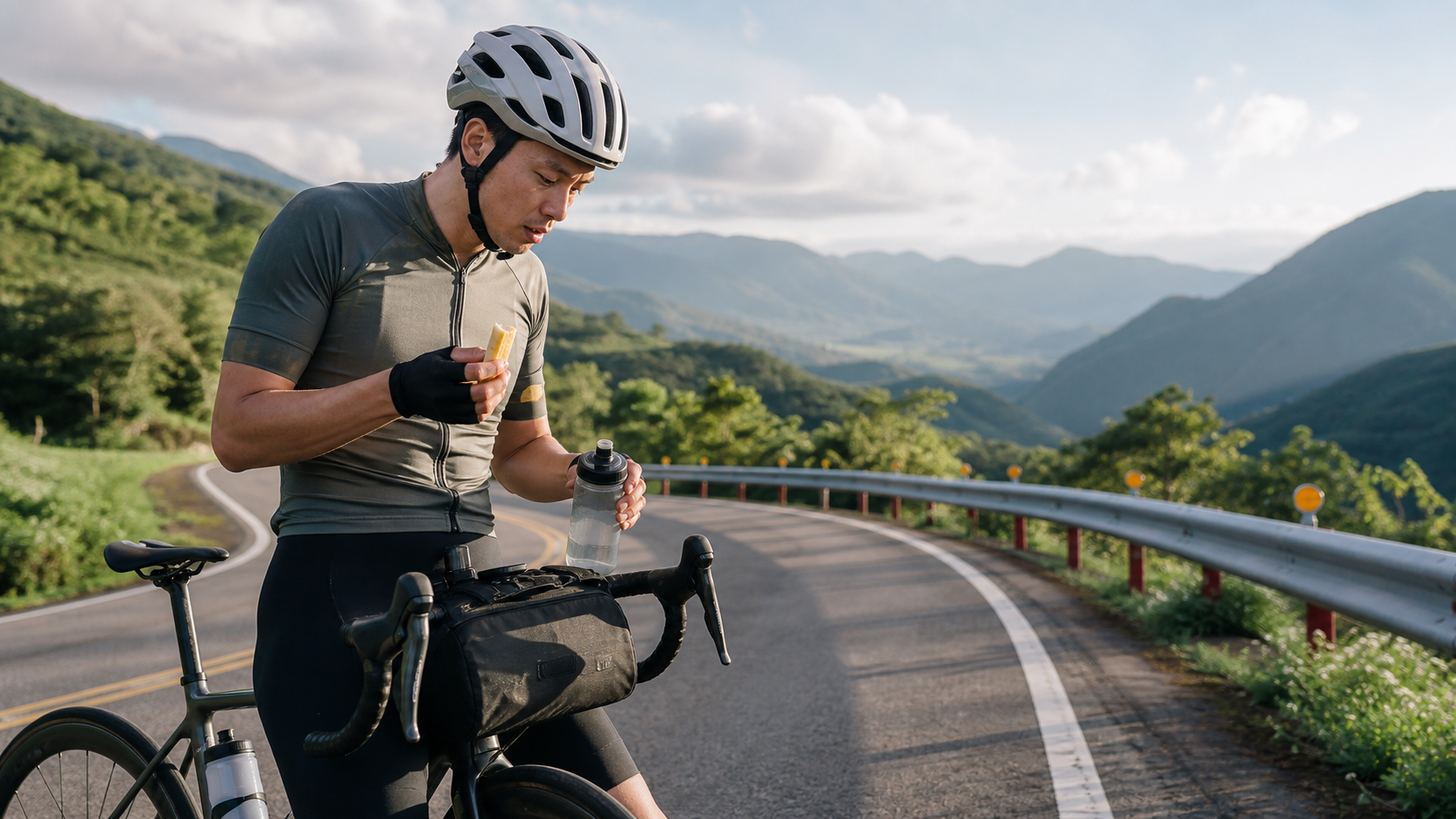
Introduction
If you’ve ever felt an unexplained slump in the latter half of a long ride—not fatigue, but a strange hollow feeling, struggling to keep up with conversation, your arms starting to shake, and a descent you’d normally fly down suddenly filling you with dread—congratulations, you’ve experienced what athletes call “hitting the wall” or “bonking.” That’s the real face of hypoglycemia during a ride.
For amateur cyclists, this issue is especially easy to overlook, because the misconception that “I’m an average person, I won’t get hypoglycemia” is widespread. But in reality, after more than 90 minutes of moderate-to-high-intensity riding, everyone faces the risk of glycogen depletion—regardless of how much you normally eat or how fit you are.
The Basics of Energy Metabolism During Exercise
Understanding hypoglycemia management starts with knowing how your body uses energy while riding:
| Ride Duration | Primary Energy Source | Supplementation Needs |
|---|---|---|
| 0–30 minutes | Blood glucose + muscle glycogen | Generally no supplementation needed |
| 30–90 minutes | Primarily muscle glycogen | Supplementation recommended for moderate-to-high intensity |
| 90–180 minutes | Glycogen + fat, blood glucose begins to drop | Consume carbohydrates every 30–45 minutes |
| 180+ minutes | Higher fat utilization, but high intensity still requires carbs | Active supplementation with varied foods |
Key concept: Glycogen stores are limited. A typically well-trained cyclist has roughly 400–500 grams of total body glycogen (about 1600–2000 kcal). Cruising at 200W burns approximately 700–800 kcal per hour, meaning stores could theoretically be depleted within 2–3 hours.
The Psychological Symptoms of Hypoglycemia: More Dangerous Than Physical Symptoms
Most riders know the physical symptoms of hypoglycemia (shaking, weakness, cold sweats), but often overlook the psychological symptoms:
- Impaired judgment: Slower reactions to traffic on mountain roads, poor gear-shifting decisions
- Emotional breakdown: Sudden, disproportionate feelings of extreme sadness or crying
- Cognitive fog: Forgetting the route, unable to calculate how many kilometers remain, struggling to find words
- Amplified fear: Descents you normally handle with ease suddenly feel terrifying
- Loss of motivation: Sudden thoughts of quitting the ride or tearfully calling someone to pick you up
These psychological symptoms are especially dangerous because they often appear before you even realize your blood sugar is low. In other words, when you “feel like nothing is wrong but your mood is terrible,” you may already be in a state of mild hypoglycemia.
Prevention Strategies: Starting Before You Leave
3 hours before departure
Eat a meal rich in complex carbohydrates (sweet potato rice, whole wheat bread with eggs). Avoid consuming large amounts of refined sugar before departure, as this can cause a rapid blood sugar drop 30–40 minutes into the ride—“reactive hypoglycemia.”
30–60 minutes before departure
A small amount of low-GI food (a banana, a few whole wheat crackers) provides slow-release energy. No need to eat too much; excessive fullness will cause discomfort in the early part of the ride.
Supplementation principles during the ride
- Don’t wait until you’re hungry to eat: By the time hunger sets in, blood sugar has often already begun to drop. “Regular supplementation” is safer than “supplementing by feel.”
- Consume 30–60g of carbohydrates every 30–45 minutes: Equivalent to one energy bar, one gel packet, or a tea egg plus a steamed bun from a Taiwanese temple square (an authentic choice for touring-style refueling).
- Combine solid food with liquid energy: In the latter half of a long ride, your appetite for solid food may decline, so keep a few gel packets or carb drinks as backup.
Local Refueling Strategies for Long Rides in Taiwan
Taiwanese road cyclists have a natural advantage: high refueling density. Here are the refueling resources along common Taiwanese routes:
- Convenience stores: 7-Eleven and FamilyMart cover nearly all major roads; rice balls, tea eggs, and sports drinks are the most convenient combination
- Temple-front street food: Zongzi (rice dumplings), wan gui (rice cake), steamed buns, and other traditional foods are often the most balanced long-ride fuel
- Gas stations: Many remote mountain-area gas stations sell energy bars and crackers—your last line of defense
- Homestays and farms: On some long mountain routes, you can plan refueling stops in advance and contact roadside businesses to reserve supplies
Emergency Response After Hitting the Wall
If you’re already experiencing hypoglycemia symptoms, here’s the correct sequence of actions:
- Stop immediately and find a safe spot: Do not keep riding; any traffic judgment is unreliable in a hypoglycemic state
- Quickly consume simple sugars: 15–20 grams from a gel, energy bar, or sugary drink (not zero-calorie)
- Wait 15 minutes: Let your blood sugar recover; don’t rush to continue riding
- Follow up with complex carbohydrates: Once blood sugar stabilizes, eat some solid food to prevent a second hypoglycemic episode
- Lower your intensity for the remainder: After hitting the wall, the goal is to finish, not to maintain your original pace
Practical Tips
- Create a personal fueling calculation sheet: Based on your weight, riding intensity, and duration, calculate the total carbohydrate intake needed for each long ride and distribute it across your refueling stops
- Practice “eating when not hungry”: Deliberately practice timed supplementation during training to help your brain overcome the false intuition that “you shouldn’t eat if you’re not hungry”
- Prepare an emergency fuel pack: Always keep a gel packet or a few glucose tablets in your jersey back pocket for emergency hypoglycemia treatment
- Train your fat utilization: Long-term low-intensity aerobic training (Zone 2) improves your body’s ability to use fat at low intensities, delaying glycogen depletion
Conclusion
In long-distance riding, fueling management isn’t just sports science—it’s also a part of mental management. When your mind is clear and your energy is sufficient, the challenges of mountain roads are an exciting adventure; but when your blood sugar starts to drop, the same roads can become a trigger for mental collapse. Learning to eat the right food at the right time is the most fundamental—and most easily overlooked—skill for maintaining good judgment and a positive mindset on every long ride. Let your brain and your muscles cross the finish line together.
Related Reading
- Carbohydrate Strategies for Long Rides: Hourly Intake and Digestion
- Energy Fueling Plans for Long Rides: The Science of Hourly Intake
- Hypoglycemia Management for Cyclists: Recognition, Prevention, and Treatment in Training and Racing
- Energy Fueling Schedule for Long Rides: Practical Hourly Carbohydrate Intake
一日北高常見問題大集合 | 攻略 | 路線 | 訓練 | 補給 | 自行車 單車 | 一日雙城 | 雙塔 | TWB北高360 | 屁股痛
6 年前
CT暗黑廚房) 車友必備 宇宙無敵鮮蚵湯 幫助訓練恢復 天然食補 好市多 超肥鮮蚵 破PR
7 年前
單車 一日北高 ( 雙城 ) 肥宅雙人瘋狂行 紀錄片 REACTO
10 年前
Never Stop 西進武嶺 前後雙機 完整全程錄影 訓練台 實境
8 年前
下次拍照前要查清楚啦🤣 #cycling
7 個月前
#公路車 #Fitting 靠人工智慧APP 幫你調整單車
6 年前
西進武嶺 免費訓練分析服務 Intervals | 練不夠還是練過頭?你哪一種類型選手?AI模型告訴你! | 備戰神器 | 公路車 訓練 | CT Yeh
4 年前
一日北高前的高裝檢 | 北高 360 | 挑戰11小時的裝備 | 一日雙塔 | 補給
6 年前