Introduction
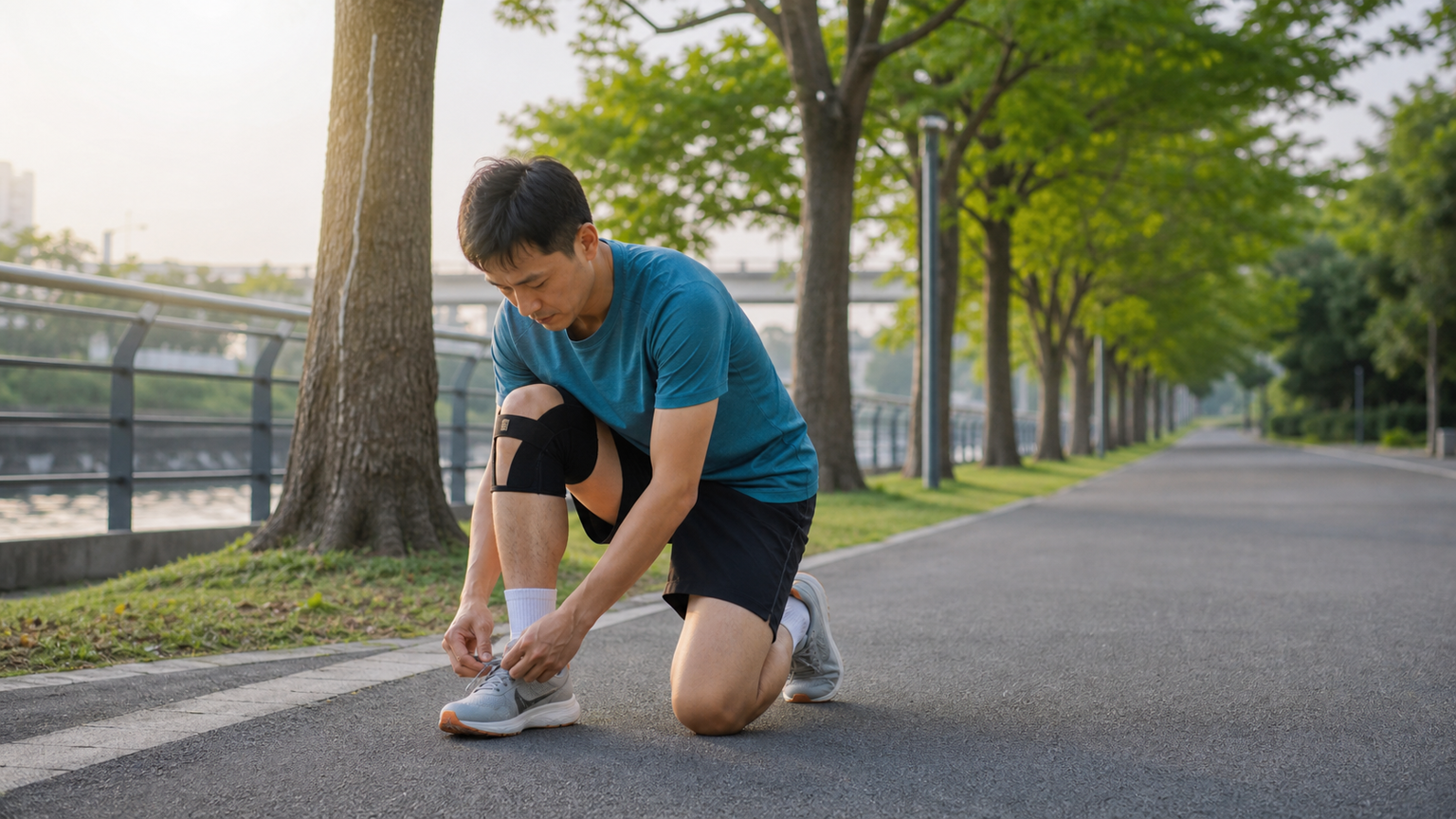
The fracture has healed, the fasciitis has subsided, and three months of physical therapy after knee surgery are complete—the doctor says, “You can start jogging now,” but when you lace up your running shoes for the first time and take that first step, the familiar fear is still there: “What if I get injured again?” Sports psychology refers to this state as the “Psychological Barrier to Return-to-Sport.” It is a real psychological challenge that requires proactive management, not a sign of weak willpower.
The Psychological Mechanism of Post-Injury Fear
Injury is not just a physical event; it is also a psychological trauma. Intense pain, the frustration of being unable to exercise, and the updated belief that your body is no longer reliable all leave strong emotional imprints in your memory. When you return to running, any similar sensation—mild soreness, an odd feeling in the same area—can trigger that memory and activate the brain’s “danger alarm system.”
This hypervigilance serves a protective function in the short term, but if it persists too long, it can:
- Cause you to avoid any movement that might trigger discomfort (overprotective behavior)
- Lead you to interpret normal training soreness as a “sign of impending injury” (catastrophic thinking)
- Keep your training intensity and confidence persistently below your body’s actual capacity
Assessing Fear of Returning to Training
| Sign | Description |
|---|---|
| Over-monitoring bodily signals | Constantly scanning the injured area during runs instead of running normally |
| Avoidance behavior | Avoiding routes or movement patterns where the injury occurred |
| Catastrophic thinking | Immediately associating minor discomfort with reinjury |
| Decreased confidence | Losing trust in your body’s abilities, questioning whether you can return to your previous performance |
| Emotional fluctuations | Noticeable anxiety or low mood before and after runs |
Five Steps to a Psychological Return to Training
Step 1: Confirm the Evidence That “Your Body Is Ready”
Before starting the psychological work, make sure you have clear medical justification: explicit clearance from your doctor or physical therapist, and an understanding of the acceptable training range. Psychological fear is sometimes mixed with uncertainty about your physical condition; clear medical boundaries can eliminate part of that unknown anxiety.
Step 2: Graded Exposure
Exposure therapy from psychology applies perfectly here: start with the lowest-anxiety running scenario and progress gradually:
- Week 1: Jog on a treadmill for 10 minutes (an environment where you can stop at any time)
- Week 2: Jog on a familiar flat route for 15 minutes
- Week 3: Begin jogging outdoors, gradually increasing distance
- Week 4 onward: Introduce slight inclines and declines, gradually approaching pre-injury training intensity
After each completed step, pay attention to the real experience of “I ran, and I didn’t get injured again.” This is the foundation for rebuilding trust in your body.
Step 3: Reinterpret Pain Signals
Runners post-injury often have a binary interpretation of pain: “pain = injury.” But in reality, there are several types of discomfort during training:
- Normal muscle soreness: Occurs 24–48 hours after exercise, evenly distributed across muscle groups, and does not affect function
- Metabolic discomfort during training: The “burning sensation” from lactate accumulation, which subsides quickly after stopping
- Warning signs that need attention: Sharp, localized pain that worsens during running
Learning to distinguish these three types of discomfort allows you to avoid triggering fear when “normal soreness” appears, reserving genuine alertness for signals that truly need attention.
Step 4: Use Self-Talk to Rebuild Trust in Your Body
Prepare a few self-talk statements for the return-to-training period:
- “This is a normal response as my muscles readapt, not an injury.”
- “The doctor said I can run, and I trust that assessment.”
- “Every run I finish is accumulating new evidence of safety.”
Step 5: Accept the Fact That “You Might Get Injured Again”
The most fundamental psychological work: accept that injury is part of running, and the risk of reinjury will always exist—but that is not a reason to stop running. Accepting uncertainty and choosing to move forward within it is one of the core abilities of mental resilience.
Practical Advice
- Seek help from a sports psychologist or physical therapist: If fear is still severely affecting your training after six to eight weeks, don’t bear it alone; professional support can greatly accelerate psychological recovery.
- Keep a “safe running log”: Every time you finish a run without reinjury, record it in the log, allowing these “pieces of evidence of safe running” to accumulate into new trust in your body.
Conclusion
For physical recovery, medicine can help you get there; for psychological recovery, you need to actively pursue it. The road back to running after injury may be slower than you expected, but every step is rewriting a new story—not “the runner who got injured,” but “the runner who overcame injury and set out again.” That version of you is actually more resilient than before the injury.
Related Reading
- Psychological Rebuilding After a Running Injury: Overcoming Fear of Relapse and Building Confidence to Run Again
- The Psychology of Fear in Running: Strategies to Overcome Falling, Injury, and Failure
- Returning to Run Training: A Progressive Return-to-Running Plan After Injury
- Post-Injury Psychological Rehabilitation: The Fear of Returning to Sport Is Harder to Recover From Than Tissue Healing
一日北高常見問題大集合 | 攻略 | 路線 | 訓練 | 補給 | 自行車 單車 | 一日雙城 | 雙塔 | TWB北高360 | 屁股痛
6 年前
摔車後補裝備: 好市多新款單車安全帽& Specialized Romin 北高整路屁股都不痛的坐墊 | 一千元居然有MIPS | CT Yeh | 公路車
4 年前
爬陡坡被爆胎的車友跑步超車 #cycling #里佳部落
9 個月前
[教學] Premiere 影片 手震 修正 教學 防抖 單眼 影像 GoPro 穩定 Video Stabilization
8 年前
西進武嶺 免費訓練分析服務 Intervals | 練不夠還是練過頭?你哪一種類型選手?AI模型告訴你! | 備戰神器 | 公路車 訓練 | CT Yeh
4 年前
Never Stop 西進武嶺 前後雙機 完整全程錄影 訓練台 實境
8 年前
2026 輪霸西濱200K 挑戰VLOG / 第一集團 / 首次參加..經驗不足、膀胱不足 /死守6H內 / AI戰鬥力顯示系統 / 公路車 / CT Yeh
4 個月前
單車 一日北高 ( 雙城 ) 肥宅雙人瘋狂行 紀錄片 REACTO
10 年前