The Psychological Challenge of a Round-Island Ride: The Willpower Breakdown Period on Days 3-4 and Coping Strategies
Introduction
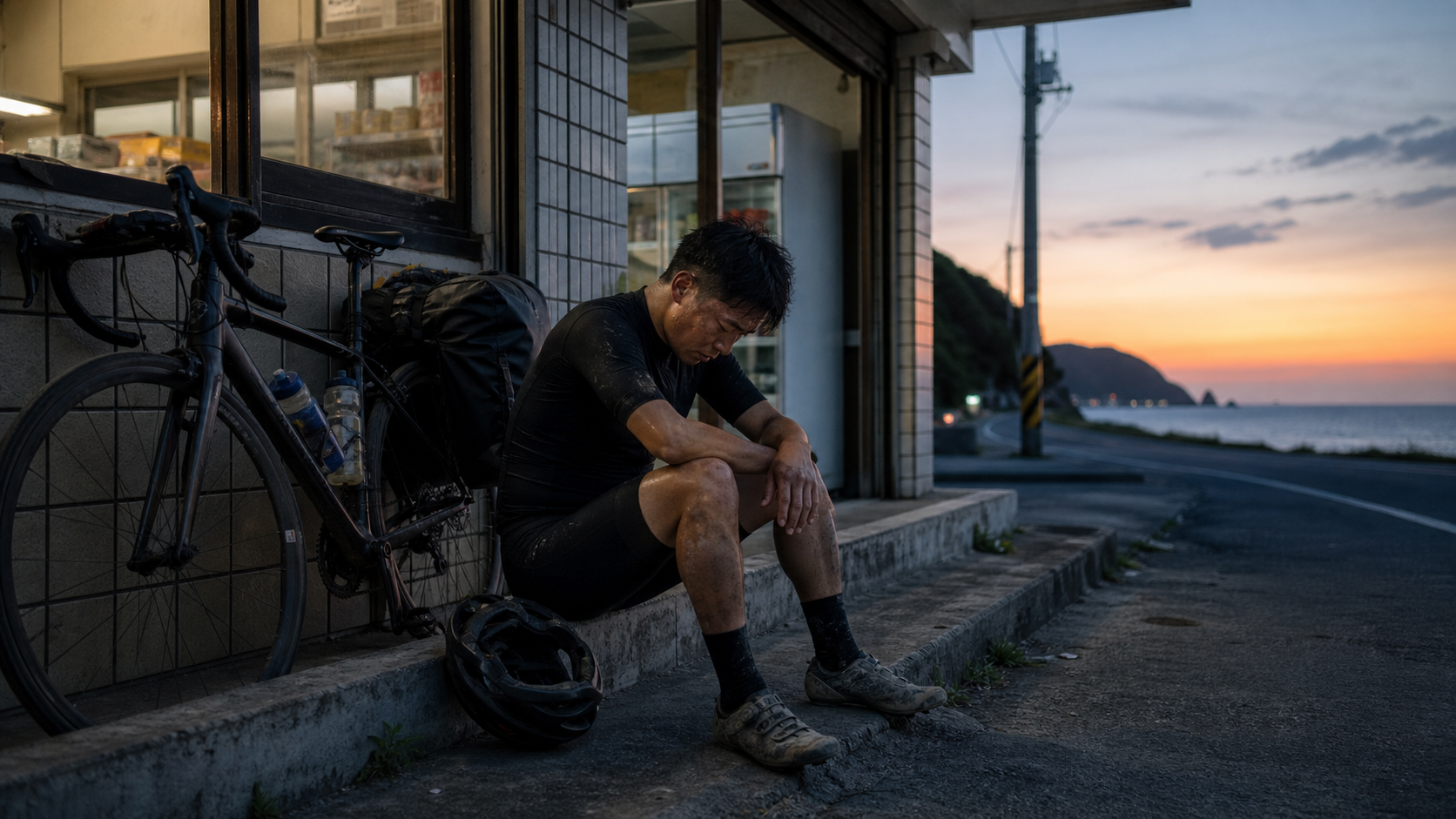
“I cried for almost an hour at a homestay in Tainan, convinced I could never finish the ride.” That’s what a female cyclist I met in Hualien told me. She eventually completed the round-island trip, but that night became her most vivid memory of the entire journey. Among round-island cyclists, this phenomenon has a name: “Day 3 Breakdown Syndrome.”
It’s nearly universal—not something reserved for the weak, but an inevitable adaptive response of the human psyche under prolonged stress. Understanding it is the key to not being defeated by it.
Why Days 3–4 Are the Peak of the Breakdown
From a physiological and psychological standpoint, several factors converge to trigger the breakdown on days 3–4:
| Factor | Explanation |
|---|---|
| Accumulated muscle fatigue | After consecutive days of riding, lactate metabolism in the quadriceps and glutes hasn’t fully recovered, making fatigue feel most intense |
| Fading excitement | The novelty and adrenaline of the first few days noticeably diminish by day 3 |
| Midpoint mileage anxiety | After several days of riding, it feels like “we haven’t even covered half,” and the finish line still seems far away |
| Accumulated physical discomfort | Saddle soreness, sunburn, and wrist pain peak on day 3 |
| Homesickness and loneliness | For solo riders sleeping away from home night after night, this is the window when loneliness hits hardest |
When these factors strike all at once, they make you feel like “there’s no point in riding on,” and thoughts like “I might as well take the TRA train home” creep in.
Three Common Forms of the Breakdown
1. The Crying Breakdown
The most common form, usually occurring when you’re alone after reaching your accommodation. Fatigue, pain, and uncertainty all erupt in the safety of a private space. After crying, you often feel lighter and ride on the next day.
2. The Angry Breakdown
Intense anger directed at road conditions, drivers, the weather, or even yourself. This is typically a reaction to imbalanced adrenaline and cortisol levels, most common in extreme heat or headwinds.
3. The Rational Retreat Breakdown
The most dangerous. The rider begins to “rationally” analyze why quitting is the sensible choice: “I’ve already ridden a few hundred kilometers—this is far enough for this trip, I’ll continue next time.” This calm retreat often leads to actually giving up midway.
Coping Strategies: How to Get Through the Breakdown
Strategy One: Shorten Your Time Horizon
When you think, “I still have 700 kilometers to ride,” that number will crush you. But if you tell yourself, “Today I just need to ride to Tainan,” and then “I just need to ride to the next convenience store,” the problem becomes manageable. Breaking your goal down into the smallest executable unit is the most effective mindset for surviving the breakdown.
Strategy Two: Reach Out to People Who Care About You
After arriving at your accommodation, call your family or a close friend immediately—not to complain, but to feel connected to your real life. Loneliness is a catalyst for the breakdown; a 10-minute phone call can significantly boost your mental state.
Strategy Three: Give Yourself a Ritualistic Reward
Plan ahead to do something that makes you happy after arriving at your accommodation on day 3 or 4: eel noodles in Tainan, Chishang bento in Taitung, or a fries-and-milkshake in Hualien—make that city a goal to look forward to, not just “another place to reach.”
Strategy Four: Write Down the Cost of Quitting
Before you set off, write down what this round-island ride means to you and what you would lose by giving up. Keep that note on your phone and reread it when you’re breaking down. This method sounds cliché, but in the depths of a breakdown at night, it works surprisingly well.
Strategy Five: Accept That “Today Sucks”
Don’t try to make every day a beautiful memory. Some days are just terrible: hot and exhausting, bad roads, bad accommodation. Allow such days to exist. Tell yourself, “Today really sucks, but tomorrow doesn’t have to,” and then go to sleep. Sleep is the most powerful reset button.
After Day 5: Light at the End of the Tunnel
Nearly everyone who has successfully completed a round-island ride describes the same turning point: after the low of days 3–4, riding starts to feel natural from day 5 onward. The body enters a “long-distance mode,” and daily fatigue actually feels lower than in the first few days. This happens because the nervous system and muscles have completed their initial adaptation and entered a stable rhythm.
Knowing that “if I just get through day 4, things will be different from there” is itself a powerful psychological anchor.
Practical Tips
- Set a “bottom line” before you depart: For example, “I won’t quit unless there’s an accident or illness,” and write it down
- Connect with other round-island riders: Meeting fellow cyclists at hostels or homestays and cheering each other on has an effect beyond what you’d expect
- Avoid making decisions on the night of a breakdown: Don’t decide whether to continue when you’re at your most exhausted and lowest—sleep on it and decide in the morning
- Prepare an emotional first-aid kit: A song that moves you, a video that makes you laugh—pull them out when you’re breaking down
Conclusion
The breakdown on days 3–4 is not a sign of weakness; it’s your body and mind taking this seriously. Only those who truly care and truly push themselves break down; people on a casual trip never feel this way. The breakdown is proof of meaning, and getting through it is the best gift you can give yourself.
Related Reading
- The Psychological Challenge of a Round-Island Ride: How to Overcome the Wall on Days 5–6
- The Psychological Breakdown in Climbing: How to Maintain Willpower on a Long Climb with No End in Sight
- The Emotion After Completing a Round-Island Ride: Stories of Psychological Transformation and Starting Anew
- The Psychological Challenge of Long-Distance Riding: Mental Preparation Strategies for a 200km One-Day Ride
JJSC南台灣單車走春三日行 DAY 1 / 強度 x 美食 x 節慶體驗 / 公路車 CT Yeh
5 個月前
一日北高/長距離團騎 常見問題補充篇 / 組團或跟團的眉角 / 壯車友容易被瘦車友慢性拉爆 / 原來屁股痛可能是這個原因...? / 風場配速法 / 公路車 / CT Yeh
2 年前
大武山後門26%歡樂陡坡!JJSC南台灣單車行Day2 / 被颱風追著跑 / 公路車 / CT Yeh
2 年前
金門 ! 我騎過最棒的離島了 / 最後可以騎車上金門大橋的機會!?/ 公路車 / CT Yeh
1 年前
2022 環花東挑戰賽 Day2 搭到特快車 高速真空吸引! 台東一路逆風殺回花蓮! 總排 ??| Feiyu Pocket 2s | 公路車 | CT Yeh
4 年前
2019 夏季KOM 5小 完賽心得 準備攻略 東進武嶺 夏季登山王之路 Taiwan KOM Challenge
7 年前
一日北高常見問題大集合 | 攻略 | 路線 | 訓練 | 補給 | 自行車 單車 | 一日雙城 | 雙塔 | TWB北高360 | 屁股痛
6 年前
【武嶺全紀錄】均推4.x太瘋狂!JJSC破三圓夢直播,直擊2h38m
3 個月前