Introduction
“Your son has a talent for running—focus on running right away and don’t let anything else distract him.” Many Taiwanese parents hear this kind of advice from coaches or relatives once their child shows running talent. This logic—“the earlier you specialize, the greater the achievement”—seems reasonable, yet it contradicts the findings of modern sports science.
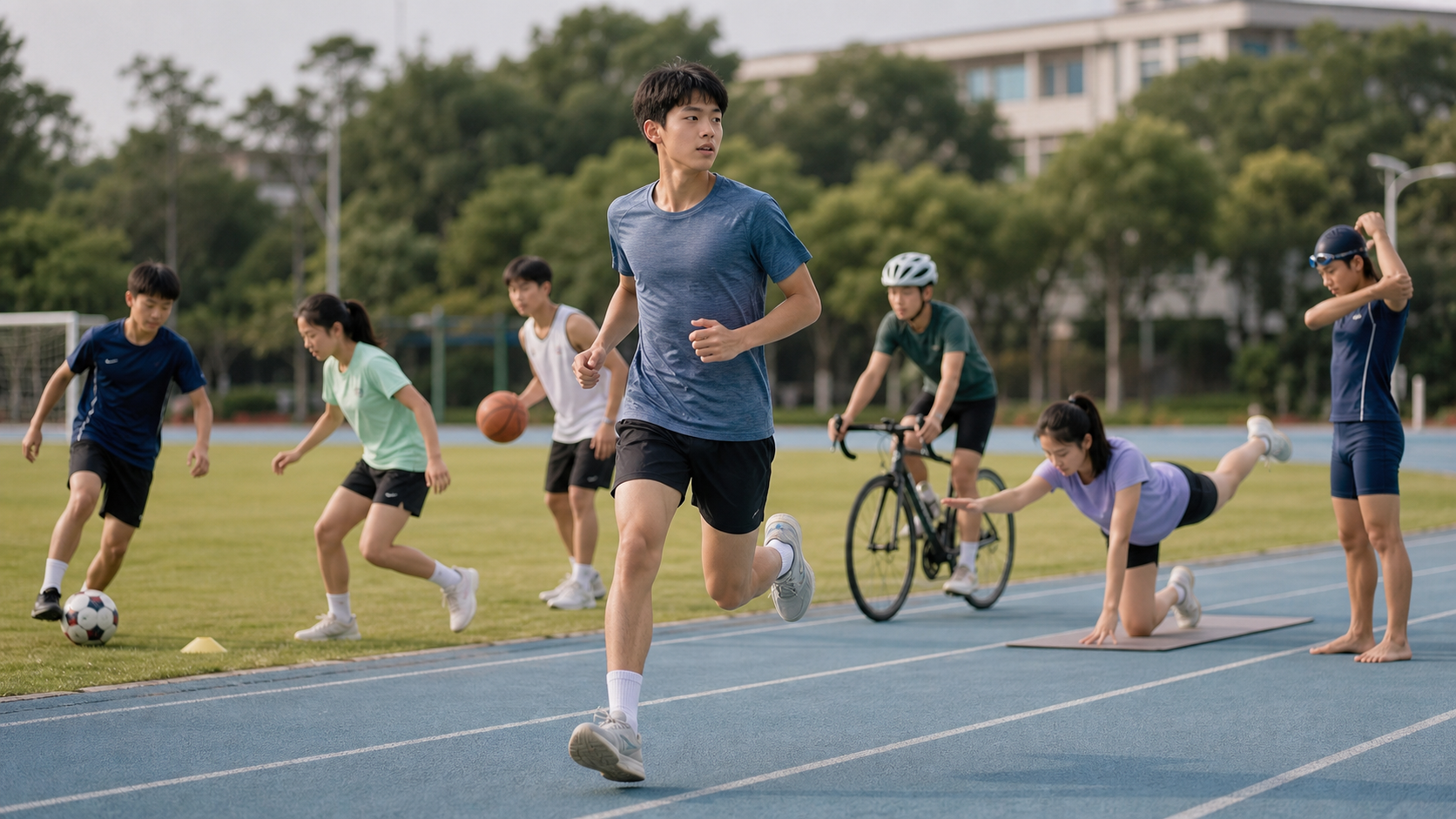
Early sport specialization refers to children or adolescents giving up multisport participation before age 12 to focus exclusively on a single sport. This approach may yield certain technical advantages in the short term, but in the long run, it harms children’s physical health, mental well-being, and athletic careers.
This article examines the importance of multisport development from a sports science perspective and provides practical guidance for Taiwanese parents on balancing running with multisport activities during adolescence.
The Cost of Early Specialization
Physical Cost: Doubled Injury Risk
Specialized training forces children’s bodies to repeat the same movement patterns over extended periods, leading to:
| Issue | Description |
|---|---|
| Overuse injuries | Repeated stress on the same muscle groups and joints, causing cumulative microtrauma |
| Movement imbalance | Excessive strength in one direction while antagonist muscles remain relatively weak |
| Uneven bone development | Excessive load on the dominant side, compromising symmetry |
| Growth plate stress | Lack of movement variety means specific growth plates endure prolonged pressure |
Research shows that adolescents who specialize early have an overuse injury rate 2–3 times higher than their multisport peers.
Psychological Cost: Burnout and Dropout
Engaging in only one sport for extended periods is also a major psychological challenge for adolescents. “Burnout” is the most common psychological consequence of early specialization, manifesting as:
- Losing passion for a sport once loved
- Feeling that training is “forced” rather than “chosen”
- Mass dropout from competitive sports in late adolescence (ages 17–19)
This is why many seemingly talented kids on Taiwanese middle school track teams stop training by high school—not because they aren’t good enough, but because they are already exhausted.
The Scientific Advantages of Multisport Development
Transfer Effects of Athletic Abilities
Abilities developed through different sports often transfer to one another. Using running as an example:
- Swimming: Strengthens core stability, improves cardiorespiratory endurance, low-impact recovery
- Ball sports (soccer, basketball): Explosive power for acceleration, sudden stops, and direction changes
- Gymnastics or dance: Coordination, core strength, proprioception
- Cycling: Aerobic base, quadriceps strength, low-impact cross-training
- Martial arts or wrestling: Full-body strength, reaction time, body control
Adolescents who develop through multiple sports tend to have a richer “movement library” when entering high-intensity specialized training, allowing them to absorb new techniques faster and with lower injury risk.
The Long-Term Advantage of Late Specializers
Sports science research tracking the development of numerous elite athletes has found:
- Gold medalists at top events like the Olympics typically did not begin serious specialization until ages 13–15
- Children who specialized before age 11 are actually less likely to reach the elite level
- Runners with a multisport background have an approximately 30% lower rate of injury-related withdrawal from competition than early specializers
Multisport Development Recommendations for Young Taiwanese Runners
Suggested Sport Combinations by Age Group
| Age Group | Running Proportion | Other Recommended Sports | Core Principle |
|---|---|---|---|
| 8–10 years | 20–30% | Swimming, ball sports, gymnastics | Explore widely, broad exposure |
| 11–13 years | 30–40% | Maintain at least 2 other sports | Increase running but don’t make it exclusive |
| 14–16 years | 50–60% | At least 1 cross-training activity | Gradually shift toward specialization |
| 17 and above | 70%+ | Swimming or cycling for cross-training | Mature specialization |
Practical Application of Cross-Training in Running Programs
For adolescents who are already primarily running-focused, scheduling 1–2 sessions of other aerobic activities per week is an ideal way to maintain multisport capacity:
- Swimming (recommended): Completely non-impact, can serve as active recovery after high-intensity running
- Cycling (recommended): Taiwan has excellent infrastructure; both indoor spin classes and outdoor riding work well
- Ball sports (suggested): Maintain multidirectional movement capacity, complementing what running training lacks
Practical Recommendations
- Before age 12, do not deprive your child of the opportunity to try different sports, even if he already excels at running
- Talk to your child about “why training in multiple sports matters”, helping him understand the value of multisport development rather than perceiving it as a lack of trust in his running ability
- Preserve free play time outside of running training—unstructured sports and games are also part of multisport development
- Inform coaches about your child’s participation in other sports to avoid overtraining from excessive stacking of running and other activities
- Prioritize your child’s long-term health and joy in sport over early results
Conclusion
Taiwan has many children gifted at running, but those who truly run long and run healthy are often the ones who had the opportunity to explore widely and play freely during adolescence. Early specialization is essentially a “gamble”—it may give a child a short-term edge over peers, but it may also leave him stalled by injury or burnout during the prime years of 18–25, when cumulative development matters most. Giving children more time and more sporting options is the smartest long-term investment.
Related Reading
- Multisport Participation for Youth: Long-Term Benefits of Early Specialization vs. Multisport Development
- The Risks of Early Specialization: Why Focusing on a Single Sport Too Early May Shorten Athletic Careers
- A Multisport Foundation for Young Endurance Athletes: Why Specializing Later Helps You Run Farther
- The Timing of Specialization in Youth Swimming: Risks and Benefits of Early Specialized Training
一日北高常見問題大集合 | 攻略 | 路線 | 訓練 | 補給 | 自行車 單車 | 一日雙城 | 雙塔 | TWB北高360 | 屁股痛
6 年前
一日北高/長距離團騎 常見問題補充篇 / 組團或跟團的眉角 / 壯車友容易被瘦車友慢性拉爆 / 原來屁股痛可能是這個原因...? / 風場配速法 / 公路車 / CT Yeh
2 年前
西進武嶺 免費訓練分析服務 Intervals | 練不夠還是練過頭?你哪一種類型選手?AI模型告訴你! | 備戰神器 | 公路車 訓練 | CT Yeh
4 年前
2019 柯P 超越北高 第一集團實錄 (11小時實錄請參考另一部影片) 一日雙城 一日北高 NeverStop Taiwan Long Distance Cycling Challenge
7 年前
滑雪新手們慘摔學習全紀錄(請開字幕),滑雪好好玩 | Snowboard + Ski | 岩原 スキー場 | 滑雪APP使用 | GoPro Max
6 年前
單車 一日北高 ( 雙城 ) 肥宅雙人瘋狂行 紀錄片 REACTO
10 年前
多機位拍片神器 DJI Action 2 拍出速度張力感 | 類空拍機視角 4陣列麥克風超強降風噪 實測! | 公路車 | CT Yeh
3 年前
live) 超越北高 之一日北高12小時 策略
7 年前