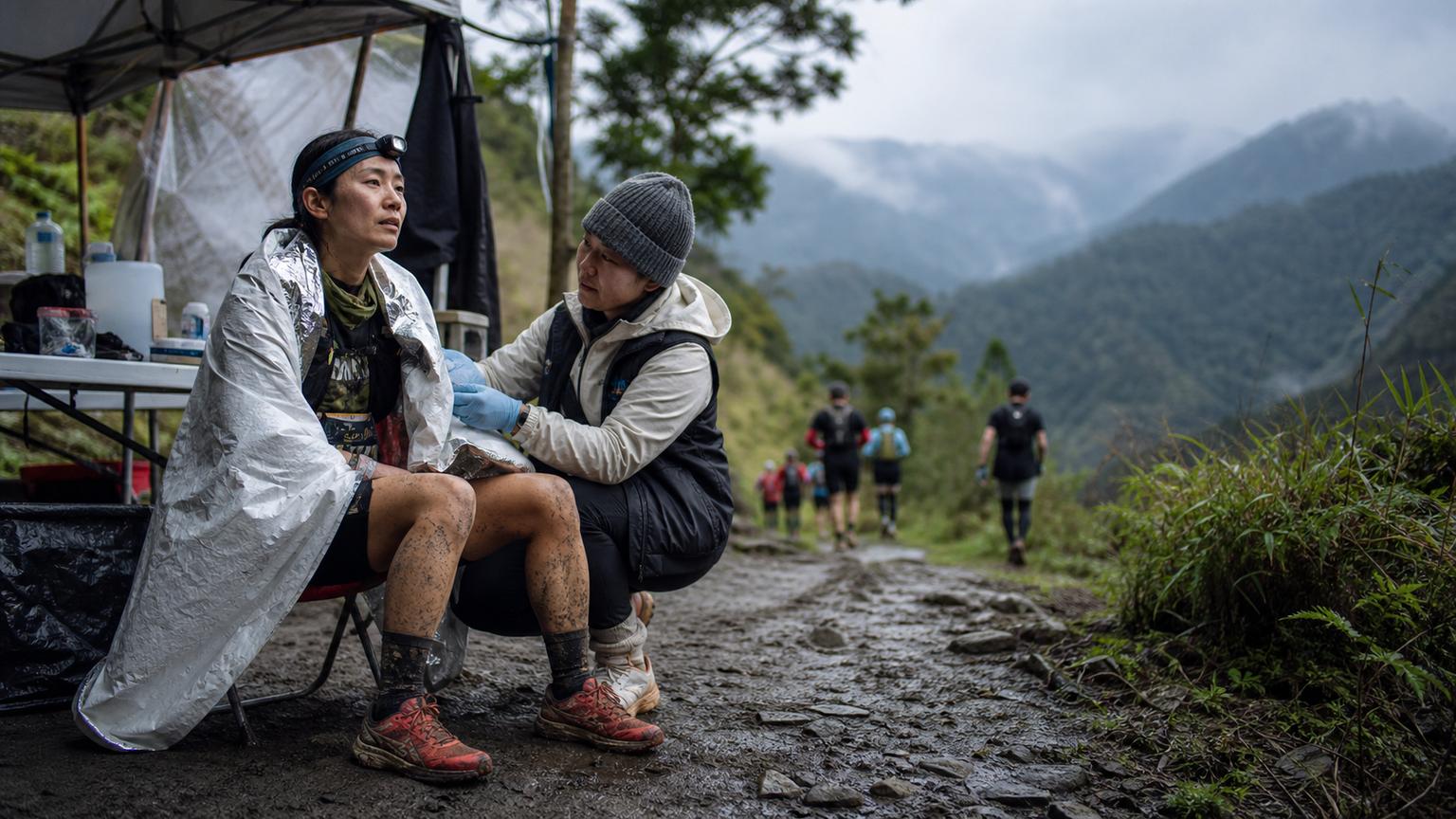
Introduction
Ultramarathon runner Kilian Jornet once said: “DNF (Did Not Finish) is not failure, but another kind of completion.” In the ultrarunning world, DNF is almost a reality that every serious runner will eventually face. Whether due to injury, gastrointestinal collapse, worsening weather, time constraints, or pure mental breakdown, dropping out is something that can happen in every ultramarathon. This article explores the cultural significance of DNF and how to make the brave decision to withdraw when it’s time to do so.
How High Is the DNF Rate in Ultramarathons?
The DNF rate in ultramarathons is far higher than in regular road races. Based on data from major global ultramarathon events:
| Race Category | Average DNF Rate |
|---|---|
| 50K entry-level ultramarathon | 10–20% |
| 80–100K trail races | 20–35% |
| 100-mile (160K) | 35–50% |
| Extreme ultramarathons (200K+) | 50–70% |
The DNF rate for ultramarathons in Taiwan typically ranges between 15–30%, fluctuating depending on terrain difficulty and weather conditions. The renowned UTMB (Ultra-Trail du Mont-Blanc) has seen DNF rates exceed 50% at its peak.
Why Is DNF Accepted in Ultramarathon Culture?
The ultrarunning community’s attitude toward DNF differs from road running, for the following reasons:
- The essence of ultrarunning is exploring limits: Challenging unknown boundaries means sometimes reaching the other side of those boundaries
- The distance and terrain of ultramarathons inherently carry uncertainty: Factors such as weather, gastrointestinal issues, and injuries cannot be fully predicted
- Safety always comes first: Pushing through in the mountains can endanger both yourself and rescue personnel
- The culture of mutual support in the ultrarunning community: Helping runners who have dropped out and caring for the injured at aid stations is part of ultrarunning culture
When Should You DNF?
This is the most difficult judgment call. Here are some clear indicators that you “should drop out”:
Medical Emergencies (Immediate Withdrawal)
- Severe hypoglycemia (dizziness, confusion, inability to coordinate movements)
- Suspected fracture or severe sprain (unable to bear weight normally)
- Hypothermia or heatstroke (cold, clammy skin, or sudden cessation of sweating after heavy sweating)
- Severe vomiting preventing any intake (even water comes back up)
- Abnormal heart rhythm or chest pain
Safety Considerations (Strongly Recommended to Withdraw)
- Severely lost after dark with no phone signal
- Headlamp failure with backup light source depleted (nighttime trail)
- Unable to maintain the pace required to make cutoff times
Situations Warranting a Rational Decision to Withdraw (Worth Evaluating)
- Continuing could cause long-term injury (e.g., knee pain reaching 7 or above on the pain scale)
- Gastrointestinal system completely shut down, unable to take in any nutrition for over 2 hours
- Extremely low body temperature combined with excessively long distances between aid stations
When You Should NOT DNF
Ultrarunners also commonly face the opposite extreme—dropping out too early for psychological reasons:
- Pure emotional breakdown (the “bear pit”): This is something you can get through; it typically improves after 30–60 minutes
- Legs are very sore and tired: This is a normal state in ultrarunning, not a reason to drop out
- Pace is slower than expected: Adjust your goals; finishing is more meaningful than a DNF
- The thought “I might not make it to the finish”: Almost everyone has this thought in an ultramarathon—keep moving forward
After the DNF: How to Rebuild
Psychological processing after a DNF is equally important:
- Give yourself 24–48 hours without judgment: Don’t make any assessments or decisions when your emotions are at their lowest
- Analyze the reason for dropping out: Was it insufficient training? An equipment issue? Or uncontrollable factors?
- Identify what can be improved: Treat the DNF as a detailed training report
- Stay within the ultrarunning community: Talk with other runners who have also DNF’d, and you’ll find you’re not alone
- Plan the next race: Having a goal is the best way to heal from a DNF
Practical Advice
- Communicate the possibility of a DNF with family or crew before the race: Help them understand that DNFs are normal in ultrarunning, reducing the psychological burden when you withdraw
- Set your personal “withdrawal bottom line” before the race: Decide in advance under which circumstances you will definitely drop out—deciding beforehand is more rational than judging while in pain
- Carry contact information for medical personnel: If you determine you cannot continue on your own, know how to notify the organizers
- A DNF does not affect whether you are a “true ultrarunner”: The moment you stood at the starting line, you already were
Conclusion
A DNF in ultrarunning is not failure, but a form of honesty. Acknowledging the limits of your body or the environment and making a rational decision to withdraw requires greater courage than pushing through. Every DNF carries a story—a story about exploring your own boundaries. At the next start line, you’ll carry this experience and run wiser and farther.
Related Reading
- In-Race Decision-Making in Ultrarunning: The Principles for Judging DNS, DNF, and Continuing
- Criteria for Dropping Out Mid-Marathon: When You Should DNF to Protect Your Body
- Trail Race Withdrawal Decision Tree: When DNF Is Wisdom and When It’s Avoidance
- Facing the DNF: Psychological Recovery When the Race Has No Finish Line
微雨戰! 2022桃園市長盃錦標賽 無敵交管 沒來玩太可惜了! 羅馬公路太可怕 差點成佛! 公路車 | CT Yeh
4 年前
RAMP FTP Test 直播 究竟能撐到幾瓦 訓練台 Gravat Zwift
6 年前
2026 輪霸西濱200K 挑戰VLOG / 第一集團 / 首次參加..經驗不足、膀胱不足 /死守6H內 / AI戰鬥力顯示系統 / 公路車 / CT Yeh
4 個月前
大武山後門26%歡樂陡坡!JJSC南台灣單車行Day2 / 被颱風追著跑 / 公路車 / CT Yeh
2 年前
爬陡坡被爆胎的車友跑步超車 #cycling #里佳部落
9 個月前
日本公路最高登山賽,台灣首位YT挑戰實錄,乘鞍登山賽40週年,賽前篇完整版,請到我的YT收看 #公路車 #cycling
10 個月前
小野田真的存在!日本赤城山爬坡公路賽 台灣首發團完全實錄 | 頭文字D真實賽道! | 看完東奧自行車賽後好想再去騎一次啊! | 公路車 | CT Yeh
4 年前
戰略) Zwift Race 如何咬在第一集團 如何評估自己要開多少推力 (請開1.5倍速看)
7 年前