Ultramarathon Logistics Support: A Collaboration Plan Between Runners and Aid Station Volunteers
Introduction
Ultramarathon runners fight alone on the course, but behind the finish line, there is often a meticulously coordinated support team. The presence of crew and pacers is not just about providing supplies—they serve as the runner’s psychological anchor during the lowest moments. Many ultramarathon events in Taiwan allow runners to set up personal support at major aid stations, and some events also permit pacers to join the runner in the latter half of the race. This article shares how runners and volunteers can build an efficient support coordination system.
Role Division in Support Logistics
Crew
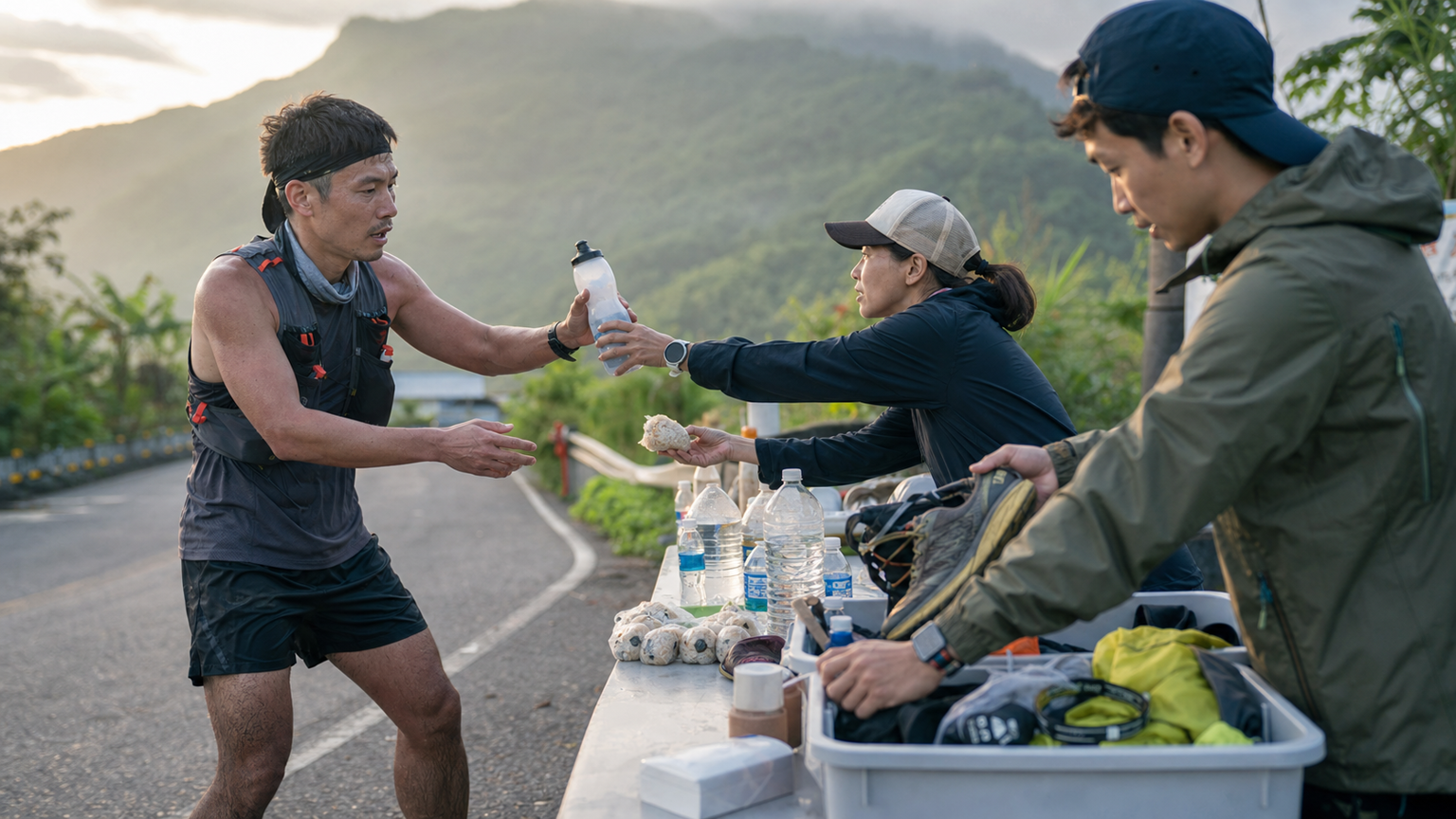
Crew members typically wait for the runner at designated aid stations, providing:
- Preparation and delivery of food and drinks
- Gear changes (shoes, clothing, restocking supply bags)
- Medical treatment (blisters, minor sprains)
- Psychological support and intelligence (informing the runner of their position and remaining mileage)
- Assessing the runner’s condition and, when necessary, persuading them to withdraw (or refusing to let them withdraw)
Pacers
Pacers typically join the runner in the latter half of the race (usually after 50K), providing:
- Safety assurance (nighttime pacing, preventing getting lost)
- Pace management (preventing the runner from going too fast or too slow in the later stages)
- Conversational companionship (breaking the loneliness, especially during nighttime segments)
- Aid reminders (reminding the runner to eat and drink on schedule)
Pre-Race Support Planning
Good support begins with thorough planning before the race:
Step 1: Study the Race Map
Confirm which aid stations allow personal crew access—organizers usually indicate this in the race instructions. Taiwanese ultramarathons typically have 2–4 major aid stations where crew members can enter.
Step 2: Create an Aid Station Checklist
| Aid Station | Mileage | Estimated Arrival Time | Supplies Needed | Gear Change Needs |
|---|---|---|---|---|
| Station A | 20K | 3 hours after start | Water refill, bananas, spare gels | None |
| Station B | 40K | 6.5 hours after start | Full meal (rice balls), shoe change, supply refill | Spare shoes |
| Station C | 60K | 10 hours after start | Hot food, spare headlamp battery, nighttime gear | Add outer jacket |
Step 3: Prepare Supply Boxes
Each supply box (typically a waterproof bag or container) is labeled with the corresponding aid station, and its contents include:
- Food: The runner’s preferred solid foods, spare energy gels
- Drinks: If the race does not provide specific beverages, prepare the electrolytes the runner is accustomed to
- Gear: Spare shoes (if needed), clean socks, spare headlamp batteries
- Medical: Anti-chafing cream, tape, blister needles (if needed)
- Psychological support items: Memos, runner photos, encouragement cards
Volunteer Communication Preparation
Communication preparation between volunteers and the runner is just as important as training:
Items That Must Be Communicated in Advance
- Aid priority: What does the runner need first upon arrival? (Usually water and food)
- Stop time goals: How long does the runner plan to stay at each aid station?
- Withdrawal decision criteria: Under what circumstances does the runner want volunteers to help assess whether to withdraw?
- Emotional response approach: When the runner is in a dark place, how does he want volunteers to respond (comfort? encouragement? silence?)
- Emergency contact methods: What backup contact methods exist if volunteers lose contact at an aid station
Volunteers’ Mental Preparation
Volunteer work is more draining than expected:
- Long waits (the runner may arrive 30–60 minutes later than expected)
- Emotional management when seeing the runner in pain
- Sometimes having to make difficult decisions (preventing the runner from withdrawing, or supporting the runner’s withdrawal)
Pacer Responsibilities and Techniques
Pacers are not just “running alongside”—they actively participate in race management:
- Know the race course: Research the latter-half route in advance, knowing where the difficult sections are
- Know the runner’s cutoff times: Continuously track pace and alert the runner if there is a cutoff risk
- Aid management: Remind the runner to refuel on schedule—runners in a fatigued state tend to forget
- Topic preparation: Prepare a few topics that can engage the runner in conversation, breaking the silence of the dark place
- Know when to be silent: Some runners need quiet in the dark place, not conversation
Support Transportation and Time Planning
One of the biggest challenges for volunteers is “arriving at the right aid station at the right time”:
- Research transportation routes to aid stations before the race (aid stations at trail events sometimes require hiking to reach)
- Estimate the runner’s arrival time at each aid station and plan to arrive 30 minutes earlier than expected
- Bring enough food, water, and warm clothing for yourself—volunteer wait times may exceed expectations
Practical Tips
- Volunteers need rest too: Support for long-distance events can last 12–24 hours; volunteers’ energy management is equally important
- Set up a support group chat: Allow multiple volunteers to share the runner’s location and aid station updates in real time
- Bring backup supplies: Aid stations may run short on food; bringing backups ensures the runner always has something to eat
- Thank your volunteers after the race: Half the glory of finishing an ultramarathon belongs to those who waited for you at the aid stations
Conclusion
Ultramarathon support logistics is a job that requires preparation, communication, and love. An efficient support team can make a runner feel strength at the most difficult moments, enabling them to make the decision to keep going. If you have people around you who are willing to wait for you at an aid station at three in the morning, cherish them—they are the most important teammates on your ultramarathon journey.
Related Reading
- The Culture of Mutual Support Among Ultramarathon Runners: Fellow Runners Pacing and Aid Volunteers
- Road Running Pacer Techniques: How to Use Pacers to Achieve Your Goals
- Reflections from a Running Pacer: Guiding Runners to Complete Their Goals
- What Road Race Volunteers and Officials Need to Know: How Road Races Operate in Taiwan
西進武嶺 免費訓練分析服務 Intervals | 練不夠還是練過頭?你哪一種類型選手?AI模型告訴你! | 備戰神器 | 公路車 訓練 | CT Yeh
4 年前
西進武嶺 自製新版AI配速表產生器 x 賽前攻略 抱佛腳! 沒有功率計也可以產生配速表嗎?有什麼其他眉角賽前要注意的呢? | 西進武嶺 / 東進武嶺 KOM 攻略 | 公路車 | CT Yeh
4 年前
#公路車 #Fitting 靠人工智慧APP 幫你調整單車
6 年前
新屋團體繞圈賽 | 眾多菁英好手賽道奔馳 | 千瓦女子軍團 | 無敵交管狂獲好評 明年你一定不能錯過 | #公路車
5 年前
2025 海鷗團體繞圈賽 網路直播 超激烈裁判長視角 / EIPC 李廷威、Waypoint 等眾多高手競爭 / feat. 卡密兒主持 / 海鷗繞圈賽
9 個月前
Live) 備戰2019彰化經典百K 賽前攻略 (已完賽請看新影片
7 年前
FTL 與 SYB 車隊專訪 西進武嶺 實用攻略分享! 2小時 如何練?!你不知道的眉角!新手準備武嶺必看 EP1 | 實力派女車友 | 精華版 | 公路車 | CTYeh
4 年前
西進武嶺各路段 前8000名 大數據分析 配速攻略/功率/心律/推力比/維持率/踏頻/踏瓦比/牽車率 大公開 | 建大盃 NeverStop 可參考 | 公路車 | CT Yeh
5 年前