Ultramarathon Race Preparation: Complete Guide to Gear Checklist and Training Cycles for Taiwan's 100K Ultramarathons
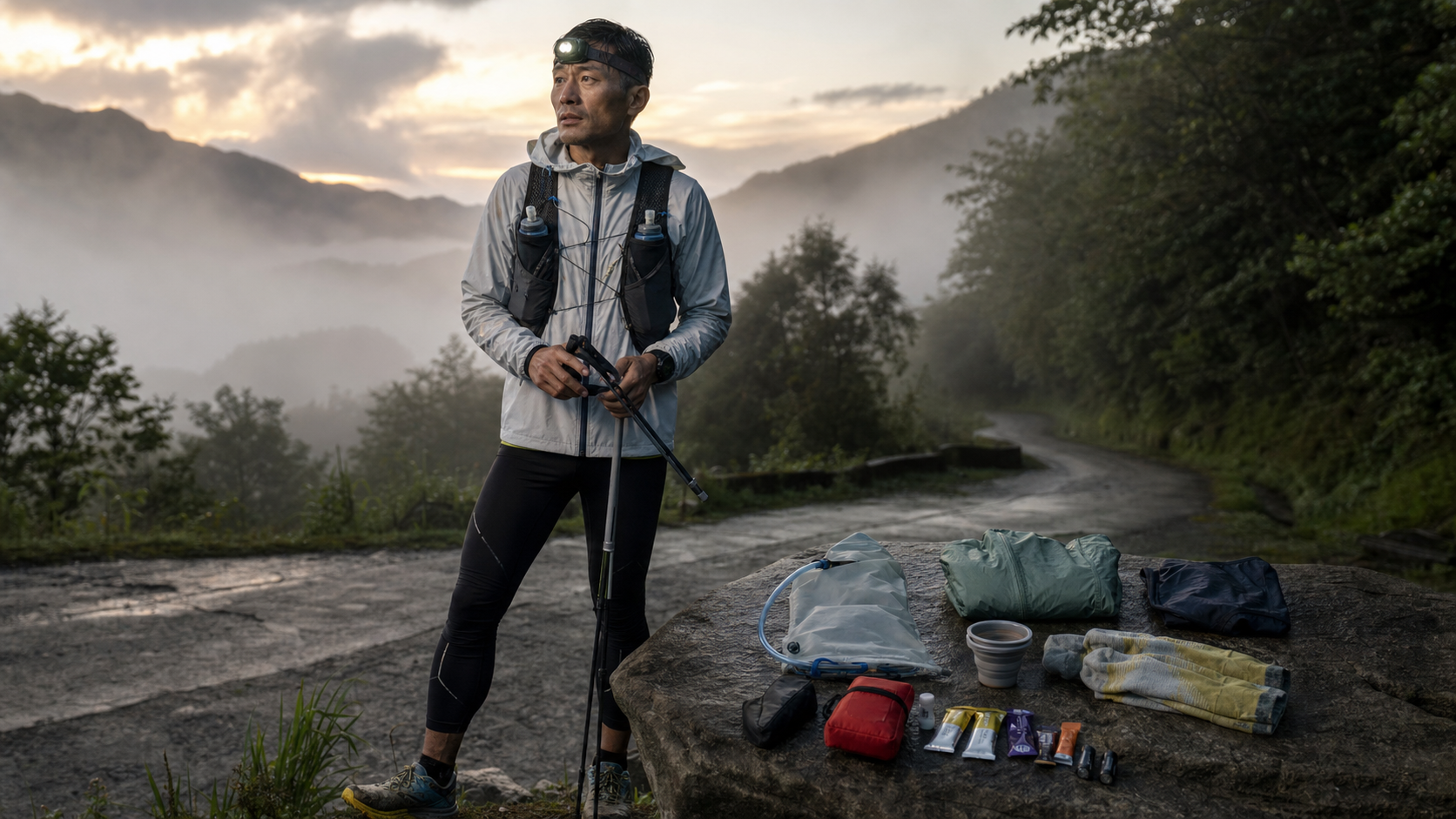
Ultramarathon Pre-Race Preparation: Complete Gear Checklist and Training Cycle Guide for Taiwan’s 100K Ultramarathons
Introduction
When the full marathon is no longer a challenge, many Taiwanese runners set their sights on ultramarathon events—100 km, 150 km, or even longer distances. Taiwan hosts several renowned ultramarathons, such as the Wuling Ultramarathon and the Taiwan Beast Ultramarathon. These races combine mountainous terrain, nighttime running, and prolonged continuous exertion, making them the most comprehensive test of a runner’s body and mind. Preparing for an ultramarathon is fundamentally different from a standard marathon, requiring systematic gear planning and a training cycle spanning several months.
Overview of Taiwan’s Ultramarathon Events
| Event Name | Distance | Terrain Type | Main Challenges |
|---|---|---|---|
| Wuling Ultramarathon | 100+ km | Primarily road climbing | Elevation 3,275 m, 3,500 m+ of climbing |
| Taiwan Beast Ultramarathon | 50/100/168 km | Trail + road mix | Nighttime running, long distances between aid stations |
| Yilan Ultramarathon | 100 km | Primarily flat road | High temperatures, long duration |
| Alishan Ultramarathon | 60/100 km | Forest road and trail | High altitude, low nighttime temperatures |
Different types of ultramarathons present distinct challenges. This article focuses on the 100 km road + trail mixed course format.
Essential Gear Checklist
Clothing
- Running vest or hydration pack (essential): Capacity of at least 6–10 liters, capable of carrying a hydration bladder (2L) plus gear
- Compression tights or leggings: Muscle compression protection for long distances is a must
- Technical moisture-wicking shirts (one short-sleeve, one long-sleeve): Switch to long sleeves as temperatures drop after dark
- Lightweight windbreaker: Essential for mountain nights; keep weight under 200 g
- Spare shorts or pants: Place in a drop bag for mid-race changes
- Compression calf sleeves (optional): Helpful for downhill protection and managing late-race fatigue
Footwear
- Primary trail running shoes (broken in with 200+ km): Balance of traction, cushioning, and rock protection
- Spare running shoes: A lifesaver if the primary pair causes blisters or injury
- Waterproof socks: Protection for nighttime running or water-crossing sections
- Spare socks (at least 2 pairs): Changing socks during an ultramarathon is a key step in preventing blisters
Lighting
- Headlamp (primary light): At least 300 lumens, with a battery life of at least 8 hours (including spare batteries)
- Backup headlamp or flashlight: A safety backup in case the primary light fails
- Batteries (3x the capacity of the primary light’s batteries): Better to have too many than too few
Nutrition
- Energy gels (at least 15–20 packets): Consume one every 30–40 minutes
- Solid food (crackers, nuts, salty snacks): Long distances require solid food to avoid cloying sweetness
- Electrolyte capsules (at least 30–40 tablets): Take every 45–60 minutes to prevent cramping and hyponatremia
- Caffeine supplements: Help maintain alertness after 15–16 hours, especially at night
First Aid and Safety
- Personal first aid kit: Adhesive bandages, antiseptic wipes, medical tape, scissors
- Blister treatment kit: Needles (sterilized with alcohol), blister patches
- Emergency thermal blanket: Life-saving gear for sudden drops in temperature in the mountains
- Whistle: A signaling tool if you get lost or injured
- Personal emergency contact card: Keep in the outermost pocket, listing blood type and allergy information
Training Cycle Planning (24 Weeks)
Weeks 1–8: Base Endurance Phase
- Weekly mileage: 50–70 km
- Weekend long run: 25–30 km
- Focus: Build aerobic endurance base; do not chase speed
- Practice: Train on varied terrain, including dirt roads and trails
Weeks 9–16: Advanced Training Phase
- Weekly mileage: 70–100 km
- Weekend long run: 35–45 km (one long run every other week)
- Focus: Night training (running with a headlamp), weighted pack running
- Add: Back-to-back long runs (Saturday 30 km + Sunday 20 km) to simulate leg fatigue
Weeks 17–22: Specialization Phase
- Weekly mileage: 80–110 km
- Weekend ultra-long run: 50–60 km (race simulation)
- Focus: Test full nutrition strategy, field-test all gear
- Enter a 50 km ultramarathon as a practice race
Weeks 23–24: Taper Phase
- Reduce weekly mileage to 40–50 km
- No long-distance or high-intensity training
- Finalize gear preparation and confirm the nutrition plan
Race Strategy
- Deliberately run slow for the first 30 km: The biggest killer in ultramarathons is starting too fast and completely falling apart later
- Accept a natural pace drop at night: With reduced visibility and lower temperatures, accept the loss of pace
- Stop at every aid station: Refuel, drink, check your feet, and change gear as needed
- Sleep management: For races exceeding 20 hours, consider resting 10–15 minutes at aid stations
Conclusion
The 100 km ultramarathon is the ultimate test of human willpower, and Taiwan’s mountain courses add an extra layer of environmental complexity. Systematic training, well-prepared gear, and a clear race strategy are the three pillars every ultramarathon runner must possess. When you’re running alone on a mountain trail before dawn, that solitude and persistence will make you realize you are stronger than you ever imagined.
Related Reading
- Taiwan Ultramarathon Calendar: Complete List of Major Ultramarathon Races
- My First 100K Ultramarathon: A Complete Record of Registration, Preparation, and Finishing
- Ultramarathon Culture: Stories and Spirit of Taiwan’s 100K Ultramarathon Runners
- Long-Term Ultramarathon Preparation: A Mileage Accumulation Strategy Spanning 6+ Months
Live) 備戰2019彰化經典百K 賽前攻略 (已完賽請看新影片
7 年前
一日北高前的高裝檢 | 北高 360 | 挑戰11小時的裝備 | 一日雙塔 | 補給
6 年前
日本公路最高登山賽,台灣首位YT挑戰實錄,乘鞍登山賽40週年,賽前篇完整版,請到我的YT收看 #公路車 #cycling
10 個月前
單車 一日北高 ( 雙城 ) 肥宅雙人瘋狂行 紀錄片 REACTO
10 年前
太平山單車員工旅遊 | 這樣玩CP值最高!| 公路車
5 年前
2024 如來神掌 百人約騎挑戰!feat. 秘境單車社團 / 神人們太可怕 / 全程錄影 x 完整坡度解析 / 公路車 / CT Yeh
2 年前
2019 夏季KOM 5小 完賽心得 準備攻略 東進武嶺 夏季登山王之路 Taiwan KOM Challenge
7 年前
FTL 與 SYB 車隊專訪 西進武嶺 實用攻略分享! 2小時 如何練?!你不知道的眉角!新手準備武嶺必看 EP1 | 實力派女車友 | 精華版 | 公路車 | CTYeh
4 年前