IM 226 Finish Strategy — A Complete Guide to Nutrition Timing, Negative Split Pacing, and Body Temperature Management
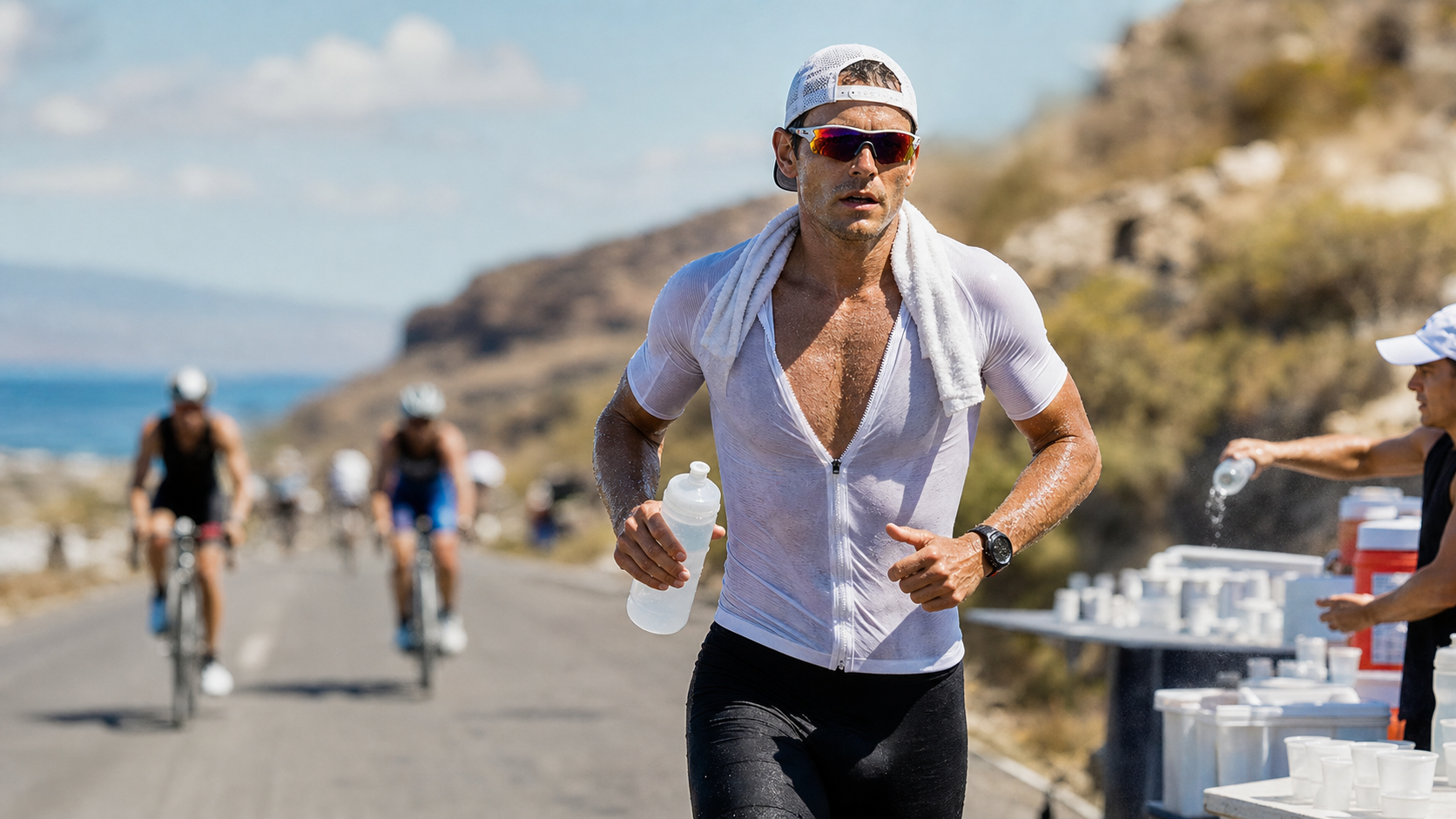
The Essence of IM 226 Is “Energy Management” and “Core Temperature Management”
A full-distance triathlon (3.8K swim + 180K bike + 42.2K run) typically takes 9-15 hours to finish. Over such a long duration, pacing, nutrition, and core temperature determine everything.
Three-Segment Pacing Strategy — Strong Negative Split
Swim 3.8 Kilometers
Pacing recommendation: CSS + 8-10 sec/100m. The reason is that there are still 12 hours ahead, so the early segment must be extremely conservative.
| Estimated Finish Time | Swim Pace | Completion Time |
|---|---|---|
| 10 hours | 1:35/100m | 60 min |
| 12 hours | 1:50/100m | 70 min |
| 14 hours | 2:05/100m | 80 min |
Bike 180 Kilometers
IF range 0.68-0.72, 10% lower than 70.3. Power above IF 0.75 = collapse on the run segment.
| FTP | IM 226 Race Power | Estimated Time |
|---|---|---|
| 250W | 175W | 5:30-5:45 |
| 300W | 210W | 5:00-5:15 |
Negative split execution:
- 0-60K: target power -10W
- 60-120K: target power
- 120-180K: target power +5W (if nutrition is on track)
Run 42.2 Kilometers
Marathon Pace + 60-90 sec/km. Someone who runs a standalone marathon in 3:30 will complete the IM run segment in approximately 4:30-5:00.
Nutrition Rhythm — Data-Driven Management Every Hour
Hourly Nutrition on the Bike Segment
| Item | Quantity | Source |
|---|---|---|
| Carbohydrates | 80-100g | Energy bars + Gels + Sports drink |
| Sodium | 700-1000mg | Salt tablets + Sports drink |
| Water | 750-1000ml | Aid stations |
| Caffeine | 100-200mg (second half) | Gels or tablets |
Nutrition Every 5 Kilometers on the Run Segment
- Every aid station: 1 cup of water + 1 cup of sports drink
- Every 30 minutes: 1 gel (25g carbohydrates)
- Every 60 minutes: 1 salt tablet (300mg sodium)
Warning Signs of Nutrition Failure
- Heart rate suddenly drops 10bpm → low blood sugar
- Leg cramps → sodium deficiency
- Nausea → delayed gastric emptying, slow down 30 seconds and stop solid food
Core Temperature Management — The Overlooked Key
Taiwan’s IM 226 (such as the Kenting and Fulong extended versions) often sees temperatures of 28-32 degrees, and failed core temperature management can directly lead to rhabdomyolysis.
Active Cooling Strategies
- Sponge soaking: Grab 2 sponges at every aid station to wipe the carotid arteries and wrists
- Ice water over the head: Once every 5 kilometers
- Ice cubes down the collar: Especially effective on the bike segment
- Clothing choice: White moisture-wicking top + sun sleeves > exposed skin (black absorbs heat)
Core Temperature Warning Thresholds
| Body Temperature | Status | Response |
|---|---|---|
| Below 37.5°C | Normal | Maintain nutrition |
| 38-38.5°C | Mild overheating | Increase cooling |
| Above 39°C | Pre-heatstroke | Withdraw immediately |
Heart Rate Management
- Bike segment: 70-75% of max heart rate
- First half of run segment: 75-80% of max heart rate
- Second half of run segment: heart rate drift of +10-15bpm is normal
Mental Tactics
Segment thinking method: Break the 226 into 4 segments (swim, first 90K of bike, last 90K of bike, run). Don’t think about how many hours remain; only focus on the current 30 minutes.
Conclusion
IM 226 is not a test of physical fitness, but a test of execution. Write the power, pace, and nutrition plan for each segment on your bike’s top tube or watch face before race day. On race day, focus only on execution, and you can reach a personal best.
Related Reading
- Ironman Full Distance: All-Day Pacing and Survival Strategies for 226 Kilometers
- Ironman 226 Full-Distance Training: A 30-Week Journey from Zero to Finish
- IM 226 Complete Nutrition Timeline: A Specific Menu of Refueling Every 20 Minutes
- Ironman 70.3 Pacing Strategy: How Much Reserve to Keep Across Swim, Bike, and Run
西進武嶺 免費訓練分析服務 Intervals | 練不夠還是練過頭?你哪一種類型選手?AI模型告訴你! | 備戰神器 | 公路車 訓練 | CT Yeh
4 年前
2019 夏季KOM 5小 完賽心得 準備攻略 東進武嶺 夏季登山王之路 Taiwan KOM Challenge
7 年前
Live) 備戰2019彰化經典百K 賽前攻略 (已完賽請看新影片
7 年前
FTL 與 SYB 車隊專訪 西進武嶺 實用攻略分享! 2小時 如何練?!你不知道的眉角!新手準備武嶺必看 EP1 | 實力派女車友 | 精華版 | 公路車 | CTYeh
4 年前
#公路車 #西進武嶺 配速配瓦實驗 坡度分析 四小時內攻略 建大盃 NeverStop #西進武嶺攻略
6 年前
西進武嶺 自製新版AI配速表產生器 x 賽前攻略 抱佛腳! 沒有功率計也可以產生配速表嗎?有什麼其他眉角賽前要注意的呢? | 西進武嶺 / 東進武嶺 KOM 攻略 | 公路車 | CT Yeh
4 年前
一日北高前的高裝檢 | 北高 360 | 挑戰11小時的裝備 | 一日雙塔 | 補給
6 年前
2016 桐花飛舞 單車挑戰 精華片段
10 年前