Triathlon Transition Details for Women: Sports Bras, Menstrual Supplies, and Hairbands in Practice
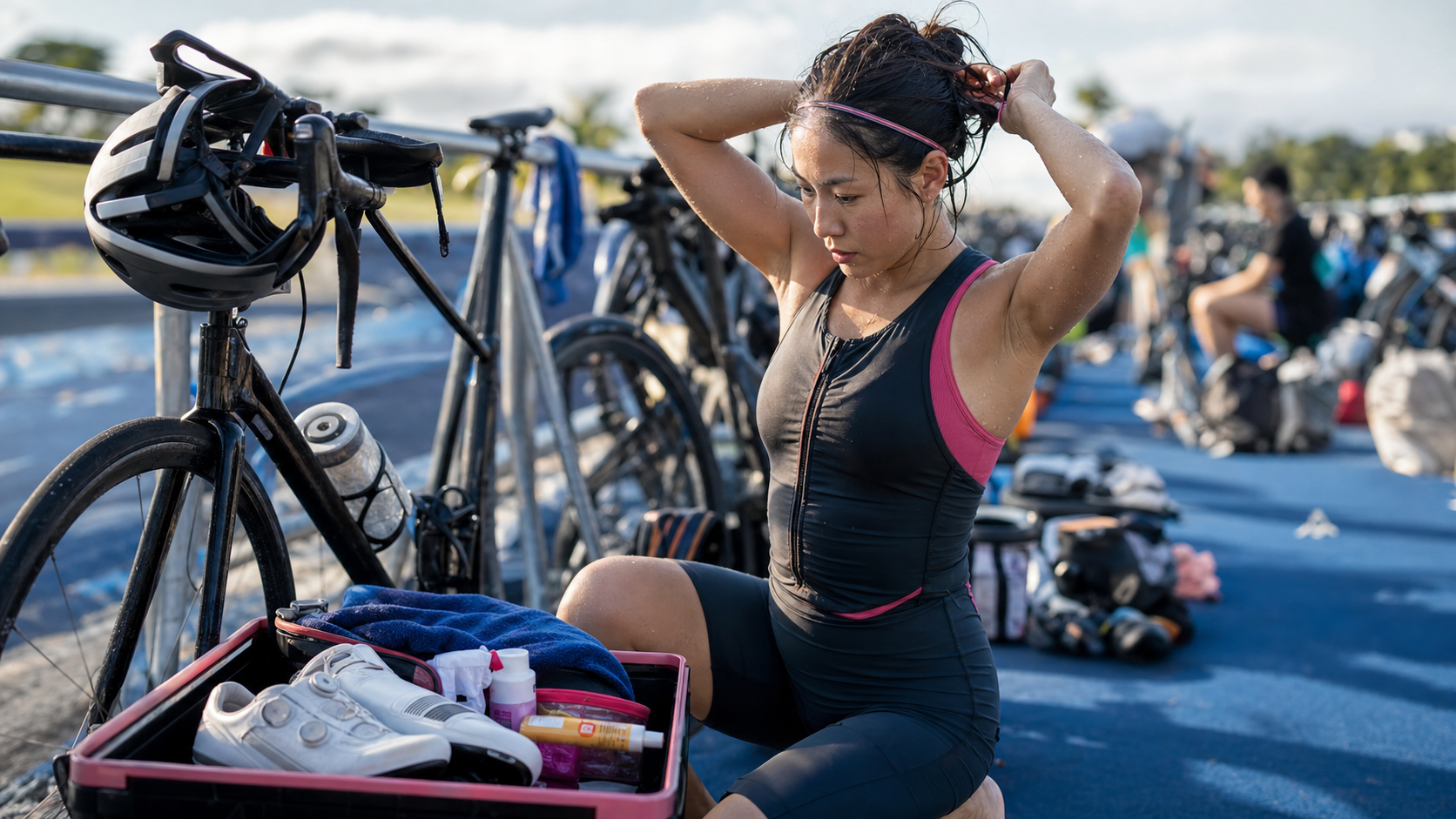
Triathlon Women’s Transition Details: Sports Bra, Menstrual Supplies, and Hairband in Practice
Triathlon transition zone rules are strict—apart from swimsuits and tri suits, full nudity for changing is not allowed. For female athletes, this means wearing the full kit from the swim start. This article compiles the detailed issues female triathletes often encounter in the transition zone and during training.
1. Why Is Transitioning More Complex for Female Athletes?
- Sports Bra Needs: Support is required from swimming to running
- Hair Management: Wet hair affects running; hairbands shift easily
- Menstruation: Race schedules cannot always avoid it
- Tri Suit Selection: Women’s cuts have additional considerations
- Privacy Concerns: The transition zone is public, making underwear adjustments difficult
2. Sports Bra Integration Options
Option A: Built-in Padding in Tri Suit
- Pros: One piece covers the entire race
- Cons: Support is usually insufficient; running may cause bouncing
- Best For: A–B cup sizes
Option B: Tri Suit + Sports Bra Worn Underneath
- Pros: Strong support, removable for washing, wide selection
- Cons: Absorbs water during swimming; damp and stuffy on the bike leg
- Best For: B–D cup sizes
Recommended combinations:
- Sports Bra: Nike Alpha, Lululemon Energy (medium-high support)
- Tri Suit: Choose one with a front zipper for easy adjustment
Option C: Swim-Specific Bra + Change into Sports Bra at T1
- Pros: Optimal support for each stage
- Cons: Longer T1 time and exposure issues
- Best For: Training periods; not recommended for racing
3. Sports Bra Selection Key Points
Support Level
| Cup Size | Recommended Support Level |
|---|---|
| A–B | Medium |
| C | Medium-High |
| D–DD | High |
| E+ | Maximum + Double Layer |
Material
- Quick-Dry Moisture-Wicking: Polyester + Lycra
- Chlorine-Resistant Durable: Essential for swim training
- Seamless Design: Prevents chafing (common chafing areas in triathlon)
Style
| Style | Pros | Cons |
|---|---|---|
| Pullover | Even support | Difficult to put on/take off (when wet) |
| Front-Clasp | Easy on/off | Clasp may irritate skin |
| Back-Clasp | Easy to adjust | May loosen during racing |
| Bikini Style | Breathable and cool | Low support |
4. Menstruation Coping Strategies
Race Cycle Management
If predictable, it is recommended to:
- Use oral contraceptives to delay: Consult a gynecologist
- Track your cycle: Use apps to predict, plan 6 months in advance
- Avoid conflicts: Choose race dates with a high probability of not being on your period
Managing a Race-Day Period
Hygiene Product Selection
| Product | Pros | Cons |
|---|---|---|
| Tampons | Usable for swimming, freedom of movement | Change every 6–8 hours |
| Menstrual Cup | Usable for 12 hours, eco-friendly | Requires practice to use |
| Sanitary Pads | High familiarity | Not for swimming, bulky |
| Panty Liners | Lightweight backup | Insufficient for heavy flow |
Recommended for triathlon: Menstrual cup + tampon backup
Menstrual Supplies in the Transition Zone
- T1 transition bag: 1 backup tampon (in a sealed bag)
- T2 transition bag: 1 backup + wet wipes
- Post-race bag: Full hygiene supplies + change of underwear
Cramp Management
- 2 hours before the race: Pain reliever (Ibuprofen 400mg)
- Do not take on an empty stomach
- A second dose can be taken during the race (depending on duration of effect)
- Avoid excessive caffeine (may worsen cramps)
Mental Preparation
- Performance may drop 5–10% in the 3–7 days before your period (luteal phase)
- Days 1–2 of your period may feel weak; recovery after day 3
- Do not completely skip a race due to your period (unless extremely uncomfortable)
5. Hair Management
Recommended Training Hairstyles
| Hair Length | Recommended Style | Accessories |
|---|---|---|
| Short (<15cm) | High ponytail | Non-slip hairband |
| Medium (15–30cm) | French braid | Headband + hair clips |
| Long (30cm+) | Bun | Hair net + pins |
Triathlon-Specific Hairstyle
Double braids + invisible hair pins:
- Split hair into two sections and braid
- Secure the ends with small elastic bands
- Coil the braids up and secure with 4–6 hair pins
- Put on swim cap (snug, gripping the braids)
- After removing the cap at T1, the braids stay flat against the head
Hairband Selection
- Non-slip material: Silicone inner side
- Sweat-wicking function: Terry cloth outer side
- Width: 3–5cm is ideal
- Color: Match with your running cap
Recommended brands: Sweaty Bands, Nike Twisted Headband
T1/T2 Hair Handling
- After T1: No need to fix hair after removing the swim cap; put on the helmet
- After T2: After removing the helmet, use your hand to sweep bangs aside before putting on the running cap (5 seconds)
- Run leg: Use fingers to comb hair to keep sweat out of your eyes
6. Sunscreen Reapplication
Women’s skin is more sensitive to sun exposure, and the prolonged sun exposure in triathlon makes sunscreen essential.
Sunscreen Product Selection
- Water-resistant sports sunscreen (SPF 50+ PA++++)
- Roll-on: Easy to reapply
- Spray: Quick coverage for large areas
- Powder: Non-greasy reapplication
Recommendations:
- Anessa Gold (waterproof and sweat-resistant)
- ALLIE Mineral Sunscreen
- Avene Children’s Sunscreen (suitable for sensitive skin)
Reapplication Timing
| Stage | Reapplication Area | Amount |
|---|---|---|
| 30 minutes before race | Whole body | Generous |
| T1 | Arms, back of neck | Roll-on or stick |
| T2 | Face | Spray |
| Mid-run | Back of neck (exposed to tanning) | Roll-on |
7. Other Details
Lip Balm
- Apply once before the race, at T1, and at T2
- Choose a sunscreen version (SPF 30+)
- Recommendations: Burt’s Bees, Carmex
Carry-On Supplies (Hidden in Tri Suit Pockets)
- Small packet of Vaseline: Apply to chafing areas
- One tampon (sealed)
- Simple medical adhesive bandage (Band-Aid)
- 2 salt tablets
Makeup?
- Heavy makeup is not recommended (washes off in the swim, runs with sweat)
- Waterproof mascara (if you care)
- Do not apply blush (it will streak with sweat)
8. Women’s Changing Tents
Large events (IM, 113) usually provide women’s changing tents:
- Remove shoes before entering the tent (floor may be wet)
- Brief upper-body exposure is allowed inside the tent (to change sports bras)
- Tents are usually 10–30 meters from the bike racks, which adds to T1 time
- In an emergency: Leave the wet swimsuit in the tent and retrieve it after the race
9. Insights from Elite Female Athletes
Based on actual interviews with amateur elite female athletes:
- Tri Suit Selection: 80% choose styles with built-in padding
- Pre-Race Training: Train in the tri suit at least 5 times or more
- Menstruation Management: 90% choose a menstrual cup + tampon backup
- Hair: 100% race with double braids or a bun
- Sun Protection: 100% carry reapplication supplies
10. Practical Checklists
One Week Before the Race
- [ ] Do at least 3 training sessions wearing your tri suit
- [ ] Confirm your menstrual cycle status
- [ ] Prepare menstrual supplies
- [ ] Choose a hairstyle and practice it
- [ ] Test sunscreen products in real conditions
The Day Before the Race
- [ ] Have your tri suit ready (don’t lose it)
- [ ] Pack hygiene products separately (T1, T2, post-race)
- [ ] Pack sunscreen separately
- [ ] Spare hair ties and hairpins
- [ ] Lip balm
Race Day
- [ ] Apply sunscreen 30 minutes in advance
- [ ] Braid your hair
- [ ] Tri suit + sports bra already on
- [ ] Hygiene products in place (if needed)
- [ ] Settle your mindset and stay calm
Women’s triathlon involves more details than men’s, but that’s part of the fun of the sport—every detail is a small victory.
Related Reading
- Women’s Triathlon Gear Details: Sports Bras, Trisuit Cuts, and Menstrual Products
- Sprint Female Athlete Training Adjustments: Menstrual Cycle and Gear
- Triathlon Transition Zone Fully Broken Down: T1, T2 Layout Design, Gear Placement, and Every Minute You Can Save
- Triathlon Gear Checklist: What You Need for Swimming, Cycling, and Running
[防寒衣體驗] 鐵人魂 三鐵 防寒衣試穿會 於松運 深水游泳池 鯨魚池
8 年前
下次拍照前要查清楚啦🤣 #cycling
7 個月前
多到選擇障礙... 換個單車把帶想一個小時 / BTP / 編織&軟木特有材質超吸睛! / 公路車 / CT Yeh
1 年前
福隆鐵人團練隨拍
8 年前
一日北高前的高裝檢 | 北高 360 | 挑戰11小時的裝備 | 一日雙塔 | 補給
6 年前
3D 列印車褲墊 / 舒適改善? / 無痕 x 分區壓縮 / ATK & Decider系列 / JE22黑科技 / #公路車 #CTYEH
11 個月前
公路車 爬坡 破PR 紀錄 小技巧 分享
6 年前
FTL 與 SYB 車隊專訪 西進武嶺 實用攻略分享! 2小時 如何練?!你不知道的眉角!新手準備武嶺必看 EP1 | 實力派女車友 | 精華版 | 公路車 | CTYeh
4 年前