Brick Training Recovery: Managing Delayed Onset Muscle Soreness (DOMS) from Dual Muscle Group Loading
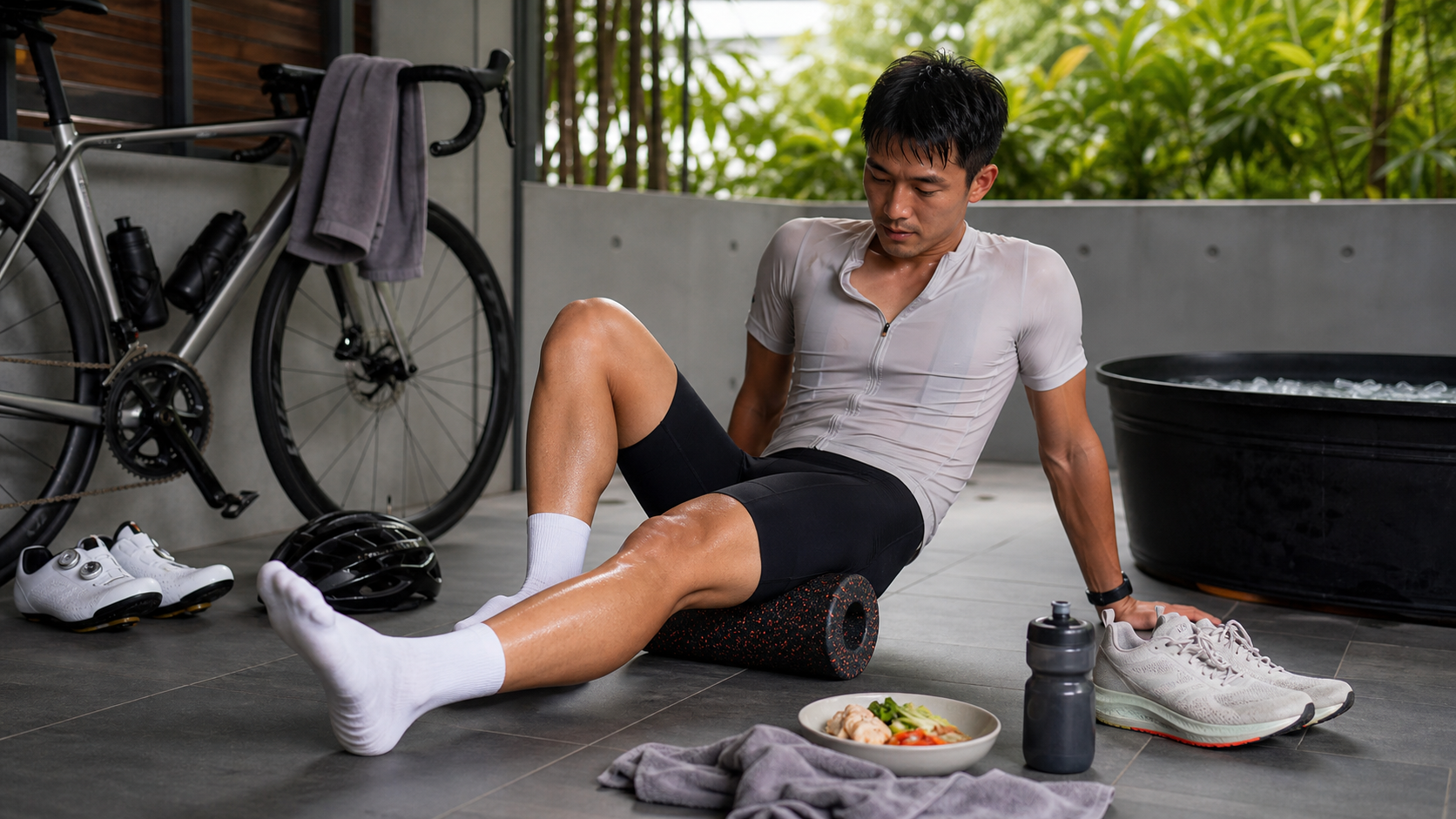
Brick Training Recovery: Managing Delayed Onset Muscle Soreness (DOMS) from Dual Muscle Group Loading
After a 4-hour brick workout, waking up the next day feeling like you’ve been run over by a truck—that’s DOMS (Delayed Onset Muscle Soreness). A brick session simultaneously engages both cycling and running muscle groups, making DOMS 2–3 times more severe than a single-sport workout. This article compiles a complete recovery strategy.
1. The Science Behind DOMS
Primary Causes
- Micro muscle fiber tears: Caused by eccentric contractions (especially pronounced during the run segment)
- Inflammatory response: Immune reaction during muscle repair
- Connective tissue damage: Micro-injuries to fascia and tendons
- Metabolic waste accumulation: Lactic acid is already metabolized, but other metabolites remain
Timeline
| Time | Symptoms |
|---|---|
| 0–6 hours post-workout | Mild tightness |
| 6–24 hours | Soreness begins |
| 24–48 hours | Peak soreness (DOMS peak) |
| 48–72 hours | Improvement begins |
| 72–96 hours | Mostly recovered |
| 96–120 hours | Full recovery |
2. The Unique Nature of Brick DOMS
Soreness Distribution
Based on actual data, soreness ratios 24–48 hours after a brick session:
| Area | Soreness Ratio | Cause |
|---|---|---|
| Quadriceps (VL, VMO) | 85% | Dual load from cycling + running |
| Gastrocnemius | 70% | Running impact |
| Soleus | 65% | Running posture |
| Iliopsoas | 60% | Hip flexion movement |
| Gluteus maximus | 55% | Cycling push-down |
| Gluteus medius | 50% | Running stability |
| Lower back muscles | 45% | Fixed cycling position |
| Posterior deltoids | 30% | Residual from swimming (if swimming included) |
Systemic Fatigue
Compared to cycling or running alone:
- Energy expenditure: A 5-hour brick burns approximately 3,500–4,500 kcal
- Total fatigue score: 1.5–2 times that of a single-sport session
- Immune system stress: Immunity drops 30% for 24 hours post-workout
3. The Golden 30-Minute Recovery Window Post-Workout
Immediate Refueling (0–30 minutes)
| Item | Amount | Purpose |
|---|---|---|
| Carbohydrates | 1.2g/kg body weight | Replenish glycogen |
| Protein | 0.4g/kg body weight | Muscle repair |
| Fluids | 150% of fluid lost | Rehydration |
| Sodium | 800–1,500mg | Replenish electrolytes |
Using a 70kg athlete as an example:
- 84g carbs (about 1.5 bananas + 1 bowl of rice)
- 28g protein (4 eggs or 2 cups of soy milk)
- 1,500ml electrolyte drink
Recommended Combinations
Option A: 500ml chocolate milk + 2 bananas + 1 salt tablet
Option B: Recovery drink (Endurox R4, SiS Rego) + banana
Option C: 1 bowl of rice + 3 eggs + banana + salted rice ball
4. Cold Therapy and Heat Therapy
Ice Bath / Cold Plunge
- Temperature: 10–15°C
- Duration: 10–15 minutes
- Timing: Within 1–2 hours post-workout
- Effect: Reduces inflammation, alleviates DOMS by approximately 20–30%
Note: Ice baths reduce muscle adaptation signals and are not suitable for long-term use during race preparation—reserve them for post-race or key recovery periods.
Contrast Bath
- Hot water 38–42°C for 3 minutes + cold water 10–15°C for 1 minute
- Repeat 3–5 rounds
- End with cold water
- Improves blood circulation, accelerates metabolite clearance
Heat Packs and Massage
- Timing: 24 hours after training or later
- Methods: Hot towel, heat pack, hot water bottle
- Effect: Relaxes tightness, improves blood flow
5. Active Recovery
Within 24 Hours Post-Brick
Wrong approach: Staying completely sedentary → blood circulation stagnates, soreness lasts longer
Right approach: Light activity
| Activity | Duration | Intensity |
|---|---|---|
| Walking | 20–30 minutes | Easy |
| Easy indoor trainer ride | 20–30 minutes | Z1 (< 60% max HR) |
| Swimming (easy backstroke, freestyle) | 20 minutes | 50% intensity |
| Yoga / stretching | 30 minutes | Dynamic stretching |
24–48 Hours Post-Brick
- Light swimming for 30 minutes
- 45 minutes on the bike trainer at Z1–Z2
- No running (avoid re-stimulating running muscle groups)
48–72 Hours Post-Brick
- Decide based on DOMS severity
- If soreness < 30%, technical drills are acceptable
- If soreness > 50%, continue active recovery
6. Foam Rolling and Massage Guns
Foam Rolling
Recommended rolling sequence (60–90 seconds per area):
- Triceps surae (calf complex)
- Biceps femoris (hamstrings)
- Quadriceps
- Iliotibial band
- Gluteus maximus
- Gluteus medius
- Upper back
Massage Gun
- Recommended areas: Large muscle groups
- Avoid: Spine, directly over joints, bruised areas
- Duration: 2–3 minutes per area
- Frequency: Post-workout + the following day
Professional Massage
- Sports massage (deep tissue): 24–48 hours post-workout
- Avoid forceful “percussive-style” massage
- Recommended once every 2 weeks
7. The Role of Sleep
Why Sleep Matters for DOMS
- Growth hormone secretion: Released during deep sleep, repairs muscle
- Inflammation control: Sleep deprivation → increased inflammatory markers
- Memory and adaptation: Neurological adaptations are reinforced during sleep
Sleep Recommendations Post-Brick
| Training Volume | Recommended Sleep Duration |
|---|---|
| Short brick (< 1 hour) | 7–8 hours |
| Medium brick (1–3 hours) | 8–9 hours |
| Long brick (> 3 hours) | 9–10 hours |
Improving Sleep Quality
- No alcohol the night after training
- No coffee within 2 hours post-workout
- Stay away from screens 1 hour before bed
- Keep room temperature at 20–22°C
- Go to bed 30–60 minutes earlier on the night after training
8. Nutritional Supplements (Recovery Period 24–72 Hours)
Anti-Inflammatory Foods
- Salmon, mackerel (Omega-3)
- Turmeric + black pepper
- Blueberries, cherries (anthocyanins)
- Green tea (catechins)
- Dark chocolate (flavonoids)
High-Protein Foods
- Chicken breast, lean beef
- Eggs, Greek yogurt
- Tofu, edamame
- Whey protein (1.6–2.0g/kg body weight per day)
Supplement Recommendations (Use with Caution)
| Supplement | Dosage | Effect |
|---|---|---|
| Omega-3 | 2~3g/day | Anti-inflammatory |
| Vitamin D3 | 2000 IU/day | Repair, immunity |
| Magnesium | 300~400mg/day | Muscle relaxation |
| Glutamine | 10g/day | Immune support |
| Vitamin C | 500~1000mg/day | Antioxidant |
Note: Supplements are not a cure-all; prioritize whole foods.
IX. Practices to Avoid for Counterproductive Results
Mistake 1: High-Dose Painkillers
NSAIDs such as Ibuprofen can relieve pain, but they suppress muscle adaptation signals. They can be used short-term after racing, but should be avoided during training.
Mistake 2: Immediate Ice Bath After Training + Long-Term Use
Ice baths reduce inflammation but also reduce adaptation; their use should be minimized during the race preparation period.
Mistake 3: Over-Stretching Muscles with DOMS
During DOMS, muscles are in a state of micro-damage, and deep static stretching may worsen the damage. Switch to dynamic stretching or yoga flow instead.
Mistake 4: Drinking Alcohol After Training
Alcohol causes dehydration, suppresses testosterone, and disrupts sleep—all recovery elements are affected.
Mistake 5: Training Again Before DOMS Subsides
Forcing training only accumulates fatigue, leading to overtraining syndrome. When soreness is > 50%, switch to active recovery.
X. Practical Recovery Timeline
Using a Saturday long Brick (4+1) as an example:
| Time | Action |
|---|---|
| 0~30 min after training | Chocolate milk + banana + salt tablets |
| 30~60 min | Shower (alternating hot and cold) |
| 60~120 min | Full meal |
| 120~180 min | Foam rolling for 30 minutes |
| That evening | Sleep early (1 hour earlier) |
| Sunday morning | 30-minute walk |
| Sunday afternoon | Easy 45-minute trainer ride + foam rolling |
| Sunday evening | Massage gun + sleep early |
| Monday | Complete rest or 30-minute swim |
| Tuesday | Short Brick or running intervals |
Brick training is an “investment,” and recovery strategy is “compound interest”—get recovery right, and every Brick session makes you stronger.
Related Reading
- The Timeline of Muscle Soreness After Cycling: Repair Physiology of DOMS from Hour 24 to Hour 96
- Recovery Strategies After Strength Training: How Endurance Athletes Can Keep Lifting from Draining Sport-Specific Workouts
- Managing Muscle Soreness After Running: Causes of DOMS and Methods to Speed Up Recovery
- New Prevention Strategies for Delayed Onset Muscle Soreness (DOMS) After Training: A Synthesis of Research Recommendations
一日北高常見問題大集合 | 攻略 | 路線 | 訓練 | 補給 | 自行車 單車 | 一日雙城 | 雙塔 | TWB北高360 | 屁股痛
6 年前
西進武嶺 免費訓練分析服務 Intervals | 練不夠還是練過頭?你哪一種類型選手?AI模型告訴你! | 備戰神器 | 公路車 訓練 | CT Yeh
4 年前
一日北高/長距離團騎 常見問題補充篇 / 組團或跟團的眉角 / 壯車友容易被瘦車友慢性拉爆 / 原來屁股痛可能是這個原因...? / 風場配速法 / 公路車 / CT Yeh
2 年前
2019 夏季KOM 5小 完賽心得 準備攻略 東進武嶺 夏季登山王之路 Taiwan KOM Challenge
7 年前
單車 一日北高 ( 雙城 ) 肥宅雙人瘋狂行 紀錄片 REACTO
10 年前
摔車後補裝備: 好市多新款單車安全帽& Specialized Romin 北高整路屁股都不痛的坐墊 | 一千元居然有MIPS | CT Yeh | 公路車
4 年前
一日北高 11小時 賽後心得分享篇 | TWB北高360 | 一日雙城 | 單車 | 公路車
6 年前
2019 柯P 超越北高 第一集團實錄 (11小時實錄請參考另一部影片) 一日雙城 一日北高 NeverStop Taiwan Long Distance Cycling Challenge
7 年前