What is Otitis Externa
Otitis Externa, commonly known as “Swimmer’s Ear,” is an inflammation of the skin of the ear canal. Its prevalence reaches 10-20% during the summer swim season, making it the most common infectious injury among swimmers.
Pathogenesis
The ear canal is normally a protected environment:
- Earwax: weakly acidic, containing antibacterial lipids
- Dryness: low humidity discourages bacterial growth
- Skin barrier: intact stratum corneum
Swimming disrupts these three lines of defense:
- Prolonged water exposure dilutes earwax
- Humidity in the ear canal rises
- Repeated ear picking creates micro-wounds in the skin
Bacteria (most commonly Pseudomonas aeruginosa and Staphylococcus aureus) or fungi (Aspergillus) take advantage of the opportunity.
Symptom Stages
| Stage | Symptoms |
|---|---|
| Early | Ear itching, mild feeling of fullness |
| Acute | Ear pain (worse when swallowing or pulling the ear), discharge |
| Severe | Hearing loss, ear redness and swelling, fever |
Characteristic sign: Pulling the auricle or pressing on the tragus noticeably worsens the pain (unlike otitis media).
High-Risk Groups
The following swimmers are at the highest risk:
- Swimming more than 3 times per week
- Open-water swimmers (poorer water quality)
- Those who wear earplugs but do not clean them thoroughly
- Those with a habit of picking their ears
- People with atopic dermatitis or diabetes
- Those with a history of otitis externa
6 Prevention Strategies
1. Drain Water Immediately After Swimming
Right after getting out of the water:
- Tilt your head to one side, hop on one foot 5 times to let the water drain out
- Repeat on the other side
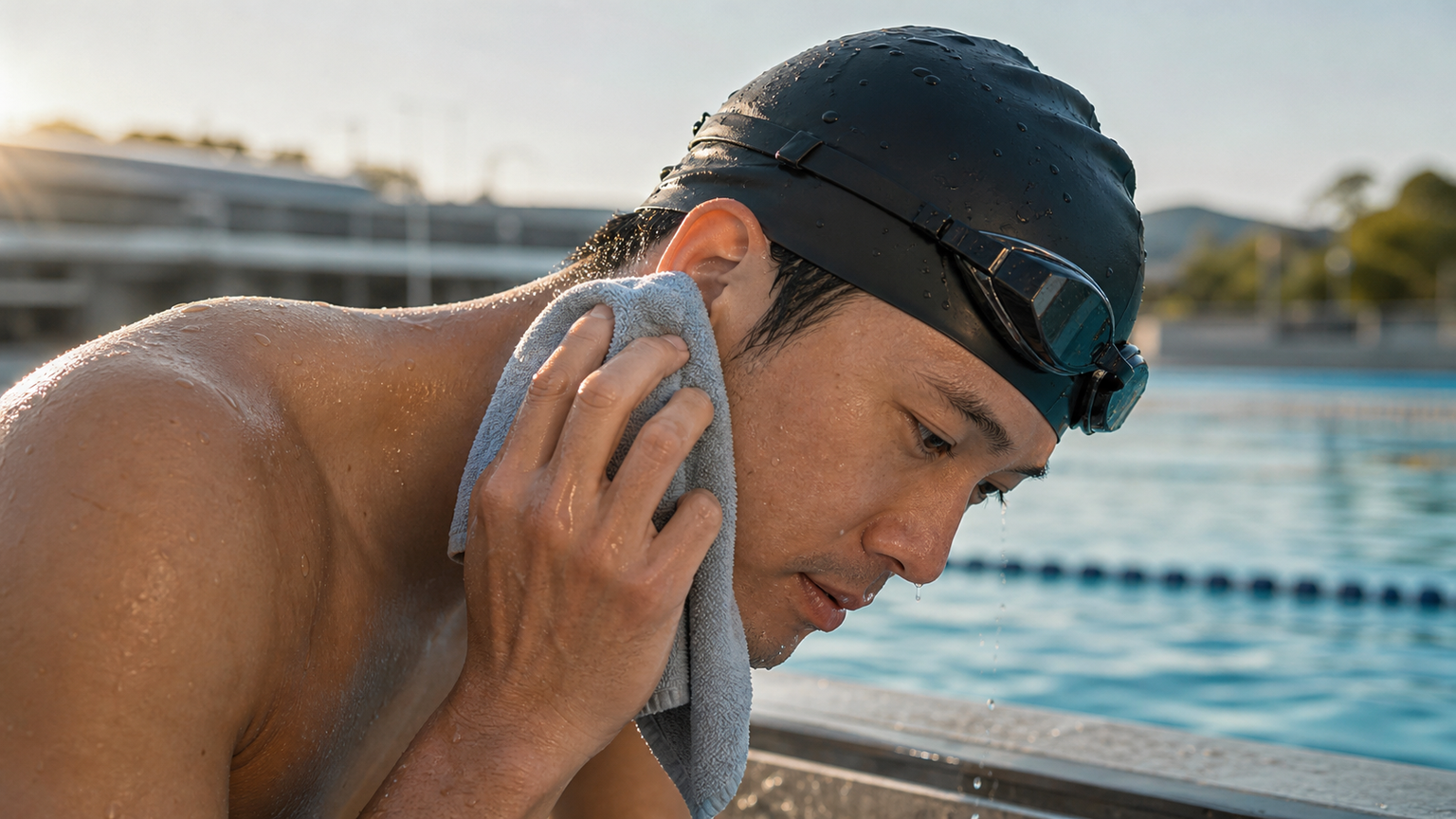
- Gently pat the outer ear opening dry with a towel (do not insert it deep)
- Use a hairdryer on the cool setting at a distance of 30 cm for 30 seconds
2. Preventive Ear Drops (Acetic Acid 2%)
High-risk swimmers can, after swimming:
- Instill 2-3 drops of 2% acetic acid in isopropyl alcohol
- Keep the head tilted for 30 seconds
- The acetic acid restores the acidity of the ear canal, while the isopropyl alcohol speeds up drying
Note: Contraindicated for those with a perforated eardrum.
3. Wear Swimming Earplugs
Suitable for:
- Those with recurrent otitis externa
- Open-water training
- Those with existing dry skin dermatitis of the ear canal
Selection principles:
- Moldable silicone earplugs are better than rigid ones
- Custom-molded earplugs offer the best waterproofing
- For children, choose styles with better buoyancy
- Wash and air-dry after every use
4. Avoid Picking Your Ears
- Do not use cotton swabs (they push earwax deeper)
- Do not use hard objects such as bobby pins or toothpicks
- Earwax is self-cleaning; cleaning the ear canal opening once a month with an alcohol swab is sufficient
5. Open-Water Swimmers: Watch Water Quality
Common open-water risks in Taiwan:
- Water quality deteriorates within one week after rain
- Bacterial counts are high near river mouths and estuaries
- Water quality worsens in summer heat
Recommendations:
- Do not swim in open water within 5 days after heavy rain
- Always shower and clean the ear canal opening after getting out of the water
6. Extra Protection for Those with Allergies
For those with atopic dermatitis or allergic tendencies:
- Apply a thin layer of petroleum jelly around the ear canal opening to form a waterproof barrier
- Use drying ear drops once a week as prevention
- Avoid swim caps that are too tight and rub against the ear canal
Treatment Steps
Early Itching Stage
- Stop swimming immediately for 3-5 days
- Use acetic acid in isopropyl alcohol ear drops 2-3 times daily
- Observe for 48 hours; see a doctor if there is no improvement
Acute Stage (Ear Pain, Discharge)
- Seek medical attention immediately
- Doctors usually prescribe antibiotic ear drops
- Oral antibiotics may be added in severe cases
- Stop swimming for 7-14 days until fully recovered
Chronic Recurrent Episodes
- Get a thorough evaluation from an ENT specialist
- Ear canal discharge culture may be needed
- Confirm whether there is a fungal infection
- Consider custom-molded earplugs for long-term use
Medication Precautions
- Tap the bottom of the ear drop bottle gently to warm the solution to body temperature before use
- Remain lying on your side for 5 minutes after instilling
- Do not wear earplugs while using ear drops
- The full course of treatment is usually 7-10 days; do not stop medication just because symptoms have resolved
When Can You Return to the Water
Only swim again once the following criteria are met:
- Ear pain has completely resolved
- No discharge
- Hearing has returned to normal
- Doctor has confirmed recovery
- The full course of antibiotics has been completed
Recommendations for the early return period:
- Wear earplugs for 4-6 weeks
- Shorten individual training sessions (to within 30 minutes)
- Increase ear canal drying after swimming
Common Myths
Myth 1: Water in the ear will drain out on its own, so no special treatment is needed
Wrong. The ear canal is curved, and water tends to pool deep inside; active draining is necessary to prevent infection.
Myth 2: Earplugs increase the risk of infection
Partially true. Unclean earplugs are a breeding ground for bacteria. Proper use + thorough cleaning of earplugs can effectively prevent infection.
Myth 3: Use a cotton swab to dry out the water
Completely wrong. Cotton swabs push water deeper and scratch the skin; they are the number one thing to avoid with otitis externa.
Special Considerations for Children
Children have narrower ear canals, making them more prone to water retention. Recommendations:
- Parents should help drain water after every swim
- Use child-specific earplugs
- Check immediately if a child is tugging at their ears or seems irritable
- Preschool children should have an ENT check-up every season
Preventing otitis externa is not just about ear care—it is key to keeping your swim training uninterrupted.
Related Reading
- Ear Canal Infection After Swimming: Prevention of Otitis Externa and Post-Swim Ear Care
- Swimmer’s Ear Problems: Prevention of Otitis Externa and Choosing Protective Earplugs
- Swimmer’s Ear (Otitis Externa): Prevention and Proper Management
- ENT Problems in Swimming: Prevention and Management of Otitis Externa and Sinusitis
單車 重低音 藍芽喇叭 音質實測 SoundBot SB525 Real Sound Test
8 年前
3C開箱) SoundBot 老車升級智慧音響 SB360 藍芽 免持 接收器 Aux in 手機 汽車音響 美國聲霸
7 年前
DJI OSMO Pocket 外接麥克風 測試 External Microphone Audio Adapter 原廠 聲音轉接頭 開箱 3.5mm
7 年前
洗單車神器 吹水機! 實際洗車用用看 暴力洗鍊條大法 | 公路車 | CT Yeh
4 年前
#公路車 #Vo2Max #最大攝氧量 測驗 體驗 | 心肺測試
6 年前