Handling Nausea in Ultramarathons: On-the-Spot Responses and Nutrition Adjustments for Gastrointestinal Distress
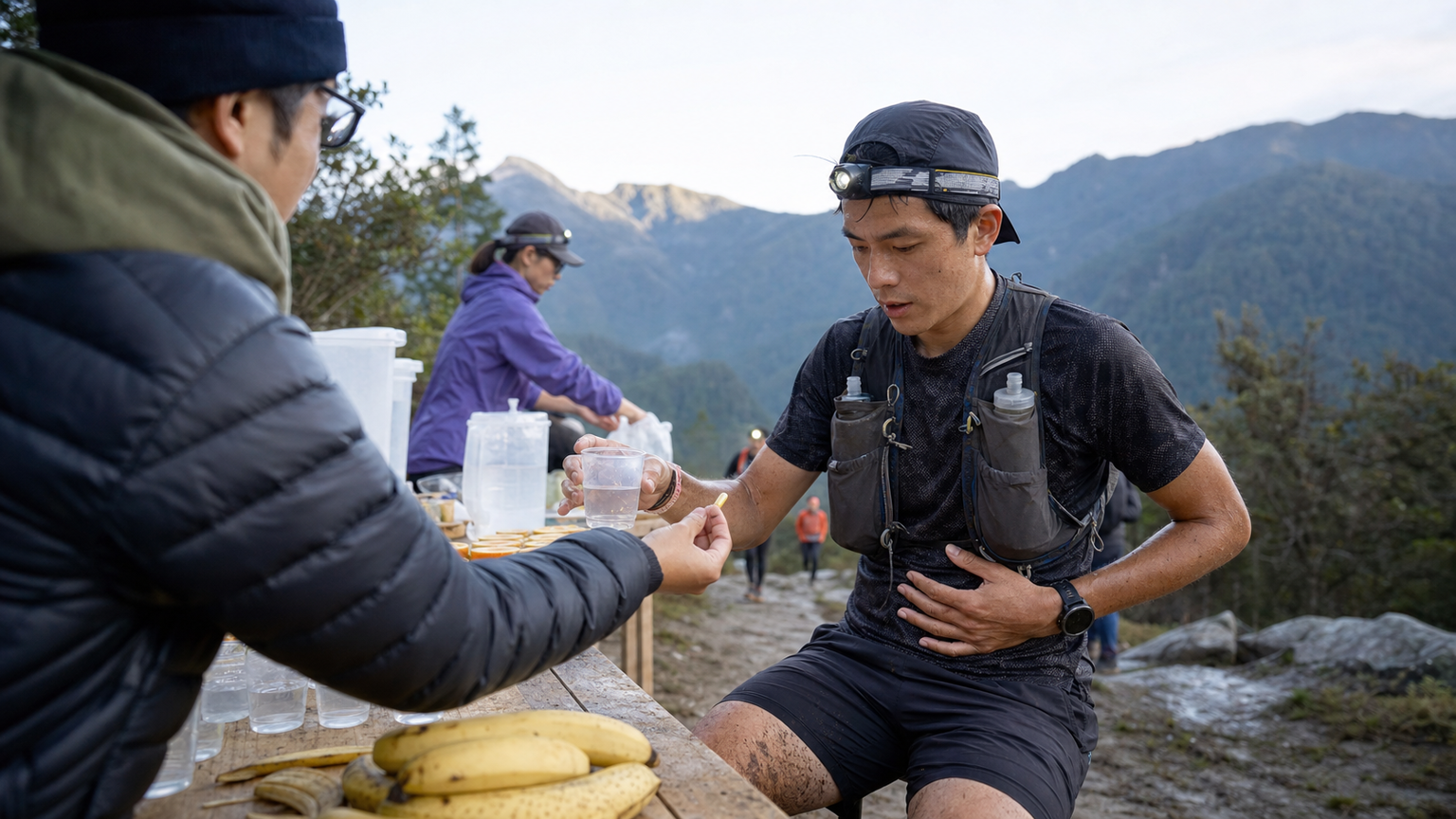
The Nasty Side of Ultramarathons: On-the-Spot Management of GI Discomfort and Nutrition Adjustments
Introduction
Every ultramarathon runner has a “nausea story.” That sudden wave of queasiness hitting you at a mountain summit, feeling sick at the sight of food at an aid station, or the miserable experience of vomiting while running—these are almost part of ultramarathon culture. But nausea doesn’t equal defeat; it’s a signal from your body telling you something is wrong. Quickly identifying the cause and adjusting your strategy is often the dividing line between finishing and a DNF.
1. Five Major Causes of Nausea in Ultramarathons
1. Over-fueling (Most Common)
Consuming too many carbohydrates (especially hypertonic fluids) or eating too quickly exceeds the gut’s absorption capacity, causing digestive stagnation.
2. Under-fueling (Low Blood Sugar)
Ironically, low blood sugar can also trigger nausea. Prolonged periods without food cause blood sugar to drop, triggering a stress response in the body, resulting in dizziness accompanied by nausea.
3. Electrolyte Imbalance (Especially Hyponatremia)
Over-hydrating without replenishing sodium causes blood sodium levels to drop; nausea is one of the early symptoms of hyponatremia. In this case, drinking more water only makes things worse.
4. Intensity Too High
When exercise intensity exceeds your individual lactate threshold, intestinal blood flow drops sharply and digestive function nearly shuts down. Any fuel intake can trigger nausea.
5. Psychological and Stress Factors
Anxiety, fear, or visual triggers (seeing other runners vomit) can all cause psychogenic nausea, especially noticeable at high altitudes or during nighttime sections.
2. On-the-Spot Identification and Rapid Decision-Making Flow
| Symptoms | Likely Cause | Immediate Action |
|---|---|---|
| Nausea + bloating + burping | Over-fueling, hypertonic fluids | Stop eating, drink plain water, slow down for 15 minutes |
| Nausea + dizziness + weakness | Low blood sugar | Immediately consume 25g of fast carbs (cola, sugar water, energy gel) |
| Nausea + headache + confusion | Hyponatremia | Stop drinking water, immediately take salt/electrolyte tablets, notify medical aid |
| Nausea + rapid heart rate + breathlessness | Intensity too high | Significantly slow down, walk, bring heart rate back to aerobic zone |
| Nausea with no other obvious symptoms | Psychogenic | Deep breathing, distract yourself, small amounts of ginger tea or ginger slices |
3. Nutrition Adjustment Strategies After Nausea Occurs
Step 1: Stop All Solid Food Intake (15–30 Minutes)
Give your GI tract room to rest. During this period, only replenish with plain water (in small amounts).
Step 2: Transition to Liquid Fueling
Resume intake starting with the least irritating liquid options:
- Plain water → Diluted sports drink (1:1 with water) → Regular sports drink
- Once you confirm liquids are tolerable, then try solid foods
Step 3: Solid Food Reintroduction Order
- First priority: Saltine crackers (low osmotic pressure, replenishes sodium)
- Second priority: Banana (natural sugars, easy to digest)
- Last to try: More complex solids like rice, energy bars, etc.
Special Treatment: The Cola Therapy
Almost every aid station at Taiwanese ultramarathons offers cola, and that’s no coincidence—the phosphoric acid and carbonation in cola can provide rapid relief for some runners’ nausea, while also delivering quick sugar and a small amount of caffeine. But note:
- Take small sips; don’t chug it quickly
- Carbonation may worsen bloating
- Best for early-stage nausea; limited effectiveness once vomiting has already begun
4. Prevention Over Treatment: Gut Conditioning in Training
- Practice eating at near-race intensity during every long training run, not just during easy runs
- Test all nutrition products you plan to use in the race (at similar race intensity)
- Avoid changing dietary habits before race day (don’t try new foods in the week leading up to the race)
- Establish a “pre-race checklist”: ensure your bowels are emptied before the race
5. Practical Tips and Items to Carry
Recommended items to carry in your gear bag:
- Ginger candy or ginger slices (natural anti-emetic, good for psychogenic nausea)
- Electrolyte tablets (emergency replenishment for hyponatremia)
- Digestive enzyme tablets (preventive intake if your stomach was off the night before)
Conclusion
Nausea is a frequent companion in ultramarathons, but it doesn’t have to be the end. The next time you feel that queasy wave on the course, stop and think for 30 seconds: Is this too much? Too little? An electrolyte issue? Or intensity too high? Find the cause, take corresponding action, and there’s a good chance you can keep moving forward—even running a stronger second half after making adjustments.
Related Reading
- Ultramarathon GI Issues: Causes and Prevention of Nausea, Vomiting, and Diarrhea
- GI Problems in Ultramarathons: Managing GI Discomfort During Prolonged Exercise
- Gut Training for Ultramarathons: Keeping Your GI Tract Able to Digest Solid Food at High Intensity
- Feeling Nauseous During Exercise? A Coach Explains the Causes and Nutrition Strategies
CT暗黑廚房) 車友必備 宇宙無敵鮮蚵湯 幫助訓練恢復 天然食補 好市多 超肥鮮蚵 破PR
7 年前
一日北高/長距離團騎 常見問題補充篇 / 組團或跟團的眉角 / 壯車友容易被瘦車友慢性拉爆 / 原來屁股痛可能是這個原因...? / 風場配速法 / 公路車 / CT Yeh
2 年前
約騎爆笑地獄梗 大腸怎麼了🤣 #公路車 #cycling
3 年前
FTL 與 SYB 車隊專訪 西進武嶺 實用攻略分享! 2小時 如何練?!你不知道的眉角!新手準備武嶺必看 EP1 | 實力派女車友 | 精華版 | 公路車 | CTYeh
4 年前
Never Stop 西進武嶺 前後雙機 完整全程錄影 訓練台 實境
8 年前
一日北高常見問題大集合 | 攻略 | 路線 | 訓練 | 補給 | 自行車 單車 | 一日雙城 | 雙塔 | TWB北高360 | 屁股痛
6 年前
一日北高前的高裝檢 | 北高 360 | 挑戰11小時的裝備 | 一日雙塔 | 補給
6 年前
CT 喇低賽) 武嶺牽車 才是王道 西進牽車四小時內秘訣 攝手位置 如何判斷 防抽筋小秘訣
7 年前