Introduction
Swimming is widely recognized as the most suitable aerobic exercise for seniors, but the dimension of “water safety” is often overshadowed by the halo of health benefits. What makes the aquatic environment unique is that in an emergency, the rescue window is far shorter than in land-based exercise, and seniors have relatively limited capacity for self-rescue. Establishing sound water safety habits is an essential foundation for seniors to enjoy swimming over the long term.
Major Risk Categories for Senior Swimmers
| Risk Type | Cause | Prevention Strategy |
|---|---|---|
| Cardiac event (sudden death) | Coronary artery disease, arrhythmia, cold water stimulation | Pre-entry screening, gradual water entry |
| Cramps in the water | Sudden spasms in calf/sole muscles | Thorough warm-up, electrolyte replenishment |
| Hypoglycemia | Swimming on an empty stomach or overly long sessions | Light meal before training |
| Disorientation/panic | Open water, poor visibility | Swim only in pools or safe open water |
| Dizziness/syncope | Orthostatic hypotension, hyperventilation | Exit water slowly, avoid standing up abruptly |
Risk Differences Between Pools and Open Water
Swimming Pools (Relatively Safe)
- Water depth is fixed and known, with predictable footing
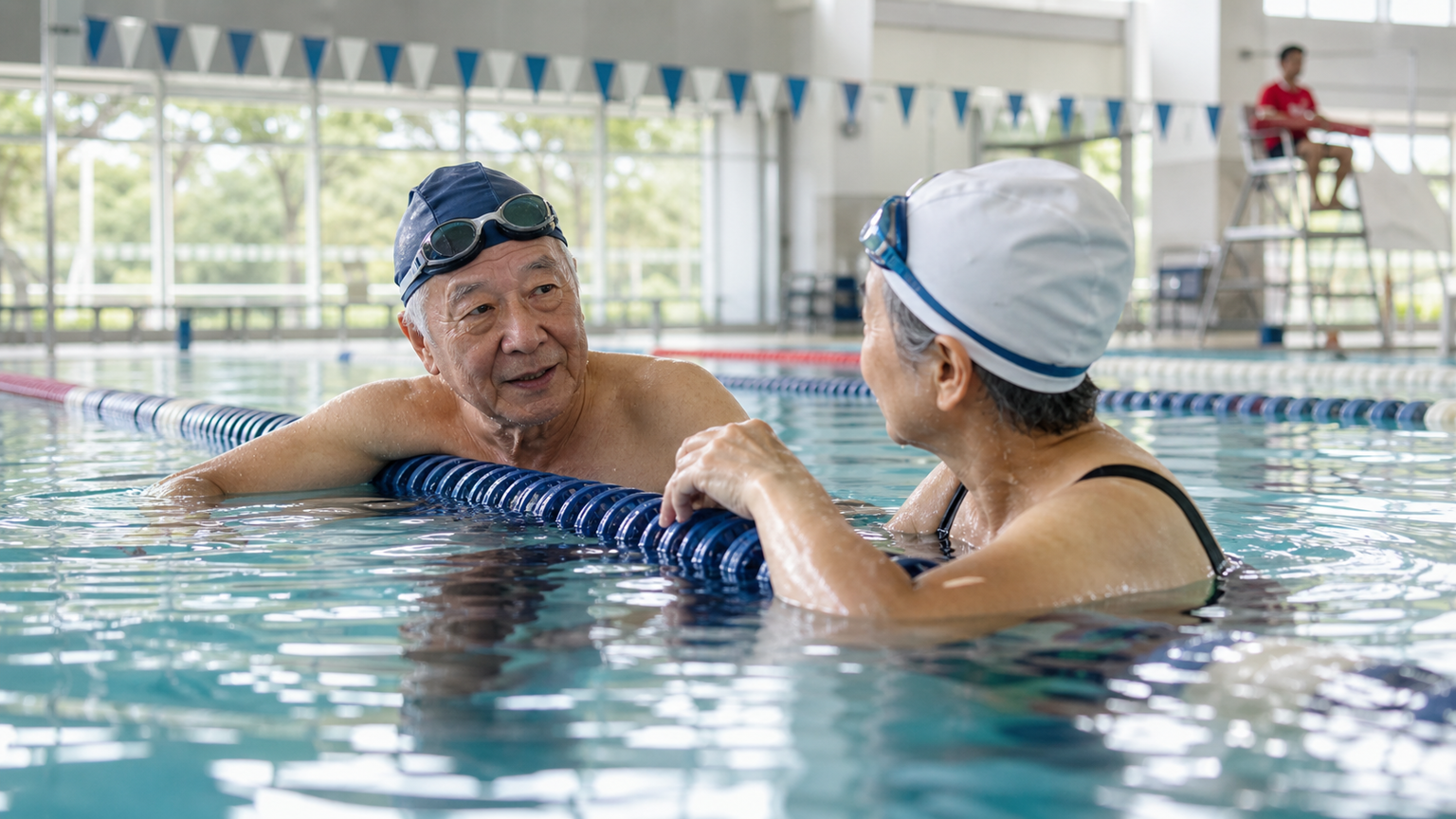
- Lifeguards are usually on duty
- Water quality is controlled, with no currents or wave disturbance
- Other swimmers are present, so help can be summoned quickly in an emergency
Recommendations for seniors in pools: Choose public pools or fitness center pools with lifeguards on duty, and avoid swimming alone in unguarded pools (such as hotel private pools).
Open Water (Higher Risk)
- Water depth is unpredictable, and the bottom may contain debris or slippery rocks
- Water temperature may be far lower than in a pool (cold water can trigger the cardiac vagal reflex)
- Rescue personnel cannot be guaranteed to be available at all times
- Currents and waves may exceed what a senior’s physical capacity can handle
Recommendations for seniors in open water: Those aged 60 and above should strictly avoid swimming alone in open water. If they wish to experience sea or lake swimming, they should ensure a well-trained buddy accompanies them, with good visibility and calm water conditions.
Establishing the Buddy System
The Buddy System is the core mechanism of water safety, requiring:
- Mutual check-in: Confirm each other’s health status before entering the water, asking “How are you feeling today? Any discomfort?”
- Line of sight: Both swimmers stay within a visible range of 10 meters of each other
- Regular contact: For long-distance swimming, check in with each other every 5 to 10 minutes
- Pre-arranged signals: Agree in advance on an in-water signal for “I need help” (such as raising and waving a hand)
- Synchronized exit: Do not leave your buddy alone in the water; exit together
For senior swimmers without a regular buddy, options include:
- Joining a swimming club or morning swim community to naturally form a buddy network
- Swimming during lifeguard duty hours and informing the lifeguard of your planned duration before entering the water
- Using a waterproof emergency alarm device (available from some sports brands)
Safe Procedures for Entering Cold Water
Cold water (below 26°C) poses particular risks for seniors because:
- Cold water stimulation can trigger the vagal reflex (a sudden drop in heart rate)
- The sharp blood pressure changes caused by temperature differences may trigger cardiac events
Recommended safe entry steps:
- First, test the water temperature with your hands and forearms to assess whether it is comfortable
- Enter gradually from the feet up to the legs, allowing the body to adapt to the water temperature (at least 2 to 3 minutes)
- Avoid “jumping in”; enter slowly via a ladder or a gentle slope
- When the water temperature is below 25°C, wearing a wetsuit is recommended
Managing Cramps in the Water
Calf cramps are among the most common emergencies in swimming:
- Immediate action: Roll onto your back and float, letting your body rise to the surface and reducing kicking movements
- Stretching: While floating on your back, reach for your toes and pull them toward your body, holding for 20 to 30 seconds
- If you cannot manage it yourself: Raise your hand and call for help; do not force yourself to swim toward the shore (this may worsen the cramp)
Essential Preparation Before Swimming
- Adequate warm-up: Do 5 to 8 minutes of dynamic land-based warm-up before entering the water (ankle rotations, shoulder circles, side stretches)
- Avoid swimming on an empty stomach: Eat a light meal 1 to 2 hours before swimming (avoid being overly full, which can trigger stomach cramps)
- Electrolyte preparation: Replenish electrolytes promptly after long swims to reduce the risk of cramps
- Medication check: Confirm that you have taken your daily medication on time (such as blood pressure medication) to avoid blood pressure fluctuations from a missed dose
Practical Tips
- When visiting a new pool or swim venue for the first time, locate the lifeguard station, the AED, and the emergency phone number
- Inform family members of your swimming plan for the day and your expected return time
- If you feel fatigued, dizzy, or unwell on any given day, choose not to swim or shorten the session rather than pushing through
- Take swimming technique classes regularly; many community pools offer dedicated programs for seniors
Conclusion
Safety is the prerequisite for enjoying swimming, not an obstacle to it. Measures that seem basic—the buddy system, gradual water entry, thorough warm-ups—are precisely the defenses that protect senior swimmers from aquatic accidents. Build these habits, and let the water become a place of health for you, not a place of risk.
Related Reading
- Safety Considerations for Senior Swimmers: Precautions for Those with Heart Disease and Hypertension
- Senior Swim Training: A Safe Beginner’s Plan and Precautions for Those Over 65
- Swimming for Seniors: An Aerobic Exercise Guide for Those 75 and Older
- Senior Swimming Safety Rules: A Complete Training Plan Design for Beginners Over 65
一日北高/長距離團騎 常見問題補充篇 / 組團或跟團的眉角 / 壯車友容易被瘦車友慢性拉爆 / 原來屁股痛可能是這個原因...? / 風場配速法 / 公路車 / CT Yeh
2 年前
[教學] Premiere 影片 手震 修正 教學 防抖 單眼 影像 GoPro 穩定 Video Stabilization
8 年前
抖肩舞 台灣x日本交流版 (台灣 vs 前橋) 赤城山登山賽 coincidance
8 年前
一日北高常見問題大集合 | 攻略 | 路線 | 訓練 | 補給 | 自行車 單車 | 一日雙城 | 雙塔 | TWB北高360 | 屁股痛
6 年前
[防寒衣體驗] 鐵人魂 三鐵 防寒衣試穿會 於松運 深水游泳池 鯨魚池
8 年前
live) 超越北高 之一日北高12小時 策略
7 年前
2025 海鷗團體繞圈賽 網路直播 超激烈裁判長視角 / EIPC 李廷威、Waypoint 等眾多高手競爭 / feat. 卡密兒主持 / 海鷗繞圈賽
9 個月前
滑雪新手們慘摔學習全紀錄(請開字幕),滑雪好好玩 | Snowboard + Ski | 岩原 スキー場 | 滑雪APP使用 | GoPro Max
6 年前