Introduction
Carbohydrate loading (often shortened to carbo-loading) is one of the most important nutritional strategies for marathon runners before a major race. Research shows that fully executing a 3-day loading plan can increase muscle glycogen stores by 20–40%, delaying or even eliminating the “hitting the wall” phenomenon after the 32-kilometer mark. However, many Taiwanese runners are skeptical of this strategy, or give up because they don’t know how to incorporate local ingredients. This article provides a complete 3-day meal plan tailored to Taiwanese food culture, helping you fill your fuel tank with familiar foods.
The Science Behind Carb-Loading
The human body stores approximately 15–20g of glycogen per kilogram of muscle; under normal conditions, total body glycogen is around 400–500g, which can increase to 600–700g after loading. For a full marathon, the extra 200g of glycogen provides an additional 800 calories of readily available energy—enough to sustain your target pace for the crucial final 10 kilometers.
There are three keys to successful carb-loading:
- Total carbohydrate intake: Aim for 10–12g of carbs per kilogram of body weight per day (for a 60kg runner, that’s 600–720g daily)
- Low fiber, low fat: Reduce gastrointestinal burden and avoid bloating the night before the race
- Increase fluid intake simultaneously: Every 1g of glycogen binds with 3g of water, so a natural 1–2kg weight gain during loading is nothing to worry about
3-Day Carb-Loading Meal Plan (Example for a 60kg Runner)
3 Days Before the Race (D-3)
This is the launch day of your loading phase. The dietary strategy is to “reduce vegetable fiber and increase refined starches.”
| Meal | Content | Estimated Carbs |
|---|---|---|
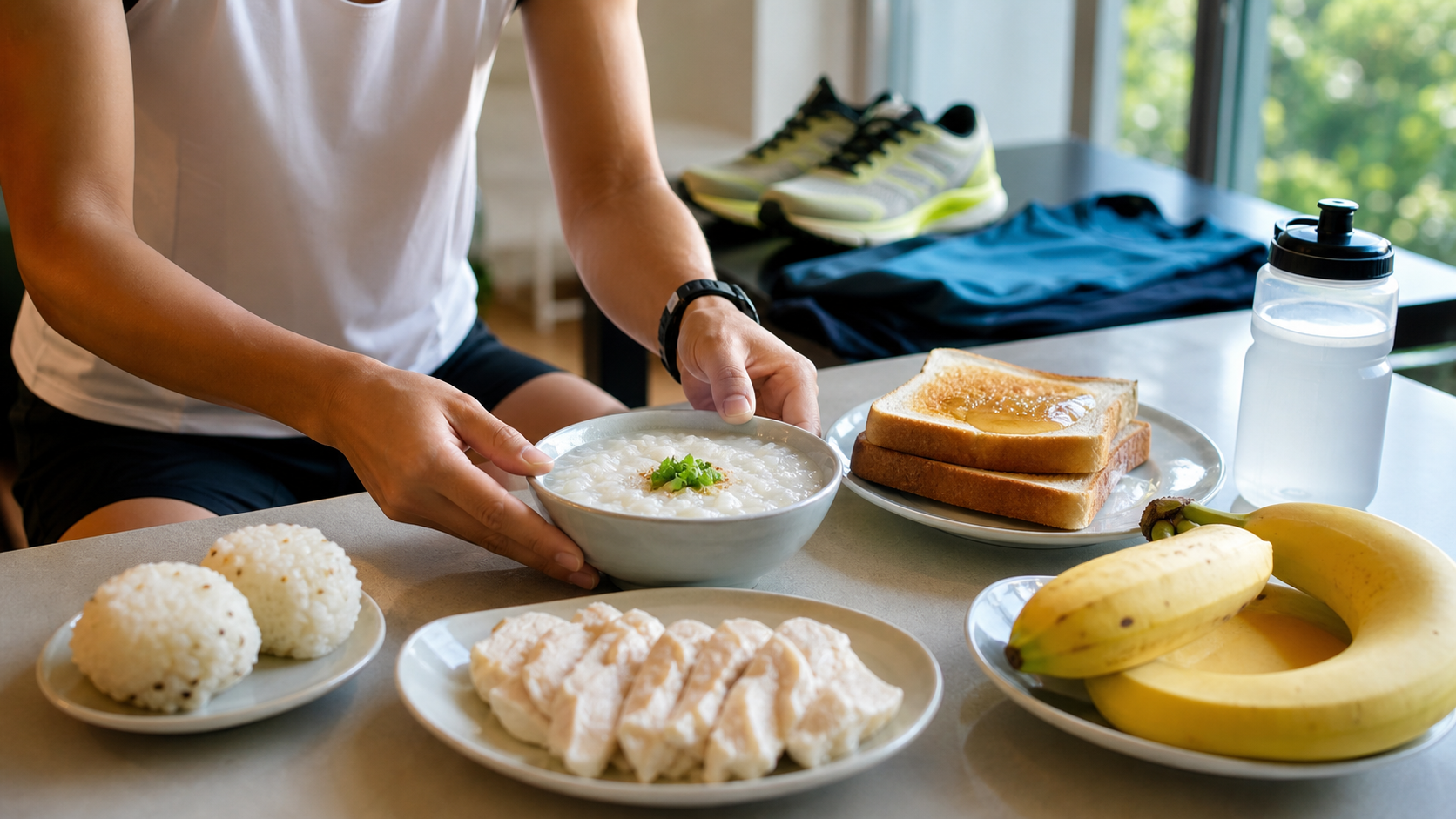
| Breakfast | 2 bowls of plain rice porridge + a little pork floss + 2 slices of white toast | Approx. 120g |
| Morning Snack | 2 bananas + 1 plain steamed bun | Approx. 80g |
| Lunch | 3 bowls of white rice + steamed fish + a small amount of stir-fried greens | Approx. 180g |
| Afternoon Snack | 500ml sports drink + 1 plain rice ball | Approx. 70g |
| Dinner | 3 bowls of white rice + tomato egg drop soup + braised chicken leg (skin removed) | Approx. 180g |
| Late-Night Snack | 2 slices of white toast + 1 tablespoon of honey | Approx. 50g |
Daily total: approximately 680g of carbs
2 Days Before the Race (D-2)
Continue maintaining high carbohydrate intake while also paying attention to sodium intake to avoid pre-race hyponatremia.
- Breakfast: White rice porridge with century egg (low fiber, easy to digest) + 4 red bean glutinous rice balls
- Lunch: Plain noodles (no bean sprouts) + a small amount of thinly sliced braised pork + 1 tea egg
- Afternoon Snack: 1 sweet potato (about 150g, peeled) + 200ml apple juice
- Dinner: 3 bowls of white rice + tofu egg drop soup + steamed chicken breast
- Late-Night Snack: 1 serving of rice cake (street vendor style, about 200g)
1 Day Before the Race (D-1, Race Eve)
This is the most critical day. Many runners can’t eat due to nerves, so it’s recommended to spread carbohydrate intake across 5–6 smaller meals.
- Breakfast: 2 plain rice balls + 350ml unsweetened soy milk
- Lunch: 6–8 pieces of sushi (salmon sushi or nori rolls, avoiding pickled vegetables) + miso soup
- Afternoon Snack: 2 plain steamed buns + honey water
- Dinner (12 hours before the race, around 7 PM): 200g white pasta (dry weight) + tomato meat sauce (low oil)
- Pre-Race Late-Night Snack (optional): 1 slice of white toast + jam
Common Mistakes and Precautions
- Don’t try new foods: During the loading period, eat only foods you’re familiar with to avoid any gastrointestinal risk
- Avoid high-fiber fruits and vegetables: Sweet potato leaves, broccoli, apples (with skin), and other high-fiber foods should be put on hold
- Control fat intake: The high fat content in fried chicken or pork chop bento boxes slows gastric emptying
- Weight gain is normal: A 1–2kg increase after loading indicates success, not fat gain
- Hydrate simultaneously: Consume at least 2.5–3L of fluids daily (including water from food)
Practical Tips
- Start reducing mileage from D-4 to allow muscles to fully absorb glycogen
- Use familiar Taiwanese snacks such as braised pork rice, tapioca jelly, and glutinous rice balls as carbohydrate sources—less psychological stress
- No need to deliberately restrict protein during loading; just keep carbohydrates as the priority
- If you experience stomach discomfort, switch to sports drinks for carbs to avoid the digestive burden of solid foods
Conclusion
Carb-loading is not binge eating—it’s a scientifically grounded fuel management strategy. Taiwan’s staple foods like white rice, noodles, steamed buns, and sweet potatoes are all excellent carbohydrate sources. As long as you follow the principle of “low fiber, low fat, high carb,” you can fill your muscle glycogen stores with familiar Taiwanese flavors and greet every kilometer with confidence at the starting line.
Related Reading
- Carb-Loading Three Days Before Race Day: Complete Plan and Practical Example
- Marathon Carb-Loading 3 Days Before: Complete Guide to Food Choices and Portion Calculation
- 14-Day Carb-Loading Template: Filling Your Tank with Carbohydrates
- Carbohydrate Supplementation Before Road Races: A 3-Day Carb-Stacking Strategy
CT暗黑廚房) 車友必備 宇宙無敵鮮蚵湯 幫助訓練恢復 天然食補 好市多 超肥鮮蚵 破PR
7 年前
單車 一日北高 ( 雙城 ) 肥宅雙人瘋狂行 紀錄片 REACTO
10 年前
一日北高前的高裝檢 | 北高 360 | 挑戰11小時的裝備 | 一日雙塔 | 補給
6 年前
Live) 備戰2019彰化經典百K 賽前攻略 (已完賽請看新影片
7 年前
靠單車減肥35公斤 心得分享與整理
7 年前
JJSC南台灣單車走春三日行 DAY 1 / 強度 x 美食 x 節慶體驗 / 公路車 CT Yeh
5 個月前
西進武嶺 免費訓練分析服務 Intervals | 練不夠還是練過頭?你哪一種類型選手?AI模型告訴你! | 備戰神器 | 公路車 訓練 | CT Yeh
4 年前
一日北高/長距離團騎 常見問題補充篇 / 組團或跟團的眉角 / 壯車友容易被瘦車友慢性拉爆 / 原來屁股痛可能是這個原因...? / 風場配速法 / 公路車 / CT Yeh
2 年前