Introduction
Carbohydrate loading (or glycogen supercompensation) is a strategy used by competitive endurance athletes to maximize muscle glycogen stores by increasing carbohydrate intake before an important race. For long-distance swimmers (800m, 1500m, open water), muscle glycogen stores are a key factor in determining the ability to maintain pace in the latter stages of a race. A well-executed carbohydrate loading plan can increase muscle glycogen stores by 20–40%, allowing athletes to sustain a higher speed in the final laps of a race.
Traditional vs. Modern Carbohydrate Loading Methods
Traditional Method (Ahlborg Protocol, 1967):
- 7–6 days before race: High-intensity training + very low-carbohydrate diet (glycogen depletion phase)
- 5–3 days before race: Low-intensity training + very high-carbohydrate diet (supercompensation phase)
- Disadvantages: The low-carb phase can easily cause fatigue and decreased immunity, affecting training quality
Modern Method (Sherman Protocol):
- 3–4 days before race: Gradually reduce training volume, increase daily carbohydrate intake to 8–12g/kg body weight
- No extreme low-carb depletion phase required; results are comparable to the traditional method with fewer side effects
- This method is currently recommended by mainstream sports nutrition guidelines
Daily Meal Plan for the Taper Week (Example: 65kg Swimmer)
| Days Before Race | Training Volume | Carbohydrate Target | Protein Target | Key Foods |
|---|---|---|---|---|
| 6 days before | Normal training | 6g/kg (390g) | 1.8g/kg (117g) | Normal balanced diet |
| 5 days before | Normal training | 6g/kg (390g) | 1.8g/kg (117g) | Maintain regular eating habits |
| 4 days before | Taper begins (-30%) | 7g/kg (455g) | 1.6g/kg (104g) | Increase staple food portions |
| 3 days before | Taper (-50%) | 9g/kg (585g) | 1.5g/kg (98g) | Increase intake of white rice and noodles |
| 2 days before | Light training | 10g/kg (650g) | 1.4g/kg (91g) | Starch-based, reduce fiber |
| 1 day before | Light activity/rest | 10–12g/kg | 1.2g/kg | White rice, noodles, toast, honey |
| Race day | Race | Pre-race meal 200–300g carbs | Moderate | Easily digestible foods |
High-Carbohydrate Meal Planning for a Taper Week in Taiwan
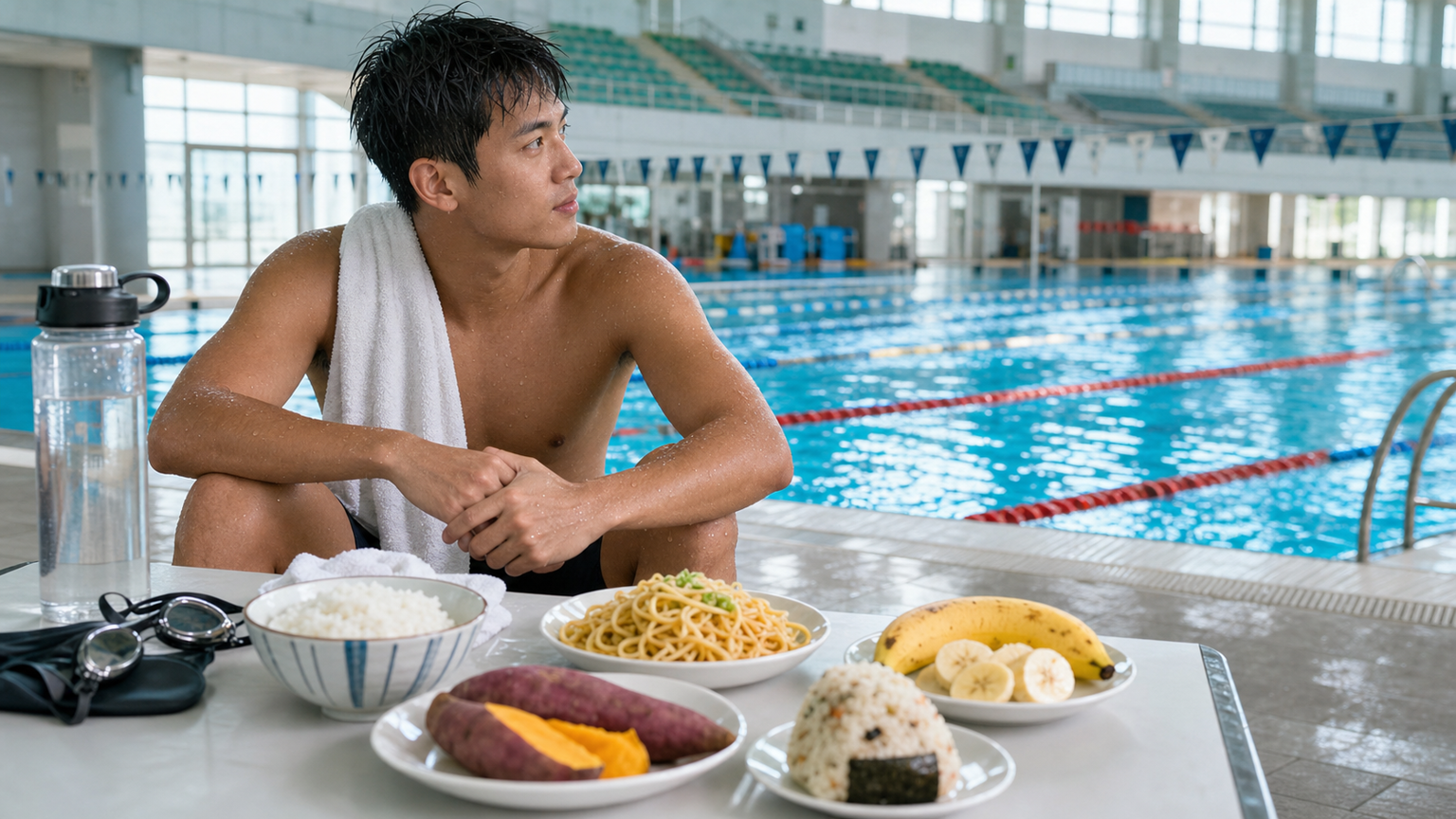
In the Taiwanese dietary environment, increasing carbohydrate intake is relatively easy. The key is to choose carbohydrate sources that are easily digestible and low in dietary fiber:
Recommended Foods (2–3 days before race):
- White rice (do not substitute with brown rice)
- White steamed buns, white toast, white noodles
- Udon noodles, rice vermicelli, mung bean vermicelli
- Bananas, grapes, lychees (high-sugar, low-fiber fruits)
- Sweet potatoes (cooked and peeled), yam
- Honey, jam (pure carbohydrate supplementation)
Foods to Avoid During the Taper Week:
- Brown rice, whole wheat bread (high fiber, increases gastrointestinal burden)
- Legumes, broccoli, cabbage (easily cause gas, leading to bloating on race day)
- High-fat foods (fried chicken, oily rice): delay digestion and affect race performance
- New foods never tried before: race week is not the time to experiment with new foods
Understanding Body Weight Changes Correctly
During carbohydrate loading, body weight typically increases by 1–3 kg because:
- Each gram of glycogen stored binds approximately 3 grams of water
- A 65 kg athlete gaining 300–500g of muscle glycogen → weight gain of approximately 1–1.5 kg
This weight gain is a normal and expected phenomenon; it does not mean gaining fat, and it will naturally return to normal as glycogen is depleted after the race. Do not worry about weight gain during the taper week; instead, view it as an indicator of successful carbohydrate loading.
Practical Recommendations
- First-time carbohydrate loading should be tested during a simulation race or a minor event 4–6 weeks before the major competition
- Increase fluid intake during the taper week to ensure complete glycogen hydration (at least 3 liters per day)
- Do not attempt dieting during the taper week; even if you feel heavier, do not cut carbohydrate intake
- Communicate with your coach about reducing training volume during the taper week to ensure tapering and carbohydrate loading are synchronized
Conclusion
Carbohydrate loading is a well-scientifically-supported race preparation strategy that has a significant impact on the latter-stage performance of long-distance swimmers. In Taiwanese food culture, a dietary pattern centered on white rice and noodles naturally aligns with the needs of carbohydrate loading. The key lies in understanding the correct timing of execution, choosing easily digestible carbohydrate sources, and maintaining a proper understanding of the temporary weight gain. Through systematic taper-week meal planning, swimmers can arrive at race day with ample glycogen stores, sustain racing speed in the crucial final laps, and deliver the results of their training.
Related Reading
- Carbohydrate Stacking Before a Swim Race: A Three-Day Pre-Race Meal Plan
- Pre-Race Swim Nutrition: Carbohydrate Loading Strategies for the Three Days Before Competition
- Nutrition for Recovery: A Comprehensive Practical Guide to Carbohydrate Loading for Endurance Athletes — A 10g/kg Body Weight Carb Meal Plan for the 72 Hours Before Race Day and a Full Recovery Schedule
- Carb-Loading Three Days Before the Race: Complete Plan and Practical Examples
Live) 備戰2019彰化經典百K 賽前攻略 (已完賽請看新影片
7 年前
CT暗黑廚房) 車友必備 宇宙無敵鮮蚵湯 幫助訓練恢復 天然食補 好市多 超肥鮮蚵 破PR
7 年前
西進武嶺 免費訓練分析服務 Intervals | 練不夠還是練過頭?你哪一種類型選手?AI模型告訴你! | 備戰神器 | 公路車 訓練 | CT Yeh
4 年前
一日北高前的高裝檢 | 北高 360 | 挑戰11小時的裝備 | 一日雙塔 | 補給
6 年前
CT 喇低賽) 武嶺牽車 才是王道 西進牽車四小時內秘訣 攝手位置 如何判斷 防抽筋小秘訣
7 年前
靠單車減肥35公斤 心得分享與整理
7 年前
單車 一日北高 ( 雙城 ) 肥宅雙人瘋狂行 紀錄片 REACTO
10 年前
FTL 與 SYB 車隊專訪 西進武嶺 實用攻略分享! 2小時 如何練?!你不知道的眉角!新手準備武嶺必看 EP1 | 實力派女車友 | 精華版 | 公路車 | CTYeh
4 年前