Introduction
Swimming training systems across Taiwan provide many adolescents with a high-quality training environment. However, high-intensity swimming training poses unique nutritional challenges for the still-developing bodies of young athletes. Adolescence (approximately ages 10–18) is a critical period of rapid growth and peak bone mineralization, and it is also a stage when many swimmers rapidly increase their training volume. If energy or micronutrient intake is chronically insufficient during this period, the consequences can range from impaired training performance to compromised final height and bone density, and may even trigger serious health issues such as the Female Athlete Triad (energy deficiency, menstrual dysfunction, and low bone density) in female athletes.
Caloric Needs of Adolescent Swimmers
Adolescent athletes have significantly higher caloric needs than their non-athletic peers:
| Age / Sex | General Adolescents (No Training) | Competitive Swimmers |
|---|---|---|
| 12–14 yrs Female | 1800–2000 kcal | 2200–2800 kcal |
| 12–14 yrs Male | 2000–2200 kcal | 2500–3200 kcal |
| 15–18 yrs Female | 1900–2100 kcal | 2400–3000 kcal |
| 15–18 yrs Male | 2200–2800 kcal | 2800–4000 kcal |
For every additional hour of weekly training, an estimated extra 400–600 kcal is required.
Calcium: The Foundation of Bone Development
Adolescence is the golden window for bone mineralization, and adequate calcium intake directly determines peak bone mass in adulthood. Because water-based training provides less mechanical stimulation to the skeleton than land-based sports (running, jumping), swimmers see relatively limited gains in bone density and must be especially proactive about calcium intake:
- Recommended Daily Intake (ages 10–18): 1000–1300 mg
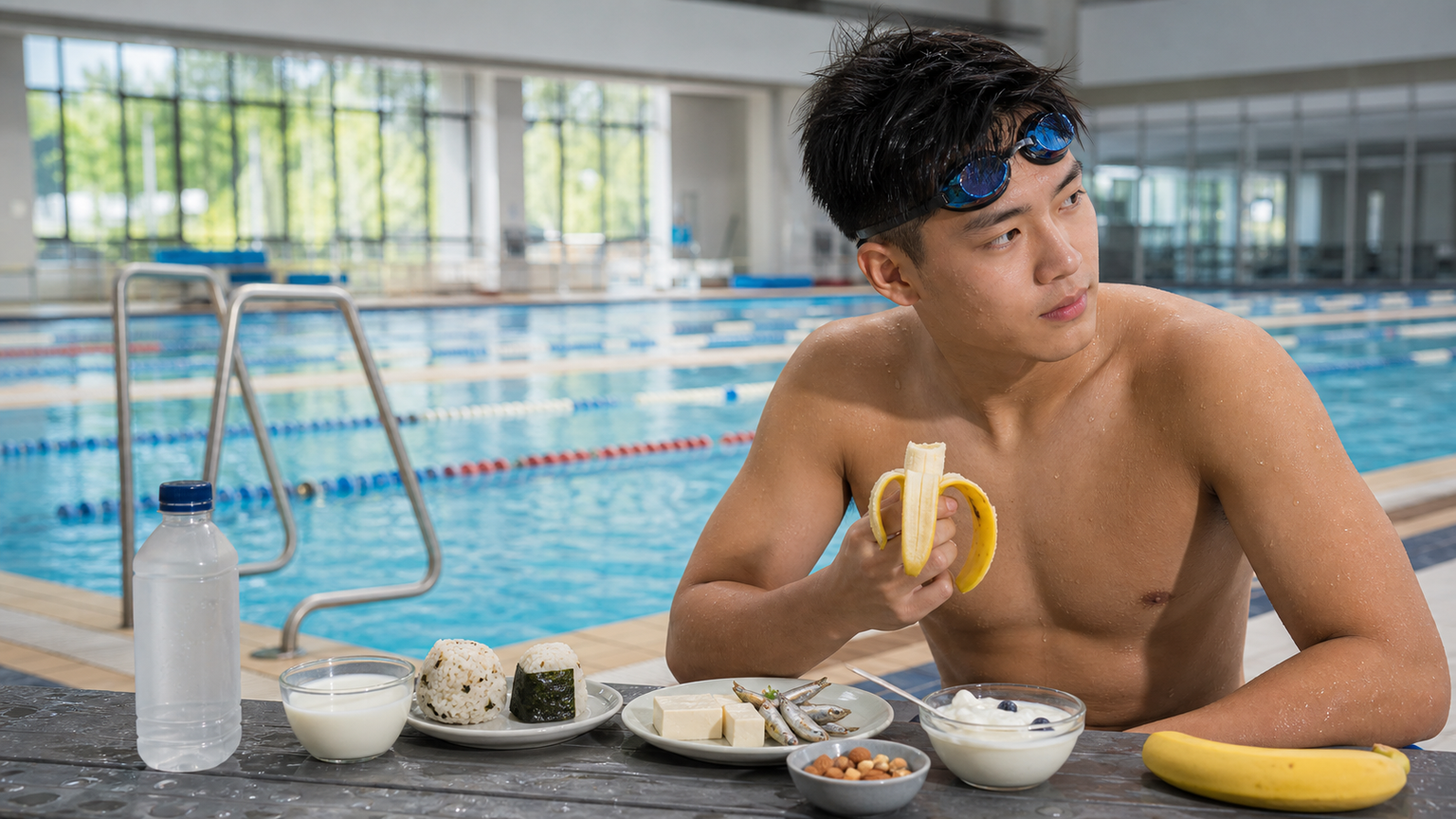
- Common calcium-rich foods in Taiwan: low-fat milk (280 mg per 240 ml), yogurt, cheese, dried small fish, black sesame seeds, firm tofu
- Calcium absorption requires vitamin D: ensure adequate vitamin D intake (sun exposure + food sources)
Protein: Meeting Both Growth and Training Demands
Adolescent athletes’ protein needs combine growth requirements (tissue synthesis) with training recovery (muscle repair):
- General recommendation: 1.4–1.7 g per kg of body weight (higher than adult athletes’ growth requirements)
- High-intensity training periods: may increase to 1.7–2.0 g/kg
- Food first: prioritize whole foods such as eggs, soy milk, chicken, and tofu; supplements are secondary
Other Key Micronutrients
- Iron (especially for females): needs increase during growth and menstruation; 15 mg daily; pork liver and lean red meat are the best sources
- Zinc: involved in growth hormone synthesis and immune function; 8–11 mg daily; oysters, beef, and pumpkin seeds are rich in zinc
- Vitamin D: aids calcium absorption; deficiency rates are high among Taiwanese adolescents due to long indoor training hours and strong sun-protection habits
- Magnesium: participates in over 300 metabolic reactions; losses are high after intense swimming sessions; 240–360 mg daily; nuts and dark chocolate are rich in magnesium
Common Dietary Issues Among Taiwanese Adolescent Athletes
Based on dietary observations of young Taiwanese athletes, common issues include:
- Dieting for weight loss: influenced by body-image ideals on social media, some female athletes self-impose restrictive diets, leading to energy deficiency
- Over-reliance on convenience stores: while convenience stores offer quick options, relying long-term on microwaved meals as staples results in severely inadequate fruit and vegetable intake
- Not drinking milk: some adolescents avoid milk due to lactose intolerance or taste preferences, leading to insufficient calcium intake
- Not eating after training: many students rush to class or head home after practice, missing the golden recovery window
Practical Advice (for Athletes and Parents)
- Parents can prepare post-training recovery snacks (tea eggs + banana + soy milk) and keep them in the swim bag so athletes can eat immediately upon exiting the pool
- Add an extra serving of blanched vegetables to school lunches to replenish vitamins and minerals lost during training
- If signs of dieting appear, intervene early and work with coaches and parents to establish healthy weight-management concepts
- Schedule a comprehensive blood test once a year (including serum iron, vitamin D, and calcium) to detect deficiencies early
- Cultivate the mindset that “food is fuel, not the enemy”
Conclusion
Nutritional management for adolescent swimmers is a shared responsibility among parents, coaches, and athletes. In Taiwan’s training environment, adequate food intake and proper nutrition education are the foundation for helping young swimmers grow healthily through high-intensity training while maintaining competitive performance. Investing in nutritional quality during adolescence is not just about immediate competition results—it lays the groundwork for a healthy, sustainable long-term athletic career.
Related Reading
- Special Nutritional Needs of Adolescent Swimmers: Dietary Strategies for the Growth Period
- Dietary Needs of Young Swimmers: Caloric and Nutritional Supplementation Strategies for Growth
- Nutrition for Adolescent Athletes: Calculating Calories for Growth and Training Demands
- Dietary Needs of Adolescent Runners: Caloric and Protein Requirements During Growth
CT暗黑廚房) 車友必備 宇宙無敵鮮蚵湯 幫助訓練恢復 天然食補 好市多 超肥鮮蚵 破PR
7 年前
一日北高/長距離團騎 常見問題補充篇 / 組團或跟團的眉角 / 壯車友容易被瘦車友慢性拉爆 / 原來屁股痛可能是這個原因...? / 風場配速法 / 公路車 / CT Yeh
2 年前
單車 一日北高 ( 雙城 ) 肥宅雙人瘋狂行 紀錄片 REACTO
10 年前
16/02/16 - 夜訪中社路 緩慢進步中
10 年前
一日北高常見問題大集合 | 攻略 | 路線 | 訓練 | 補給 | 自行車 單車 | 一日雙城 | 雙塔 | TWB北高360 | 屁股痛
6 年前
靠單車減肥35公斤 心得分享與整理
7 年前
一日北高前的高裝檢 | 北高 360 | 挑戰11小時的裝備 | 一日雙塔 | 補給
6 年前
GoPro Hero 10 畫質好但 他是個吃電怪物 過熱只是小CASE 單車錄影實測 ! 耗電 災情 過熱實測 購買前請三思 OSMO Action 2了 !? | CT Yeh
4 年前