Completing My First Triathlon: Swimming, Cycling, Running, One Thrilling Adventure
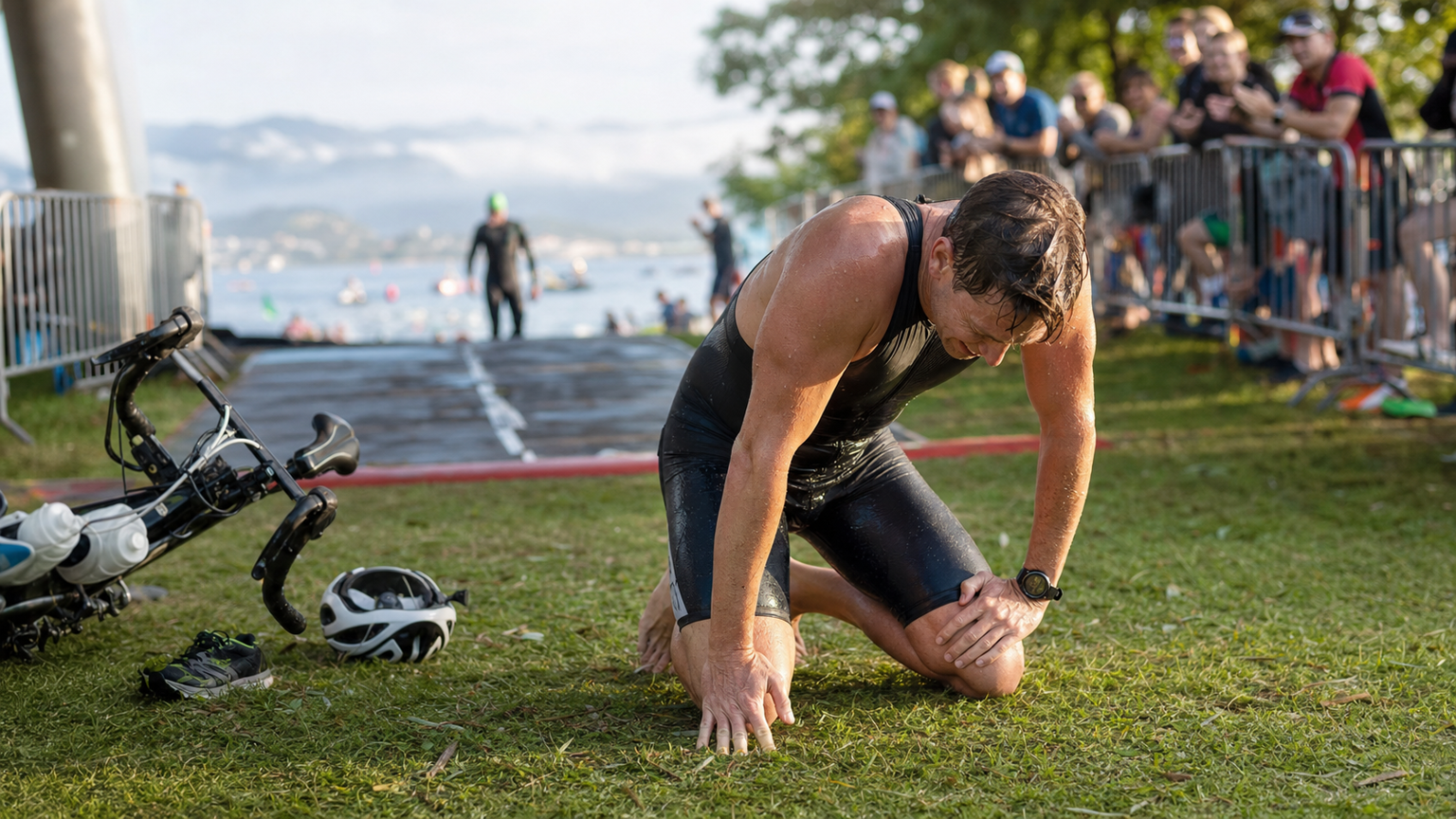
The moment I crossed the finish line, I knelt on the grass before it, my whole body trembling, unable to tell if it was exhaustion or excitement. The announcer’s voice came through the speakers: “Congratulations, you’ve finished!” The crowd around me was applauding, but I couldn’t hear a thing. Only one thought filled my mind—I actually did it.
Swim 1.5 kilometers, bike 40 kilometers, run 10 kilometers. Olympic Distance (51.5K) triathlon—for many triathletes, it’s just an entry-level race, but for me, who nine months ago couldn’t swim 50 meters without choking on water, it was an unimaginable mountain.
Where It All Began: An Impulsive Registration
It all started last October. A colleague at the office had completed a Half Ironman. He shared his finish photos in the company group chat, wearing a trisuit stained with sweat and salt crystals, holding up his medal, grinning like a kid. A flood of congratulations followed, but I was seized by a strange impulse.
“Anyone want to sign up for next year’s Taitung Beauty Triathlon together?” I typed that line in the group chat, hesitating for three seconds before hitting send. A colleague replied immediately: “Olympic distance or half ironman? Let’s start with Olympic distance—I’ll train with you.”
Just like that, with no idea what I was getting into, I paid the registration fee. Nine months until race day.
The Biggest Obstacle: The Water
Of the three disciplines, I had a foundation in cycling and running—I was a weekend road cyclist and occasionally ran 5K along the riverside. But swimming? The last time I’d been in the water was probably ten years ago, floating in the sea at Kenting with a swim ring.
My first pool session was a disaster. I managed two lengths of 25 meters before hanging onto the pool edge, gasping for air. My stroke was a mess, and I swallowed several mouthfuls of water while trying to breathe. An older guy in the next lane was cruising back and forth with butterfly, making me feel even more embarrassed.
I decided to sign up for an adult swimming class. The coach was a young former college swim team member. After watching me swim one length, he said: “Your problem isn’t fitness—it’s that you’re afraid of the water. Every time your face goes in, you tense up. Tension makes you hold your breath, and holding your breath makes you sink.”
For the next two months, three sessions a week, one hour each, the coach spent nearly half the time teaching me to relax. Floating drills, underwater exhaling drills, rhythmic breathing. The exercise that stuck with me most was simple: float face-down on the water, completely still, just slowly exhaling through your nose. The first time I tried it, I lasted less than ten seconds before panicking and lifting my head. By the end of week three, I could float quietly on the water for a full minute.
That was the turning point. The day I stopped fearing the water, everything changed.
Balancing Training Across Three Disciplines
The biggest challenge in triathlon isn’t any single discipline—it’s how to balance training across all three with limited time. I’m a nine-to-six office worker, and I could only carve out about one to one and a half hours a day for training.
My coach friend put together a very practical weekly plan for me:
| Day | Training | Time |
|---|---|---|
| Monday | Swim technique drills | 60 minutes |
| Tuesday | Bike trainer | 60 minutes |
| Wednesday | Run (easy pace) | 45 minutes |
| Thursday | Swim endurance session | 60 minutes |
| Friday | Rest or core training | 30 minutes |
| Saturday | Long bike ride | 2-3 hours |
| Sunday | Brick workout (bike + run) | 1.5-2 hours |
The so-called “Brick Workout” is a classic triathlon training staple—riding your bike and immediately transitioning to a run. The first time I did a brick workout felt bizarre. In the first five minutes after getting off the bike and starting to run, my legs felt like they were filled with cement, completely unresponsive. My stride was heavy and choppy; even though it was just a slow six-minute-per-kilometer jog, my heart rate spiked to the 160s. The coach said this was “jelly legs” and that I’d adapt after more practice. He was right—two months later, the jelly legs had shrunk from five minutes to two.
The Shock of Open Water
Once I could swim 1,500 meters continuously in the pool, I joined a triathlon club for an open water session, full of confidence. The location was Breeze Canal in New Taipei City.
The moment I jumped in, I knew it was a completely different world. The water was murky and had a smell, with no black line visible at the bottom. No walls to push off and rest, no lane ropes to keep you oriented. Worse, there were other people swimming around me—getting your arms smacked into someone’s legs or choking on splashes was par for the course.
On my first open water session, I only made it about 300 meters before I panicked and clung to a buoy. That fear of losing direction and safety was more mentally devastating than the physical exertion of swimming itself.
In the end, I did eight open water sessions, each one slightly better than the last. I learned to “sight”—lifting my head every dozen or so strokes to check the landmark ahead. I learned to adapt to murky water and irregular waves. I learned to stay calm in a crowd. By the final session before race day, I could swim 1,500 meters steadily in open water—much slower than in the pool, but at least without panic.
Race Day: Order Amid Chaos
The race was held at Taitung Living Lake. I arrived at the transition area at 5:30 in the morning and saw hundreds of triathlon bikes and road bikes neatly racked, athletes in colorful trisuits making final preparations, and the air thick with the smell of sunscreen and anti-chafe balm. My heart was already racing.
Leg 1: Swim 1.5K
The moment the gun went off, a hundred people charged into the water at once. “Washing machine” was the only way to describe it—water splashing everywhere, arms flailing, feet kicking you in the face. For the first 200 meters, my rhythm was completely thrown off by the crowd pushing and shoving, and I swallowed several mouthfuls of water.
I forced myself to stop, flipped onto my back to float for ten seconds, took three deep breaths, and started again. Once the crowd spread out, I found my rhythm and moved forward stroke by stroke, steadily. I finished the 1.5K and got out of the water in 38 minutes—not fast, but I made it out alive.
Transition 1 (T1)
The moment I got out of the water, I felt dizzy—a common issue for triathlon newbies, since going from horizontal swimming to standing upright changes your blood distribution. I jogged to the transition area, peeled off my swim cap and goggles, slipped on my cycling shoes and helmet, and squirted some water on myself. T1 took about three and a half minutes. I saw seasoned athletes next to me finish in under fifteen seconds, but whatever—steady was what mattered.
Leg 2: Bike 40K
Cycling was my strongest discipline. The Taitung bike course was mostly flat, running along the coastline with scenery so beautiful it didn’t seem real. The sea breeze was a bit strong, but I found a comfortable rhythm and held around 30 km/h. I ate one energy bar and drank a bottle of sports drink.
The bike leg took one hour and twenty-five minutes. My legs were a bit sore getting off, but I was in much better shape than expected.
Transition 2 (T2)
Swapped in my running shoes, put on a visor, and flipped my race number to the front. T2 took two minutes.
Leg 3: Run 10K
Jelly legs showed up right on schedule. The first two kilometers didn’t feel like running at all—more like shuffling forward in some strange posture. My heart rate immediately spiked to 170, and my mouth was completely dry. I told myself: “Just get through the first three kilometers, and it’ll get better.”
Sure enough, by the fourth kilometer, my legs found some feeling again. My pace gradually came back from 7:30 per kilometer to 6:30. The last three kilometers ran along Seaside Park, with the sunset painting the sky orange-red, and volunteers cheering at every aid station.
On the final kilometer, I saw the finish arch. Tears suddenly streamed down my face. I sprinted across the line, and my watch stopped at 3 hours and 52 minutes.
After the Finish Line
After receiving the medal, downing two cans of cola, eating three rice balls, and then collapsing on the grass to stare at the sky. Every part of my body aches, but my mind is filled with a strange sense of calm.
The meaning of completing a triathlon, for me, isn’t about the time—it’s about the experience of facing fear and discomfort again and again along the way. Afraid of the water? Go learn to swim. Uncomfortable in open water? Practice repeatedly. Wobbly legs? Do more brick workouts. Every problem has a solution, as long as you’re willing to face it.
Looking back now, that impulsive registration nine months ago was one of the best decisions I’ve ever made. Next year? Maybe it’s time to take on the half Ironman. Swim 1.9 km, bike 90 km, run 21 km. It sounds crazy, but nine months ago I thought a sprint triathlon was crazy too.
Advice for triathlon beginners: if you have a weak discipline among the three, prioritize spending your time on it. Swimming is the biggest hurdle for most people; I recommend starting open-water practice at least three months before race day. As for gear, you don’t need a dedicated triathlon bike for your first race—a road bike is more than enough. Most importantly, enjoy the process.
Related Reading
- From the First Race to the Hundredth: Celebrating and Finding Meaning in Triathlon Milestones
- 12-Week Triathlon Beginner Plan: A Training Framework for Completing Your First Sprint Race from Zero
- The Complete Triathlon Beginner’s Guide: A Triathlon Training Plan from Scratch
- Triathlon Beginner Gear Checklist: A Complete Preparation Guide from Scratch
半日 小台灣 極限單車路線挑戰實錄
7 年前
Live) 備戰2019彰化經典百K 賽前攻略 (已完賽請看新影片
7 年前
單車 一日北高 ( 雙城 ) 肥宅雙人瘋狂行 紀錄片 REACTO
10 年前
2019 夏季KOM 5小 完賽心得 準備攻略 東進武嶺 夏季登山王之路 Taiwan KOM Challenge
7 年前
新玉門關 單車挑戰賽 多視角主集團衝刺菁華版 4K #公路車
5 年前
西拉雅五庫單車挑戰 / 曾文水庫 & 南168 二寮 / 500元報名費居然這麼超值/ 公路車 / CT Yeh
10 個月前
新屋團體繞圈賽 | 眾多菁英好手賽道奔馳 | 千瓦女子軍團 | 無敵交管狂獲好評 明年你一定不能錯過 | #公路車
5 年前
[防寒衣體驗] 鐵人魂 三鐵 防寒衣試穿會 於松運 深水游泳池 鯨魚池
8 年前