The Slope Open Only Once a Year: Mount Ibuki, a Pilgrimage Road Beneath Japan's 100 Famous Mountains
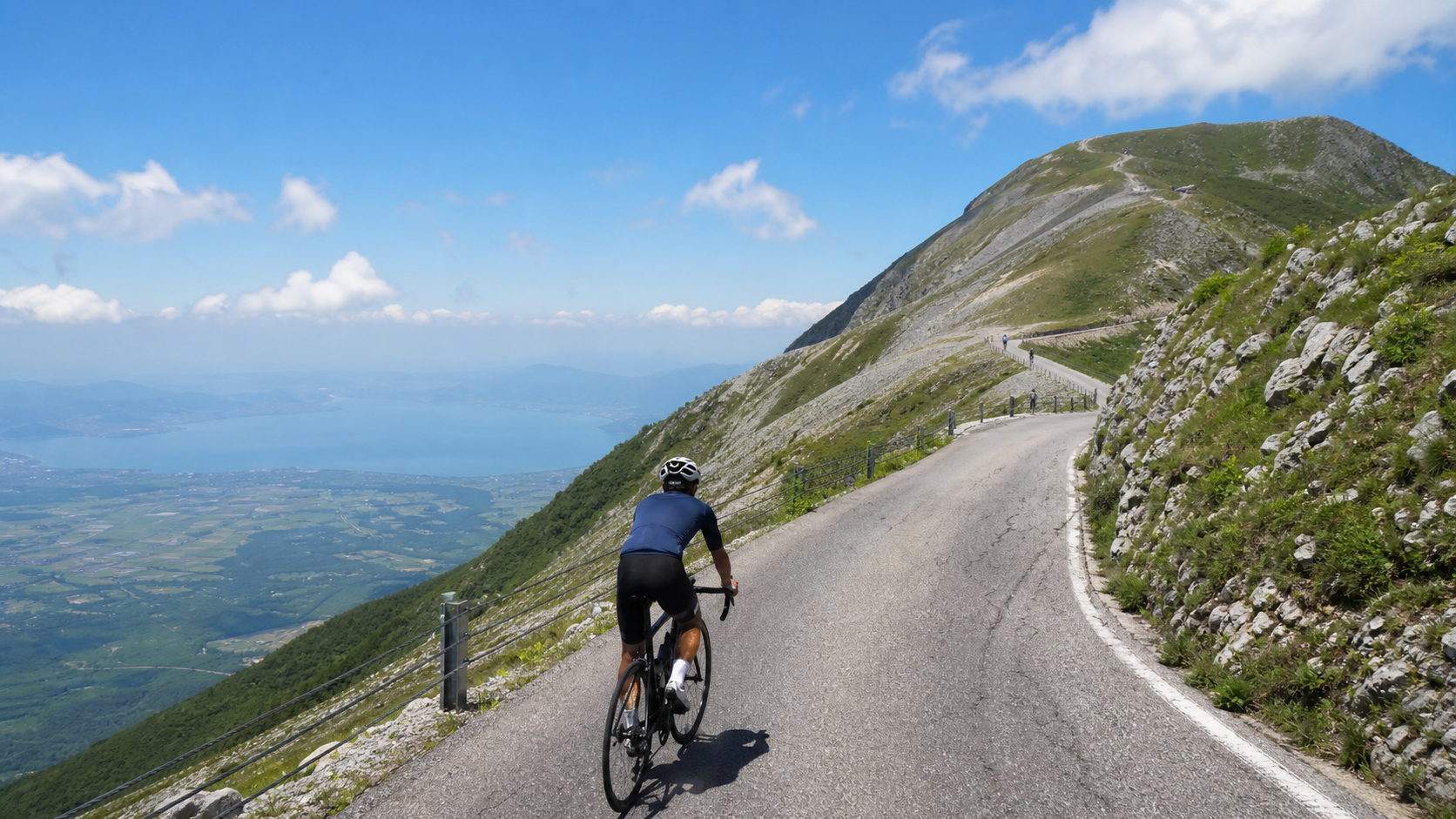
A Slope Open Only Once a Year: Mount Ibuki, a Pilgrimage Road Beneath One of Japan’s 100 Famous Mountains
Elevation 1,377 meters, one of Japan’s 100 Famous Mountains. This southern section spans 6.15 kilometers with 612 meters of climbing at an average gradient of 8.2%—a legendary slope that remains closed to bicycles for most of the year, opening for just a single day annually.
Some slopes are alluring because of their difficulty; Mount Ibuki is alluring not only for its difficulty, but also for its rarity.
Straddling the border of Shiga and Gifu prefectures, this 1,377-meter mountain is one of the “100 Famous Japanese Mountains.” The Ibuki Mountain Driveway at its base stretches 17 kilometers in total and is normally a car-only road, closed to bicycles. Just one day a year—on the eve of the winter closure being lifted—it opens its gates to cyclists, allowing hill-climb racers to pedal their way up this giant overlooking the Ōmi Plain.
The Guardian of Ōmi
If you spread out a map of Shiga Prefecture, you’ll see that solitary, imposing peak northeast of Lake Biwa—that’s Mount Ibuki. It belongs to no mountain range, rising alone from the earth like a silent guardian watching over the Ōmi Plain and Lake Biwa below.
Since ancient times, Mount Ibuki has been a place of faith and legend. In the Nihon Shoki (Chronicles of Japan), the hero Yamato Takeru was struck down while battling the mountain god here; it is also a sacred mountain of Shugendō, said to be home to various medicinal herbs. For riders in the Kansai region, the words “I’ve climbed Mount Ibuki” carry a weight close to pilgrimage.
Why It’s So Rare
I have to be honest with you: you can’t just show up and ride this road whenever you like.
The Ibuki Mountain Driveway is completely off-limits to bicycles at all other times. Only once a year does the Japan Federation of Cyclists’ Business Teams (JBCF) hold a hill-climb race here, and with the general category open to participants, wheels are permitted to touch this tarmac. In winter (roughly from late November to the third Friday of April), the road is closed due to snow, and heavy rain or bad weather can also force temporary closures.
So the days you can actually ride this road are few and far between. That’s precisely why everyone standing at the start line wears an expression of “I finally made it.”
An 8.2% Welcome Gift
The southern section I was about to tackle doesn’t look long on paper—6.15 kilometers with 612 meters of climbing—but the average gradient of 8.2% puts it firmly in the “hardcore” tier of Japanese climbs.
There’s no courtesy at the start. No gentle ramp to warm up on; the 8% gradient is served up from the very first meter. I reminded myself: don’t charge. These sustained steep sections are the most deceptive—every ounce of effort wasted early on will be repaid with interest later.
I shifted into my easiest gear, held my cadence steady, and let my body settle into that “painful but manageable” rhythm. My heart rate was high, but my breathing was still keeping up—that’s the right sign.
Above the Treeline, Above Lake Biwa
The middle section is the heart of this climb, with the gradient locked between 8–10% for long stretches and almost no flat respite. I focused entirely on my power and heart rate—because “feelings” lie during sustained suffering; only the numbers don’t.
As altitude increased, the trees grew shorter and then fell away, the view opening up inch by inch. When I looked back, Lake Biwa spread out in the distance like a silver-gray mirror, with the entire Ōmi Plain laid out before me. In that moment, the pain in my legs seemed diluted by the sheer grandeur. That’s the most luxurious reward of high-mountain climbing: the perspective you earn with sweat is something a driver will never have.
The summit parking lot sits at approximately 1,260 meters. For the full Driveway race, the official course averages about 6.9% with an elevation gain exceeding 1,000 meters, and the steep southern section beneath my wheels is the hardest bone of them all.
Rarity Makes It All Worthwhile
Standing at the top, the wind was strong and the temperature low—even in early summer, the summit and the base feel like two different seasons. I pulled my jacket tight and looked back at this road that opens only once a year.
What Mount Ibuki taught me isn’t just how to face an 8.2% gradient, but a respect for “opportunity.” Some slopes you can ride anytime, so you always say “next time”; Mount Ibuki doesn’t give you a “next time”—it only gives you “this time.” When a road becomes rare, every single pedal stroke you take on it carries extra force, extra focus, extra memory.
A Mountain That Stands Alone
What moves me most about Mount Ibuki is its “solitude.”
It belongs to no mountain range. When you look across from the Ōmi Plain, you see it rising alone—yet majestic—at 1,377 meters, like a lone traveler who keeps no company with the other peaks. This isolated topography makes it the most striking landmark on the Ōmi Plain, and it’s also why it carries so many legends and so much faith.
The Nihon Shoki records that the hero Yamato Takeru passed by Mount Ibuki on his campaign and fought the mountain god, which had taken the form of a white boar—but he was struck down by the god’s chill and fell ill, ultimately meeting his end. This ancient tale casts Mount Ibuki in a sacred yet perilous light. It is also a sacred mountain of Shugendō, said to be blanketed in medicinal herbs—to this day, “Ibuki mugwort” remains a renowned local specialty.
Knowing I was about to climb a mountain like this, my mindset shifted from simply “tackling a slope” to something more like paying a visit to an elder with stories to tell.
The “Waiting” Itself Is Part of This Road
I must emphasize again how special this road is: you cannot ride it whenever you want.
The Ibuki Mountain Driveway is normally a car-only road, completely closed to bicycles. Just one day a year—on the day before the winter closure is lifted—wheels are permitted on this tarmac, in conjunction with the JBCF hill-climb race and the open general category. In winter (roughly late November to the third Friday of April), the road is closed due to snow, and heavy rain or bad weather can also force temporary closures.
This means that “being able to ride Mount Ibuki” itself requires planning, requires luck, requires waiting. And it’s precisely this rarity that makes everyone at the start line cherish the moment. When a road is easily accessible, you always say “next time”; Mount Ibuki doesn’t give you a “next time”—it forces you to seize “this time.” This difference in mindset shows up directly in your focus while riding—nobody coasts through a once-a-year opportunity.
The Honesty of 8.2%
The average gradient of this southern section is 8.2%, firmly in the hardcore tier of Japanese climbs. And what I love about it is its “honesty”—it doesn’t play tricks with a gentle opening; it serves up the steep grade from the very first meter, telling you plainly: there’s no free lunch here.
At the start, I forced myself to stay calm. An 8% slope is the easiest thing to trigger adrenaline, making you unconsciously charge—but that’s a trap. I shifted into my easiest gear, held my cadence at a sustainable rhythm, and let my body ease into that “painful but manageable” state. My heart rate was high, but my breathing was still keeping up—that’s the right signal.
The middle section is the core, with the gradient locked between 8–10% for long stretches and almost no recovery sections. This sustained suffering tests your willpower most: you keep hearing that voice in your head saying “stop, take a break.” At times like this, the data became my anchor—I stared at my power and heart rate, and as long as they stayed within manageable range, I told myself “just hold on one more corner.”
Lake Biwa, Spread Out Beneath You Like a Mirror
The most luxurious reward of climbing is the perspective.
As altitude increased, the trees gradually fell away and the view opened up inch by inch. When I finally couldn’t resist looking back, Lake Biwa—Japan’s largest lake—spread out in the distance like a silver-gray mirror, with the entire Ōmi Plain laid out before me. In that moment, the ache in my legs seemed diluted, even healed, by the sheer grandeur.
This is the fundamental difference between high-mountain climbing and riding on flat roads: the altitude you earn with sweat rewards you with a perspective a driver will never have. Many people spend their whole lives seeing Lake Biwa only from its shores at eye level; I, on the other hand, looked down on it from nearly a thousand meters above—a completely different kind of awe.
What Rarity Taught Me
Standing at the summit, the wind was strong and the temperature low—even in early summer, the mountaintop and the base felt like two different seasons. I pulled my jacket tighter and looked back at this road that opens only once a year, a feeling of indescribable gratitude welling up inside me.
What Mount Ibuki taught me, in truth, has nothing to do with technique. It taught me reverence for “opportunity.” We always assume there is plenty of time and plenty of chances, so we push things worth cherishing off to “next time.” But some roads, some people, some scenery—like Mount Ibuki—only give you “this one time.” When you truly realize that, every single pedal stroke becomes more deliberate, more focused, more memorable.
On the descent, I kept looking back, unable to tear my gaze away. Mount Ibuki—this solitary and majestic sentinel of the Ōmi Plain—chose to open itself to me on this day, and I will remember it for a long, long time. And I made a promise to myself: if the chance ever comes, I will return and read this mountain’s story once more.
The Hard Numbers
Let’s return to those numbers: 6.15 kilometers, 612 meters of elevation gain, 8.2% average gradient.
In the world of climbing, “8.2% average” is a figure that makes seasoned riders raise an eyebrow. It means this is not a leisurely route you can ride while chatting—it’s a hard climb that demands your full concentration and grit. With nearly a hundred meters of elevation gain per kilometer, there’s almost no room to catch your breath—no fake flat sections to slack off on, only gravity that is real and uncompromising, inch by inch.
I appreciate this kind of “hard-edged honesty.” Some climbs manufacture difficulty through alternating steep and shallow sections, exhausting you mentally; Mount Ibuki doesn’t play that game. It’s steep from start to finish, laying its difficulty plainly before you, then waiting to see if you dare take it on. This straightforwardness is oddly reassuring—you know exactly what opponent you’re up against, and all that’s left is to give it everything you’ve got.
The Mountain as Faith
In Japan, mountains have never been mere geography—they are faith. Mount Ibuki is no exception.
As one of the “100 Famous Japanese Mountains,” Mount Ibuki has been a sacred site of Shugendō since ancient times. Practitioners believed that training on harsh mountains tempered the spirit and brought one closer to the gods and Buddhas. They climbed not to conquer, but to become one with nature and the divine. This tradition of “the mountain as teacher” is deeply etched into Japan’s mountaineering culture.
As a modern cyclist challenging this sacred mountain on a carbon-fiber frame, I often think: what I seek is the same thing those ancient ascetics sought—through the limits of the body, touching a mental state that transcends the everyday. At the most agonizing moments of the climb, my mind goes blank, leaving only breath and pedal strokes. That near-meditative focus might well be the modern person’s version of “ascetic training.” Mount Ibuki’s steepness forced me into that state—it was the most unexpected gift it gave me.
Gifts from the Herb Mountain
Mount Ibuki has another captivating identity—the “Mountain of Medicinal Herbs.”
Since ancient times, Mount Ibuki has been renowned for its abundant medicinal plants. Legend has it that even during the Warring States period, Western missionaries established herb gardens here. To this day, “Ibuki mugwort” (伊吹もぐさ) remains a famous specialty, used in traditional moxibustion therapy. At the mountain’s base, you can also find local cuisine featuring regional herbs and soba noodles. (Please confirm actual shops and specialties on-site.)
After riding a mountain this hard, sitting down to a bowl of hot soup made with the mountain’s bounty and tasting local soba noodles brings a profound sense of “receiving gifts from the great mountain.” The mountain gives you a harsh trial, and it also gives you gentle nourishment—this two-sided nature is exactly why the Japanese both revere and love their mountains.
Seizing “This One Time”
I want to emphasize, once more and for the last time, the core spirit of this road: seize “this one time.”
The Ibuki Mountain Driveway is normally closed to traffic and opens to cyclists only one day a year, making the very act of riding it deeply ceremonial. You can’t casually say, “The weather’s nice today, let’s go ride Mount Ibuki”—you must plan ahead, watch for announcements, pray for good weather, and then, on that one singular day, pour all your preparation and anticipation into those 6 kilometers of steep climbing.
This rarity transforms the mindset of riding. It makes you unwilling to slack off or get distracted, forcing you to make every pedal stroke count with absolute sincerity. And when you reach the summit on that one special day, overlooking Lake Biwa, the sense of accomplishment is all the more intense and unforgettable precisely because it was so hard-earned.
As I left, I kept looking back. What Mount Ibuki taught me, in the end, comes down to four words: cherish the present moment. Some mountains, some opportunities, come only once. And it is precisely the preciousness of that “once” that turns all the hardship into memories worth savoring for a lifetime. Sentinel of Ōmi, may we meet again.
The Complete Memory of That Day
The days when you can ride Mount Ibuki are few and far between, so I remember every detail of that day with perfect clarity.
The night before, I barely slept—repeatedly checking the weather forecast, inspecting my gear, staring at the opening announcement. This nervousness, almost like the eve of a pilgrimage, was something I’d never felt before riding an ordinary mountain road. Because I knew that missing this day might mean waiting another full year.
Arriving at the start in the early morning, the air carried a race-day excitement unique to such events. Riders from all over were gearing up, and on every face was written the gratitude of “I finally made it.” I took a deep breath, looked up at the road that stays closed all year but was opening for us today, and felt my heartbeat quicken involuntarily.
The climb began with an 8% greeting. No warm-up, no buffer—the steep grade pressed down from the very first meter. I fought the urge to surge, shifted into my easiest gear, and let my body settle into that rhythm of “painful but manageable.” My heart rate was high, but I told myself: stay steady, this is only the beginning.
The middle section was a purgatory of willpower. The gradient held stubbornly at 8–10%, leaving almost no room to recover. The voice in my head saying “stop now” grew louder and louder, and all I could do was stare at the numbers on my cycling computer, clinging to them like lifelines—as long as power and heart rate stayed within control, I could push through one more corner, one more hundred meters.
Then the treeline fell away. When I finally allowed myself to look back, Lake Biwa spread out in the distance like a silver-gray mirror, the entire Ōmi Plain laid out before me. In that moment, all the pain seemed instantly healed by the sheer vastness of the view. I stopped, gasping for air, yet unable to tear my eyes away. This—this was the scenery I had waited so long and climbed so hard to see.
At the summit, the wind was strong and the temperature felt like a different season. I pulled my jacket tight, looked back at this road that opens only once a year, and an indescribable sense of fulfillment and gratitude surged from deep within.
In Closing: On “Cherishing”
On the way down, I kept thinking about the word “cherish.”
In our lives, there are so many things we take for granted—health, companionship, the belief that opportunities will always be there. So we procrastinate, we go through the motions, we always say “next time.” Until one day, that “next time” never comes, and regret is all that remains.
Mount Ibuki, through its rarity of opening only once a year, gave me a stark reminder of this. It forced me to make every pedal stroke utterly sincere and to view every glimpse of scenery with profound appreciation. Because I knew clearly: this time might be the only time.
And if this appreciation born of rarity could extend to the rest of life, how wonderful that would be. Cherish the health you have now—while you can still ride, climb the mountains you long to climb. Cherish the people around you—while there’s still time, walk a few more paths with them. Cherish every present moment, because none of them will ever come again. This, perhaps, is the deepest lesson this sentinel of Ōmi wants to teach every gasping rider through those 6 kilometers of steep grade.
For Those Who Want to Come
- The most important thing: Confirm the opening. The road is normally closed—be sure to check official announcements for race days or specific open dates. Do not enter without permission.
- Closure period: The mountain is closed for winter from roughly late November to the third Friday of April; the rainy season and severe weather may also close the road.
- Gear: The summit is cold and windy—bring warm and windproof layers even in summer.
- Gearing: For a sustained 8.2% climb, bring your easiest gear; your knees will thank you.
On the descent, I kept looking back, reluctant to leave. Mount Ibuki, this sentinel of Ōmi, chose to open itself to me on this day, and I will remember it for a long, long time.
Traveler Q&A: Practical Planning for This Ride
The most important question: When can you ride it?
To reiterate: the Ibukiyama Driveway is normally closed to bicycles and opens only on specific race days each year. So before you set out, be sure to check official announcements and race information to confirm the open dates. This is the first priority in planning this trip—nothing else comes close.
How difficult is it? Who is it suitable for?
With a sustained average gradient of 8.2%, this is a hardcore-level climb, recommended for riders with some climbing experience and a gear ratio light enough to handle it. If a complete beginner wants to try it, be sure to make “finishing” rather than “time” the goal, and be mentally prepared for heavy breathing and fatigue.
What’s in the area?
Mount Ibuki sits on the border of Shiga and Gifu Prefectures, near attractions such as Lake Biwa and Sekigahara (the historic battlefield), which can be added to your itinerary. At the foot of the mountain, you’ll find local cuisine featuring regional herbs and soba noodles—a great choice after finishing the climb (please confirm actual restaurants on site).
Final Words
For me, Mount Ibuki has been a lesson in “cherishing.” Through the rarity of opening only once a year, it forced me to treat every pedal stroke and every view with absolute seriousness. And that sense of cherishing is far more worth taking away than any result.
Some mountains are accessible anytime, so you always say “next time.” But Mount Ibuki doesn’t give you a “next time”—it only gives you “this time.” Precisely because of that, standing at its starting point, overlooking the vastness of Lake Biwa, and summiting this sacred peak among Japan’s 100 Famous Mountains—every moment is worth remembering deeply.
If one day you’re fortunate enough to catch one of its open days, don’t hesitate—go. Go meet this solitary and majestic sentinel on the Ōmi Plain, and on that honest 8.2% gradient, experience what “hard-earned” truly means. You’ll understand that it is precisely this difficulty that turns all the effort into a memory you’ll treasure for a lifetime.
Afterword: A Mountain That Teaches You More Than Cycling
Many people ask me: is a slope you can only ride once a year worth all this preparation and anticipation? My answer is: precisely because it’s rare, it’s more worth it.
In our lives, too many things are taken for granted because they’re “always available”—things we can buy anytime aren’t treasured, people we can see anytime aren’t contacted, places we can go anytime aren’t visited. It’s scarcity that teaches us to cherish, and limited availability that makes us take things seriously. Mount Ibuki drove this lesson into my heart, in the form of a mountain.
And this focus born of cherishing is contagious. When you learn to take this one rare climb seriously, you also begin to take other rare moments in life seriously—a long-awaited reunion, a complete vacation, a fleeting spell of good weather. Through its steep slopes and rarity, Mount Ibuki turned the phrase “cherish the present” from a slogan into something my body remembers as real. That is its gift to me, beyond cycling itself. And it’s why, whenever I get the chance, I will always return to the Ōmi Plain, once again, seriously, to climb this solitary and majestic sentinel.
Related Reading
- The Sacred Mountain That Awakens Only in Summer: A Ride Up Mount Norikura, a Conversation 2,720 Meters into the Clouds
- Practical Guide to the South Side of Mount Ibuki: Segment Pacing and Gear Ratio Breakdown for 6.2 km and 612 m of Climbing
- Climbing Toward the Sky Through Forty-Eight Switchbacks: A Day-Ride Journal of Nikko Irohazaka
- Open Only Half the Year: Shibu Pass, the Ceiling of Japan’s National Highways You Must Catch Within the Seasonal Window
台北闊瀨陡坡 騎旅 / 日本單車雜誌編輯車友臨時加入!/ 髮香才是最強的 / feat. 北迴歸線小隊 / 公路車 CT Yeh
6 個月前
2025 乘鞍 KOM 登山賽挑戰實錄 / 日本公路最高 ! 賽前探路篇 / 比富士山厲害,無敵絕景!/ 40週年 / 中文YT首發 / 公路車 / CT Yeh #乘鞍ヒルクライム
10 個月前
萬年峽谷! 30% 超激陡坡 里佳部落DAY2 還是很硬! | 公路車 | CT Yeh
3 年前
大武山後門26%歡樂陡坡!JJSC南台灣單車行Day2 / 被颱風追著跑 / 公路車 / CT Yeh
2 年前
新竹羅平 x 天湖部落 大禹嶺級變態陡坡! 4K超高畫質 空拍 | 公路車
5 年前
爬坡ITT實境)台中 魔王 松鼠坡 首航 6:12 大肚山 大三元 科福路
8 年前
大武山20%魔王陡坡【JJSC南台灣遊騎Day2】!屁股真的要裂開了...凡士林抹滿也沒用?神秘金教堂還有超便宜夜市
3 個月前
虎豹潭!日本老師來台一日約騎 台灣車友熱情招待私房路線 / CT Yeh
19 天前