A Kanto Rider's Rite of Passage: Yabitsu Pass, a Sacred Ground That Measures Your Fighting Power
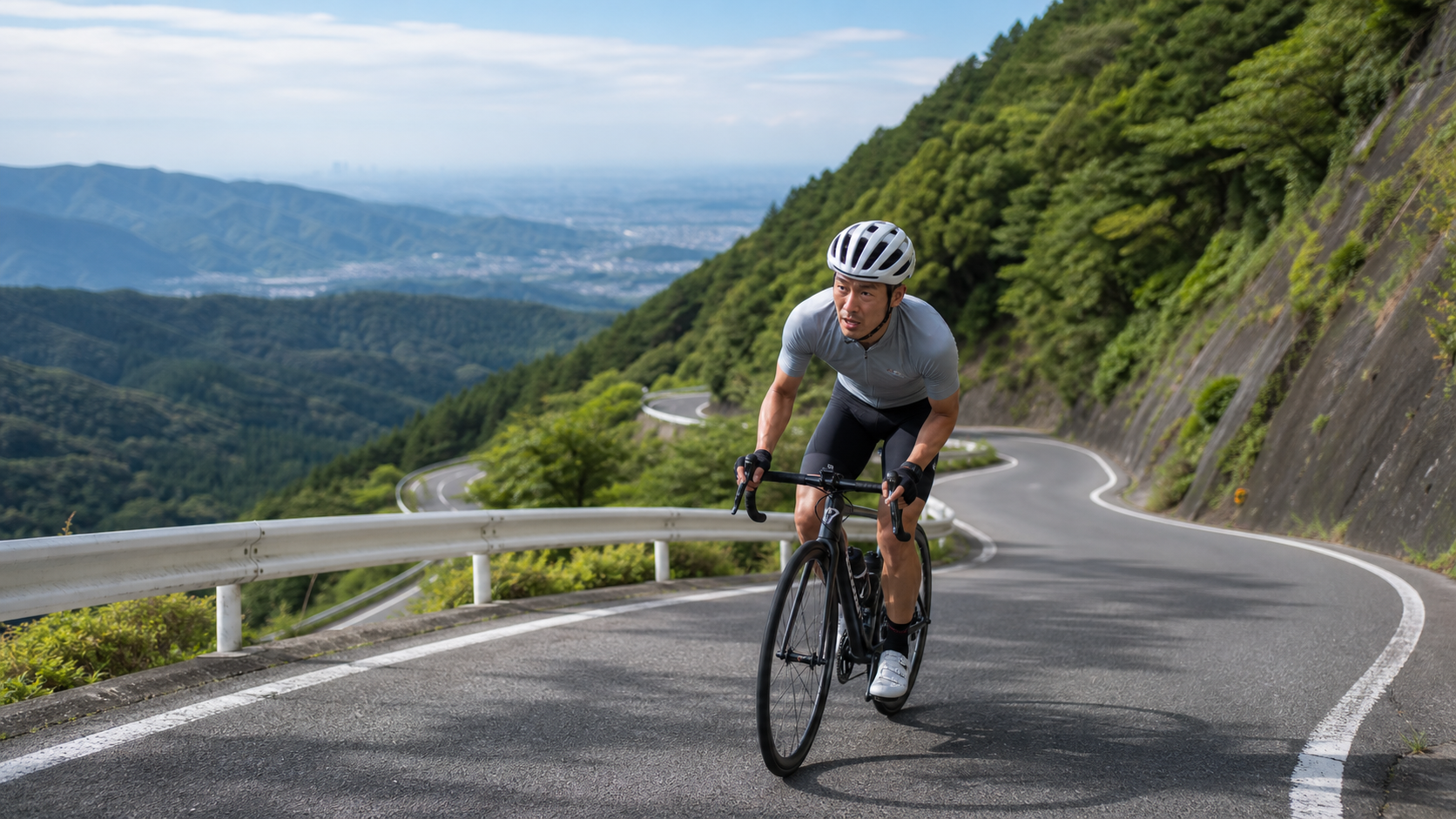
The Coming-of-Age Ritual for Kanto Riders: Yabitsu Pass, a Sacred Ground That Measures Your Fighting Strength
At 761 meters above sea level, 11.5 km on the Omote-Yabitsu side, 643 meters of climbing, and an average grade of 5.5%. Not far from Tokyo, yet it’s the place where countless Kanto riders first learn what “climbing” truly means—Yabitsu Pass, a sacred ground that is both gentle and merciless.
If Kanto riders have a “coming-of-age ritual,” it’s most likely completed at Yabitsu Pass.
Why It’s a “Sacred Ground”
Yabitsu Pass (ヤビツ峠) is located in Hadano City, Kanagawa Prefecture, at an elevation of 761 meters, sitting along Prefectural Route 70. It’s been dubbed a “climbing sacred ground” not because it’s the hardest, but because it’s just right.
It’s not too far from Tokyo, and transportation is convenient; the gradient isn’t intimidating enough to scare off beginners, yet it’s demanding enough that seasoned riders take it seriously. As a result, everyone from first-time climbing newbies to veterans repeatedly chasing their personal bests has left sweat on this climb. It’s like a universally recognized yardstick that measures each person’s “fighting strength.” When Kanto riders ask each other, “What’s your Yabitsu time?”, it’s not just about the result—it’s more like confirming each other’s “standing” in the cycling community.
Nagoki, Not “Nakogi”
The story begins at the Nagoki intersection. This is the starting point of the “Omote-Yabitsu” (front side), right next to National Route 246.
Let me share a local’s little insistence: “名古木” is pronounced nagunuki, not nakogi as the characters might suggest. If you mispronounce it on your first visit, veteran riders will kindly correct you—it’s like the first secret password to joining this circle.
From Nagoki to the pass summit, it’s about 11.5 km with roughly 643 meters of climbing and an average gradient of 5.5%. The numbers look gentle, but Yabitsu’s true character lies in the details.
The Gentle Start Is a “Benevolent Lie”
In the early section after starting, the gradient is relatively mild, passing through residential areas and fields, with sunlight slanting across the road. This stretch is so comfortable that it lulls you into complacency—many riders get excited and push too hard, driving their heart rate way up.
Veterans know this is Yabitsu’s “benevolent lie.” It first lets you float on a gentle slope, then, when you’re at your most relaxed, it bares its real teeth.
I forced myself to hold back, locking my energy away in a box. Because I knew Minomo was waiting for me.
Minomo: The Wall That Decides Success or Failure
Near the Minomo bus stop is the steepest section of the entire climb, with an average gradient of about 9% and peaks approaching 11%.
Too many riders’ time trials collapse right here. Fooled by the gentle start into overspending their energy, they hit Minomo’s steep pitch and immediately show their true colors—heart rate maxed out, legs filled with lead, speed dropping to a despairing crawl.
My strategy: before entering Minomo, I shift to the easiest gear in advance, deliberately saving my strength. Once in the steep section, I sit steady and “roll” up with a high cadence, rather than standing up and muscling the big ring. Standing and grinding burns oxygen too fast—save it for when you truly can’t go on. Inch by inch, I ground my way through that wall. That feeling of “I’m clearly about to give out, yet still moving forward” is exactly what makes climbing so addictive.
Nanohanadai: Catch Your Breath, Take in the World
After surviving Minomo, at about the two-thirds mark, you’ll come across the Nanohanadai Observation Deck.
I stopped, not because I couldn’t go on, but because the view here is worth it. Hadano’s cityscape and the distant Oiso coastline spread out below. The more painful that wall was, the sweeter the scenery is now. This is Yabitsu’s reward for those who put in the effort—it’s cruel, but fair.
After a sip of water and settling my breathing, the gradient steadied out. I found my rhythm again and, with a consistent cadence, reeled in the final few kilometers one by one.
The Summit, and the Road Beyond
The moment I reached Yabitsu Pass, the sense of accomplishment was tangible. This is a landmark in the hearts of countless Kanto riders, and I’d finally written my own entry on it.
If you still have energy left, the “Ura-Yabitsu” on the other side of the summit leads to Miyagase Lake, about 18 km long—longer, more secluded, and wilder than the Omote-Yabitsu. That’s the advanced extension, and Yabitsu’s next invitation to you—it never offers just one road.
A Yardstick That Measures People
What makes Yabitsu Pass special is that it’s a “universally recognized yardstick.”
In the Kanto cycling community, your Yabitsu completion time is almost a universal currency. When riders ask each other, “What’s your Yabitsu time?”, it’s not just about the result—it’s more like confirming each other’s “rank.” Break one hour, and you’re a serious rider; break forty minutes, and you’re strong; if you can get close to thirty minutes, you’re approaching semi-professional territory. With its 5.5% average gradient and 11.5 km length, this climb fairly measures everyone’s ability.
Precisely because of this yardstick, Yabitsu has become the “training sacred ground” for countless Kanto riders. Some show up several times a week, treating it like a gym; others treat their “first Yabitsu challenge” as their coming-of-age ritual into the world of climbing. It’s not the highest mountain, but it’s the one most people share memories of.
A Morning at Nagoki
My challenge began at the Nagoki intersection, right off National Route 246.
(One more reminder: “名古木” is pronounced nagunuki, not nakogi as the characters might suggest. If you mispronounce it on your first visit, veteran riders will kindly correct you—it’s like the first secret password to joining this circle.)
In the early morning, Nagoki still carried the coolness of dew. Riders gathered in twos and threes, gearing up, syncing their computers, taking deep breaths—the air held a pre-race tension and excitement. I felt it too. Looking at the road gently rising before me, I knew the next 11.5 km would be a conversation between me and myself.
That “Benevolent Lie”
In the early section after starting, the gradient is relatively mild, passing through residential areas and fields, with sunlight slanting across the road. This stretch is so comfortable that it lulls you into complacency.
This is Yabitsu’s most cunning trait—veteran riders call it the “benevolent lie.” It first lets you float on a gentle slope, making you think, “I’m feeling good today,” so you unconsciously pedal faster and your heart rate quietly climbs. Then, when you’re at your most relaxed, it bares its real teeth.
I’ve fallen for this before, so this time I forced myself to hold back, locking my excitement firmly in a box. Because I knew Minomo was waiting ahead—that’s the real exam.
Minomo: Where Your True Colors Show
Near the Minomo bus stop is the steepest section of the entire climb, with an average gradient of about 9% and peaks approaching 11%.
Too many riders’ time trials collapse right here. Fooled by the gentle start into overspending their energy, they hit Minomo’s steep pitch and immediately show their true colors—heart rate maxed out, legs filled with lead, speed dropping to a despairing crawl. I’ve personally watched strong riders wobble here, even dismounting to push their bikes. Yabitsu tears off all pretense here, forcing you to face your most authentic self.
My strategy: before entering Minomo, I shift to the easiest gear in advance, deliberately saving my strength. Once in the steep section, I sit steady and “roll” up with a high cadence, never standing up to muscle the big ring. Standing and grinding burns oxygen too fast—I treat it as my last trump card, saved for when I truly can’t go on. Inch by inch, I ground my way through that wall. That feeling of “I’m clearly about to give out, yet still moving forward” is painful, yet addictive—this is probably why climbing is so hard to quit.
Nanohanadai: The Reward for Those Who Try
After surviving Minomo, at about the two-thirds mark, you’ll come across the Nanohanadai Observation Deck.
I stopped, not because I couldn’t go on, but because the view here is worth stopping for. Hadano’s cityscape and the distant Oiso coastline spread out below. The more painful that wall was, the sweeter the scenery is now.
I love this “cruel but fair” personality of Yabitsu. It won’t hand you scenery for free; it demands a price first—you have to endure Minomo’s torment before you’re worthy of standing at Nanohanadai and feeling the breeze. This immediate, clear-cut cause and effect is what makes climbing so healing: here, effort always pays off, and the reward is right in front of you, visible and tangible.
After a sip of water and settling my breathing, the gradient steadied out. I found my rhythm again and, with a consistent cadence, reeled in the final few kilometers one by one.
The Summit, and the Invitation of Ura-Yabitsu
The moment I reached Yabitsu Pass, the sense of accomplishment was solid. At 761 meters above sea level, the summit is a landmark in the hearts of countless Kanto riders, and I’d finally measured my own mark on this yardstick.
And Yabitsu never offers just one road. The “Ura-Yabitsu” on the other side of the summit leads to Miyagase Lake, about 18 km long—longer, more secluded, and wilder than the Omote-Yabitsu. That’s the advanced extension, and Yabitsu’s next invitation to you—like a strict yet generous teacher, it always has the next harder lesson ready for you to take.
After finishing Yabitsu, I sat at the summit for a while, watching the faces of riders as they crested—a mix of exhaustion and satisfaction. I suddenly understood that Yabitsu Pass is a “sacred ground” not because of how magnificent it is, but because it’s like an honest mirror—whatever skill, discipline, and honesty with yourself you have, it reflects back truthfully. And everyone willing to come back again and again to look in that mirror is, bit by bit, on this climb, becoming a stronger version of themselves.
The “Just Right” in the Numbers
Back to the numbers: 11.5 km, 643 meters of climbing, 5.5% average. Yabitsu Pass’s magic lies in this “just right.”
An average of 5.5% isn’t steep enough to crush beginners from the start, yet it’s far from flat enough to bore veterans; 11.5 km isn’t long enough to intimidate, yet it’s plenty to make a time trial full of variables and drama; at 761 meters, it’s easily accessible for a day trip, yet it still has the altitude and coolness of a mountain. All this “just right” makes Yabitsu a climb that suits everyone, yet always leaves room for improvement.
This is why it became a “sacred ground”—it doesn’t intimidate with extreme difficulty, but with a perfectly balanced challenge, it draws generation after generation of riders back again and again. Your first time, the goal is “finish it”; the second time, the goal is “go faster”; by the tenth time, you treat it like an old friend, coming not for any particular reason, but to relive that familiar, pure joy of competing with yourself.
Hadano’s Water, Hadano’s Flavor
Hadano City, where Yabitsu Pass is located, has a charming nickname—the “Town of Water.”
The abundant groundwater from the Tanzawa mountain range wells up in Hadano as clear, famous springs, and the local water has even been selected for the “100 Best Famous Waters of Japan.” After climbing Yabitsu, filling your bottle with Hadano’s famous water and splashing it on your face—that cool, refreshing sensation is the gentlest hospitality this city offers to weary riders.
Hadano is also known for its local produce and snacks. After the climb, find a small shop at the foot of the mountain, enjoy a steaming bowl of ramen or soba to replenish your energy, and exchange a “good work out there” glance with fellow riders rolling down—this simple post-ride time is an indispensable part of the Yabitsu experience. (Please confirm actual shops and opening hours on site.)
A Climb That Lets You Know Yourself
After riding Yabitsu many times, I’ve gradually come to understand that its true value isn’t in the number on the timer, but in how it lets you “know yourself” again and again.
On Minomo’s steep pitch, when the thought of giving up surfaces, how do you respond? On the gentle start, when the “benevolent lie” tempts you to speed up, can you hold your discipline? In the most painful moments, do you grit your teeth and push through, or do you wisely shift down to survive? Yabitsu reflects the answers to all these questions truthfully. It’s like a mirror that shows not just your physical fitness, but your character—your patience, your discipline, your honesty with yourself.
And the most beautiful part is that the you in this mirror can grow. This time you cracked at Minomo, next time you learn pacing; this time you were fooled by the gentle start, next time you hold your rhythm. Yabitsu witnesses your incremental progress, and witnesses how you transform from a flustered beginner into a composed rider.
For You in Kanto, and for You Who’ve Traveled Far
If you live in Kanto, Yabitsu Pass is almost an unavoidable “required course”—sooner or later, a riding buddy will drag you there, or your own curiosity will drive you to stand at the Nagoki starting line. And I’d say: enjoy this lesson, it will stay with you for a long time.
If you’ve traveled from afar, even specifically from Taiwan to ride in Japan, Yabitsu is absolutely worth adding to your itinerary. It’s convenient, scenic, and moderately challenging—a perfect introduction to experiencing “Japan’s climbing culture.” When you leave your own mark on this Kanto sacred ground, you’ll share the same memories and emotions with countless Japanese riders.
Yabitsu Pass isn’t the highest, the hardest, or the most magnificent. But it’s the climb most like “a good teacher”—strict, yet generous; ordinary, yet timeless. What it teaches you goes far beyond how to climb a mountain—it’s how to surpass yesterday’s self, again and again.
The Complete Memory of That Day
I still remember the morning of my first Yabitsu time trial.
At the Nagoki intersection in the early morning, riders had already gathered in twos and threes. Some were warming up, some were syncing their computers, and the air was thick with pre-race tension. I felt it too, palms slightly sweaty, checking my bike computer over and over. For a Kanto rider, “doing a Yabitsu time trial” is almost a rite of passage, and that day, it was my turn.
The computer zeroed, and I was off. The gentle start was deceptively comfortable; I felt in great shape and instinctively wanted to accelerate. Fortunately, the veteran rider’s advice from before the start was still ringing in my ears—“Don’t be fooled by the early section, save your strength for Minomo.” I forced myself to suppress the excitement, keeping my power within the planned range, watching as a few riders who’d charged ahead too fast flew past me.
Sure enough, once we hit Minomo’s steep section, the script played out. Those who’d overtaken me earlier each showed their true colors on the 9% grade, slowing down, breathing turning ragged. And because I’d held back early, I still had reserves, and one by one I caught them back. That’s the magic of pacing—the tortoise and the hare story plays out for real on Yabitsu’s slopes every single day.
Minomo was the most agonizing. Heart rate pinned at the limit, legs flooded with lactate, every pedal stroke a tug-of-war with my own willpower. I sat steady, grinding up inch by inch with a high cadence, only one thought in my head: survive Minomo, and you’ve won half the battle.
After the steepest section, the view at Nanohanadai lifted my spirits. Hadano’s cityscape spread out below, and I knew victory was in sight. The final few kilometers steadied out, and I squeezed out every last bit of remaining strength, sprinting toward the summit.
The moment I stopped the clock, I collapsed onto my bike, gasping for air, sweat dripping onto the ground. The time wasn’t top-tier, but it was the first time I’d conquered this Kanto sacred ground with my own legs and discipline. That feeling of exhaustion mixed with elation, I still remember to this day.
In Closing: On “Competing with Yourself”
After riding Yabitsu many times, I’ve gradually come to understand that the opponent in a climbing time trial is never anyone else—it’s yourself.
The self that wants to sprint in the early section, the self that wants to give up at Minomo, the self that frets over numbers—Yabitsu forces you to face these inner voices again and again, and learn to live with them, to master them. What you conquer on the climb isn’t so much the 643 meters of elevation gain, but your own restlessness, weakness, and reluctance to accept defeat.
And this ability to “compete with yourself,” once developed, seeps into every corner of life. When you hit a wall at work, you’ll remember Minomo’s steep pitch—“just push through and it’ll be over”; when faced with temptation to take a shortcut, you’ll remember the discipline of the early section—“hold your rhythm, don’t be fooled.” What climbing teaches you is never just riding—it’s an attitude toward hardship.
This, perhaps, is the deepest reason Yabitsu Pass is called a “sacred ground.” It’s not a mountain for you to conquer, but a teacher accompanying you in self-cultivation. Every time you return to the Nagoki starting line, you’re not just challenging a climb—you’re keeping a date with yourself. And with every date kept, you become a little stronger than yesterday.
For Those Who Want to Come
- Season: Spring and autumn offer pleasant temperatures, best for chasing personal records; summer is cooler in the mountains but still guard against heatstroke; winter is mostly rideable at lower elevations, but be conservative on wet leaves after rain.
- Pacing: Don’t be fooled by the gentle start—save your strength for Minomo.
- Gearing: Shift to an easier gear before Minomo, spin through it, don’t muscle it.
- Etiquette: Holidays bring many riders and hikers; start early to avoid crowds, and always yield on corners.
Yabitsu Pass isn’t the highest or the hardest, but it’s the climb most like “a mirror.” Whatever skill, discipline, and honesty with yourself you have, it reflects back truthfully. This, perhaps, is the real reason it’s called a “sacred ground.”
Traveler Q&A: Practical Planning for This Ride
How much time should I allocate?
The Omote-Yabitsu round trip takes half a day—it’s the classic “leave in the morning, home by noon” route for Tokyo-area riders. If you want to extend, you can challenge the Ura-Yabitsu on the other side of the summit, about 18 km long, which requires another half day and more energy.
How difficult is it? Who is it suitable for?
With a 5.5% average, the difficulty is moderate—an excellent “climbing from beginner to intermediate” route. Beginners can aim for a steady finish, while veterans can go for a time trial. The only real challenge is Minomo’s ~9% steep section; hold your pacing and you’ll be fine.
How do I get there?
Take the Odakyu Line from Tokyo to Hadano Station, then ride to the Nagoki starting point. It’s convenient and a popular choice for bike travel—another key reason it became Kanto’s climbing sacred ground.
Final Words
To me, Yabitsu Pass is a strict yet generous teacher. With a “just right” yardstick, it measures my fitness, discipline, and character; with Minomo’s steep pitch, it forces me again and again to face the self that wants to give up; and with Nanohanadai’s scenery, it fairly rewards every bit of effort.
And what it teaches me most deeply is “competing with yourself.” The opponent in a climbing time trial is never anyone else, but the restless, weak, anxious self. Every return to the Nagoki starting line is a date with yourself; with every date kept, I become a little stronger than yesterday.
If you’re in Kanto, Yabitsu will eventually become your required course; if you’ve come from afar, it’s absolutely worth adding to your itinerary. Go stand at that starting line where so many riders gather, experience that painful yet addictive torment on Minomo’s slopes, and at the summit, join the shared memory of countless Kanto riders. You’ll understand why this climb—not the highest, not the hardest—is reverently called a “sacred ground” by generation after generation of riders.
Afterword: Every Kanto Rider Owes Yabitsu a Story
After riding in Kanto for a while, you’ll notice something interesting: almost every rider has a “Yabitsu story.”
Someone remembers the embarrassment of cracking at Minomo on their first attempt and awkwardly dismounting to push; someone remembers a morning when they set a personal best and couldn’t stop grinning all day; someone remembers meeting a lifelong riding buddy here; someone remembers riding up alone with a broken heart, letting the wind at the summit dry their tears. Yabitsu isn’t just a climb—it’s a shared emotional vessel for Kanto riders, holding countless people’s sweat, tears, setbacks, and glory.
And I have my own Yabitsu story—that first time trial morning when, through pacing, I caught back everyone who’d charged ahead too fast. What I learned that day went far beyond “the importance of pacing”—it was the life wisdom of “staying steady and trusting the process.” That story, I’ll remember for a lifetime.
If you don’t yet have your own Yabitsu story, then go write one. Go to the Nagoki starting line, to Minomo’s steep pitch, to the wind at Nanohanadai, and leave your sweat and emotions on this Kanto sacred ground. One day, when you can smile and share “my Yabitsu story” with others, you’ll truly be a member of the Kanto rider family.
Related Reading
- Yabitsu Pass (ヤビツ) Practical Guide: Segment-by-Segment Pacing and Gear Breakdown for 11.5 km and 642 m of Climbing
- Kuju Chojabaru → Nojiri Pass Guide: Pacing, Wind Protection, and Summit Tips for a 5.1 km 5.6% Highland Climb
- A Volcanic Road with 1,300 Years of Hot Spring History: Nasu-Tōge no Chaya’s Onsen, Legends, and Wilderness Riding
- Standing on the Roof of Kyushu: Riding the Yamanami Highway, the Spectacular Highland from Chojabaru to Nojiri Pass
台北闊瀨陡坡 騎旅 / 日本單車雜誌編輯車友臨時加入!/ 髮香才是最強的 / feat. 北迴歸線小隊 / 公路車 CT Yeh
6 個月前
2025 乘鞍 KOM 登山賽挑戰實錄 / 日本公路最高 ! 賽前探路篇 / 比富士山厲害,無敵絕景!/ 40週年 / 中文YT首發 / 公路車 / CT Yeh #乘鞍ヒルクライム
11 個月前
風櫃嘴時間 預測西進武嶺時間?13000名車友統計數據分析告訴你 !
5 年前
2025 乘鞍岳登山賽 比賽全紀錄篇 / 完整路線攻略介紹 / 日本版武嶺 公路最高點 / 高山空拍絕景 / 明年會開團! / 公路車 / CT Yeh
10 個月前
2024 如來神掌 百人約騎挑戰!feat. 秘境單車社團 / 神人們太可怕 / 全程錄影 x 完整坡度解析 / 公路車 / CT Yeh
2 年前
宇老大滿貫 拉拉山 員工旅遊 有如爬了一座東進武嶺 #公路車 4K高畫質
6 年前
大禹嶺 到 武嶺牌樓 全程前後實況錄影 | 北進武嶺 | 東進武嶺 | KOM | 訓練台 | 坡度分析 | Taiwan KOM Last 10 km HARD | 公路車
6 年前
西進武嶺 自製新版AI配速表產生器 x 賽前攻略 抱佛腳! 沒有功率計也可以產生配速表嗎?有什麼其他眉角賽前要注意的呢? | 西進武嶺 / 東進武嶺 KOM 攻略 | 公路車 | CT Yeh
4 年前