Breezes and Bell Tolls of Bagua Mountain: A Morning Dialogue Riding Toward Fengshan Temple on Changhua County Road 139
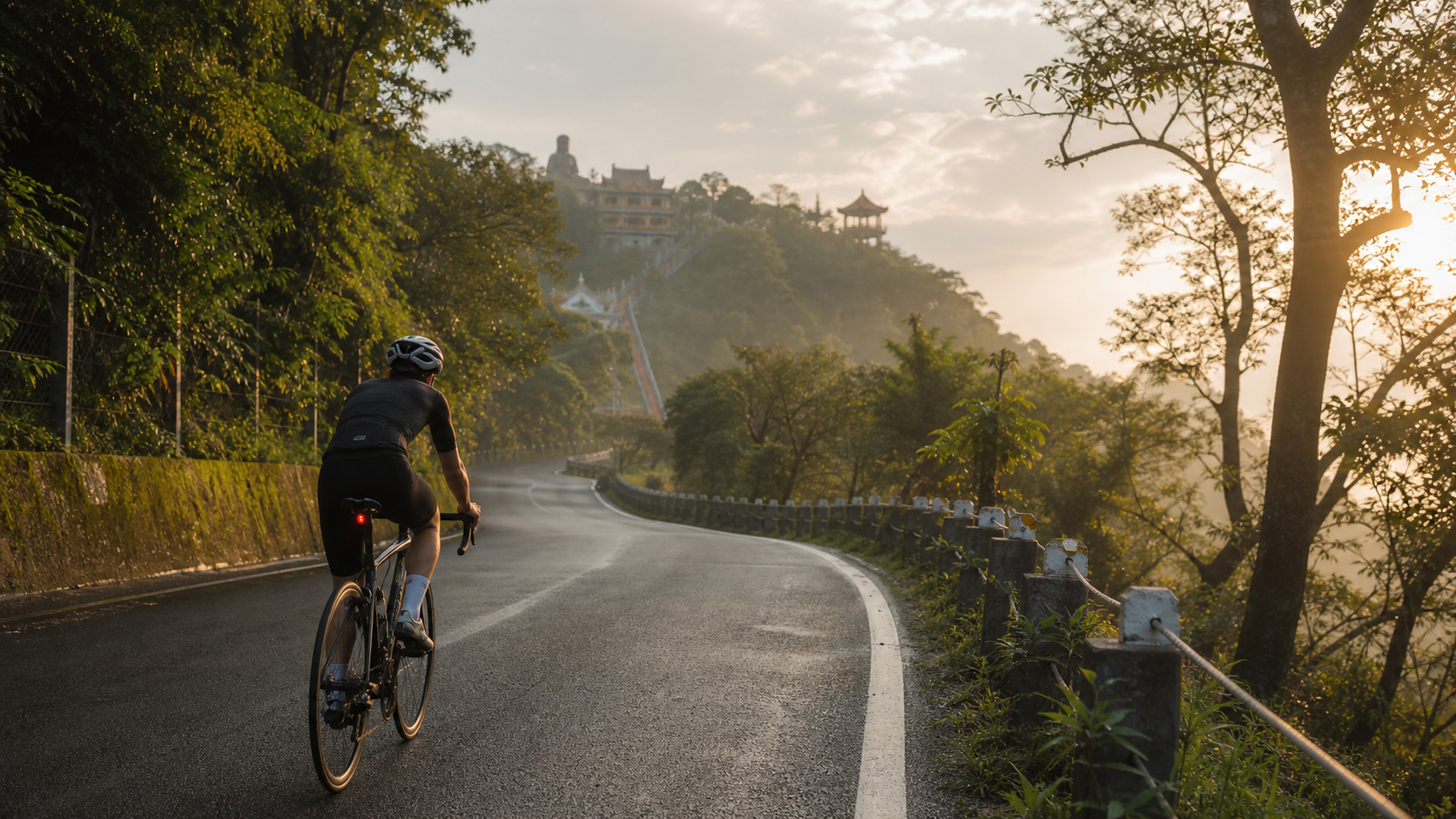
A Daily Practice Route Hidden in the Bagua Mountain Range
Changhua County Route 139 is a name that needs little introduction for those familiar with central Taiwan’s cycling culture. It winds through the Bagua Mountain tableland, connecting Changhua City with several surrounding townships, and is regarded by central Taiwan riders as “the closest route to the city that instantly switches into a mountain rhythm.” What I want to talk about today is not the grand epic of the entire Route 139, but one relatively quiet segment that carries the meaning of daily practice for many people—riding from the traffic light at the foot of the mountain all the way to Fengshan Temple.
This segment is 4.75 kilometers long with a total elevation gain of 153 meters. The numbers may not seem impressive, but its significance has never been about the size of the numbers—it’s about how it serves as a bridge between “daily life and the mountains” for countless central Taiwan riders. For many, this is not a challenging route that requires taking special leave or planning an itinerary to visit; it’s a pocket route you can set out on anytime after work or on a holiday morning—it’s right there in your everyday surroundings, within easy reach, yet it still retains the tranquility unique to the mountains and the honest test of its gradients.
The Bagua Mountain tableland itself holds a distinctive place in Taiwan’s geography and history. Although the elevation of this tableland is not particularly high—its highest point reaching only around 400-plus meters—its proximity to the Changhua Plain gives it pronounced terrace-edge undulations in terrain. Since ancient times, it has served as an important geographical barrier and transportation corridor for the Changhua region. Route 139 is part of the road system weaving through the undulations of this tableland, linking together multiple settlements, temples, and scenic viewpoints along the way, with Fengshan Temple being one of the nodes carrying deep local religious significance.
The Starting Traffic Light: The Boundary Between City and Mountains
Every ride worth remembering has its own ritualistic sense of beginning. For this route, that boundary point is the traffic light intersection at the foot of the mountain. This intersection is utterly ordinary—just a typical crossroads with standard signal lights, crosswalks, and surrounding homes and shops—but for riders familiar with this route, it carries an almost symbolic meaning: the moment the red light turns green is the instant of switching from the city’s rhythm into the mountain’s rhythm.
I often think this sense of “transition” is precisely what makes so many suburban climbing routes in Taiwan so captivating. You don’t need to drive two or three hours and cross mountains to reach the starting point; your daily living circle may be nestled right against the edge of a mountain. At the intersection where Changhua residents commute to work or school, take a turn, climb the slope, and you’re in another world—tree shade, birdsong, and the occasional dog bark replacing the bustling traffic of the city.
Setting out from this intersection in the early morning is the experience I recommend most. The sun hasn’t fully risen, the air carries a slight dampness and coolness, and the traffic light still holds a hint of nighttime stillness. The moment you press down on the pedals, the gradient immediately reveals itself—not steep, but enough to make you instantly feel the bodily signal of “ah, I’m climbing.” This gradual sense of incline actually gives you the feeling of being gently welcomed, rather than the frustration of being struck head-on by a brutal steep pitch.
Light and Sound Along the Way: A Slowly Unfolding Sensory Experience
Much of the charm of the Fengshan Temple segment of Route 139 comes from its richly varied layers of light and sound along the way. The Bagua Mountain tableland has a fairly high vegetation coverage rate, and the route mostly alternates between tree shade and open vistas, meaning riders experience distinctly different light changes within the same stretch—sometimes dappled shadows cast by dense canopies, sometimes sudden openings with panoramic views of the fields on the Changhua Plain.
In the early morning, sunlight filters through gaps in the leaves onto the asphalt, creating a light-and-shadow effect almost like cinematic camera work. This is also why many cycling photography enthusiasts are particularly drawn to visiting this route in the early morning. If you come after a rain has just cleared, the air is filled with a fresh scent of mixed soil and vegetation, paired with the moist sheen reflecting off the road surface, adding an extra layer of poetry to the entire ride.
The soundscape is equally rich. In the mid-section where the gradient fluctuates, the denser tree cover makes birdsong especially clear, with occasional calls of bamboo partridges or other mountain birds echoing back and forth. If you visit in the early morning, you might also encounter local residents out for their morning exercise—perhaps an elderly person walking a dog, or a neighbor riding an old-fashioned basket bicycle for slow commuting. This riding experience interwoven with local life is precisely what makes suburban climbing routes feel more human and warm compared to remote mountain routes.
Fengshan Temple: The Destination Where Faith and Landscape Converge
Arriving at Fengshan Temple is the climax of this journey and the point where its meaning comes full circle. As an important local religious site, Fengshan Temple carries the spiritual sustenance of generations of surrounding residents. Although the focus of this article is the cycling experience rather than religious research, there’s no denying that temples scattered throughout Taiwan’s mountains like this one often stand as historical witnesses to early settlers reclaiming mountain areas and settlements gradually taking shape.
When riders reach the temple gate of Fengshan Temple, most choose to pause briefly—take a sip of water, snap a photo, and let their labored breathing gradually settle. This moment of pause often holds more meaning than the destination itself. You’ll find your view suddenly opening up, allowing you to overlook parts of the settlements and fields below. That “scenery earned with your own legs” always feels more profound and more precious than simply driving straight there.
Many riders take a brief moment of quiet reflection here—not necessarily a religious pilgrimage, but more like a post-exercise ritual—feeling the breeze brush against sweat-soaked clothing, listening to the ambient sounds around the temple square, and letting scattered thoughts settle in that brief moment. This experience of “exercise as practice” might well be the reason why many seasoned riders, even after riding this route countless times, are still willing to return again and again.
The Fengshan Temple Segment Through the Changing Seasons
Although Taiwan’s seasons are not as distinctly defined as in temperate countries, the Fengshan Temple segment of Route 139 still reveals strikingly different faces with each season. In spring, the vegetation along the way begins to sprout fresh green, wildflowers occasionally dot the roadside in some sections, and the air carries the distinctive dampness left by spring rains; summer is the season of the densest, most luxuriant greenery, with tree shade providing precious cover—but you also need to watch out for sudden afternoon thunderstorms.
Autumn is perhaps the most comfortable season to visit this route—temperatures cool down, humidity drops, and the riding sensation is especially pleasant, making it the best season for challenging your personal best time. Although winter in central and southern Taiwan isn’t as cold and damp as the north, light fog occasionally blankets the mountain area in the early morning, adding a touch of hazy poetry to the route—though riders need to pay extra attention to slippery road surfaces and visibility issues.
Visiting the same route in different seasons and at different times often reveals completely different scenic details and emotional experiences. This is why I particularly recommend that riders don’t just ride it once for a check-in photo, but rather treat it as a “pocket route” to revisit across all four seasons, using your body to memorize the unique scents and light each season has to offer.
Local Connections: Extending from Riding to Life
As an important agricultural and cultural hub in Taiwan, the villages around Route 139 in Changhua preserve much local scenery worth exploring for riders passing through. Although this article won’t specifically list particular shop names (after all, businesses change quickly, and I’d suggest riders rely on on-site conditions and local community recommendations), generally speaking, the settlements at the foot of the mountain retain the everyday atmosphere of traditional markets and local food stalls. After finishing your ride, it’s worth slowing down to feel this warmth of everyday life that belongs to Changhua.
The Bagua Mountain tableland area is also dotted with several well-known scenic viewpoints and rest stops. Many riders incorporate the Fengshan Temple segment into a larger riding itinerary, visiting other cultural and natural attractions around the tableland in the same trip, making the entire ride not just a simple physical workout, but a deeper mini-journey combining sport, scenery, and local culture.
The Meaning of This Road for Cyclists: A Mini Grand Tour in Everyday Life
Looking back on this journey from the traffic light at the foot of the hill to Fengshan Temple, I’ve gradually come to realize that what makes it so moving is not how steep the gradient is or how magnificent the scenery is, but rather that it demonstrates the possibility of a “grand tour up close”—you don’t need to travel to distant mountains or spend an entire day to gain the sense of accomplishment and mental clarity that climbing brings. Sometimes, that small hill you pass every day but have never truly gazed upon may hold a landscape and a practice worth returning to again and again.
For many cycling enthusiasts in central Taiwan, the Fengshan Temple section has long surpassed its meaning as a mere exercise route; it has become more like a life ritual—when work pressure mounts, riding this route lets physical fatigue replace mental anxiety; when spirits are low, riding this route lets the play of light and shadow and the birdsong along the way soothe turbulent thoughts. This kind of riding experience, so intimately connected to the land and to daily life, may well be the most precious—and most easily overlooked—value of Taiwan’s suburban cycling culture.
If you also live in central Taiwan but haven’t yet visited the Fengshan Temple section on Changhua County Route 139, I encourage you to find a morning or evening and ride this route that seems ordinary yet holds deep meaning. You’ll discover that happiness can sometimes be very simple—just a climb of moderate length, a quiet temple, and the peaceful time of conversing with yourself during the ride.
A Conversation with a Veteran Rider: On Perseverance and Original Intent
On one early morning visit to this route, I met an older rider at the mountain gate of Fengshan Temple who looked like he had been riding road bikes for decades. His bike was an old steel frame with faded paint but meticulously maintained, adorned with several yellowed stickers that clearly showed it had accompanied him through numerous races and long-distance tours. We chatted briefly, and he told me he had ridden this route no fewer than several hundred times—from his vigorous youth to now, with knees slightly stiff, he still maintained the habit of visiting every week.
He said something that left a deep impression on me: “When it comes to climbing, in youth you compete on speed; as you age, you compete on whether you’re still willing to set out.” These words seemed plain at first, yet they carried profound life philosophy. For him, the Fengshan Temple section had long ceased to be an arena for breaking personal records; it had become a daily ritual of conversing with his own body and confirming that he was still “alive, still moving.”
This conversation made me rethink the essence of cycling. We often chase data—faster average speeds, lower completion times, more impressive climbing coefficients—but that older rider showed me another possibility: the ultimate value of cycling may not lie in how fast you can ride, but in whether you’re willing to return to the same route year after year, through wind and rain, to keep conversing with yourself and staying connected to the land. The original intent behind that perseverance is the true lesson we younger riders should learn.
Dual Preparation of Equipment and Mindset: The Ritual Before Departure
Every time I prepare to visit the Fengshan Temple section, I’ve developed a simple yet fixed departure ritual. The night before, I check tire pressure, make sure my water bottle is full, and neatly arrange my cycling kit and helmet at the entrance. These seemingly trivial preparatory actions are also a form of mental warm-up—through concrete acts of preparation, I gradually shift myself from the busy rhythm of daily life into the riding mindset about to unfold.
Before setting out in the early morning, I like to pause briefly at the traffic light at the foot of the hill, quietly taking in the atmosphere of the town not yet fully awake—the breakfast shop owner preparing to open, the newspaper delivery person weaving through alleys on a scooter, the occasional distant rooster crow or dog bark. These scenes unique to early morning form a subtle contrast and transition with the mountain riding about to begin, and they give every departure a ceremonial sense of anticipation.
During the ride, I’ve also gradually developed a habit—not deliberately chasing pace or data, but allowing myself to be fully immersed in the present bodily sensations and the surrounding scenery. This philosophy of “slowing down” may run counter to many guide-style articles that emphasize data-driven training, but I’ve always believed that beyond training benefits, what matters more in cycling is the spiritual nourishment it brings us and the improvement in quality of life.
A Message to Those Who Haven’t Set Out Yet
If you’re hesitating about whether to visit this route, I want to tell you: you don’t need to wait until your fitness reaches a certain standard, nor until your equipment is flawless, before you’re willing to embark on this journey. The beauty of the Fengshan Temple section lies precisely in its accessibility and inclusiveness—whether you’re a beginner just starting out or a battle-hardened veteran, this route can embrace you in its own way, and during the ride, give you an experience and insight unique to this very moment.
Find a clear morning or evening, get on your bicycle, head to that familiar yet unfamiliar traffic light intersection, let the gradient gradually reveal itself, let your breathing gradually deepen, and let the light, shadow, and birdsong along the way accompany you through this journey. The moment you arrive at Fengshan Temple, you’ll understand that the meaning of this trip has never been merely about reaching the destination, but about the profound connection you build throughout the entire process—with yourself, with the land, and with this Bagua Mountain plateau that carries the memories of countless people.
Fengshan Temple After Rain: A Different Face of the Scenery
Most riders prefer to visit this route in clear weather, but I privately have a special fondness for the Fengshan Temple section right after the rain clears. After the cleansing of an afternoon thunderstorm, the entire route seems to have been washed anew—the asphalt glistens with a moist sheen, and the greenery along both sides appears exceptionally saturated and vivid. The air carries the unique fragrance of earth after rain, mingled with the fresh scent emanating from mountain vegetation; every deep breath feels like injecting a surge of cool energy into the body.
Riding after rain naturally requires greater caution—wet surfaces, accumulated fallen leaves, and puddles on some sections due to poor drainage are all risk factors demanding heightened awareness. But as long as you slow down and sharpen your focus, the Fengshan Temple section after rain often delivers a completely different sensory experience: clouds and mist occasionally hang low on the mountainside, adding a touch of hazy poetry to the familiar scenery; occasionally you might even spot a rainbow at the horizon, an unexpected bonus reward for the ride.
This quality of “the same route, different weather, completely different experiences” is precisely what makes suburban mountain routes so captivating. It teaches us that scenery is never a fixed, static image, but a dynamic presence that constantly shifts with light, humidity, and season. For this reason, even after riding this route dozens of times, every departure still reveals new details worth pausing to appreciate.
Epilogue: A Daily Route That Never Grows Tiring
Writing this, I recall my own green and inexperienced self on my first ride up this route—back then I wasn’t even familiar with basic climbing pace, was gasping for breath by the middle section, and even briefly considered whether I should dismount and walk the remaining stretch. But it was precisely through these repeated challenges and accumulations that I gradually came to appreciate the dual growth—physical and mental—that climbing brings. Today, the Fengshan Temple section is no longer just a training route for me; it’s more like an old friend. No matter what ups and downs or challenges life brings, as long as I ride up this familiar slope, I can always rediscover inner peace and strength.
I sincerely recommend that every rider who hasn’t yet visited this route find an appropriate time to personally experience the breeze and the temple bells of this Bagua Mountain plateau. I believe you too will come to love this seemingly ordinary daily path of practice, one that holds infinite scenery and meaning.
An Invitation to Riders at Every Stage of Life
The reason this route continues to draw riders of all ages and backgrounds back again and again lies largely in the fact that it offers something meaningful to cyclists at every stage of life. For young riders just entering the workforce, at the peak of their physical fitness, this is an excellent arena for honing climbing skills and accumulating training mileage. For riders in middle age, beginning to place greater emphasis on health management, this is a healing space to escape the pressures of the office and regain a sense of control over their bodies. And for seasoned riders like that veteran cyclist, who have been riding for the better part of their lives, this place serves as a testament to the passage of time—a spiritual ground for an ongoing dialogue with their former selves.
I have also encountered fathers riding this route with their children. Although the kids’ fitness levels aren’t yet sufficient to complete the entire course on their own, the scene of companionship and passing the torch is deeply moving. Perhaps in a few years, these children will, like their fathers, ride up this familiar slope alone on some early morning, carrying on the cycling memories and family traditions that belong to this Bagua Mountain plateau.
This is precisely what makes the Fengshan Temple section of County Highway 139 so captivating—it is not merely a road in the physical sense, but rather a realm that carries countless personal stories, family memories, and transitions between life stages. Everyone who has ridden this route has left behind their own footprints and emotions here, and these invisible traces, accumulating layer upon layer, constitute the true soul and value of this route.
The next time you ride through Changhua, or make a special trip to central Taiwan for a cycling getaway, consider adding the Fengshan Temple section of County Highway 139 to your itinerary. Approach it with an open heart and slowly absorb everything this route has to offer—whether it’s the physical training or the mental clarity, I’m confident it will become a cherished memory worth revisiting again and again in your cycling career. May every rider who reads this find their own “Fengshan Temple” on the mountain or road near their own life, and in the countless mornings and evenings to come, continue to engage in quiet, profound dialogues with this land and with themselves.
Afterword: A Note to Myself on the Next Morning
Every time I finish writing a piece about the Fengshan Temple section, I find myself recalling the feelings I had when I first rode this road—back then, I still felt a sense of unfamiliarity and apprehension about climbing, unsure whether my fitness could handle it, and uncertain what scenery I might encounter along the way. Looking back now, that apprehension has long since transformed into a familiar and reassuring sense of anticipation. Before every ride, I know exactly what gradients, what light and shadow, and what emotional shifts await me.
This “familiarity” is precisely the most precious reward of repeatedly visiting the same route. It turns riding from a one-off physical challenge into a spiritual resource that can be drawn upon at any time—when life gets so busy it takes your breath away, I know that simply riding this road will help me rediscover the rhythm of breathing; when inner turmoil makes it hard to find peace, I know the birdsong and shade along the way will always cleanse my thoughts.
As I write this, the sky is gradually brightening. I think that tomorrow morning, perhaps I should ride up this familiar slope once more, to visit that quietly standing Fengshan Temple on the Bagua Mountain plateau.
Related Reading
- Changhua County Highway 139 Fengshan Temple Guide: 4.7 km, 153 m Elevation Gain, an Entry-Level Climb Suitable for Both Beginners and Intermediates
- County Highway 139 and the Bagua Mountain Bike Path: Central Taiwan Riders’ Favorite Training Route
- Three Classic Climbs on Nantou’s Bagua Mountain: A Complete Analysis of Routes 139B, 137B, and 154
- Changhua Bagua Mountain Range Traverse: A Guide to Diverse Riding Routes in Central Taiwan’s Hill Country
2024 如來神掌 百人約騎挑戰!feat. 秘境單車社團 / 神人們太可怕 / 全程錄影 x 完整坡度解析 / 公路車 / CT Yeh
2 年前
彰化 139縣道 單車 穩定測試
10 年前
高雄綠園道鐵路自行車道 / 外地人能輕鬆駕馭 還是整路崩潰? / 2025 全線開通 春節實地探索一次!(附GPS連結)/ 公路車 / CT Yeh
1 年前
嘉義大埔、阿婆灣挑戰賽,美到以為在日本!ft. 環騎5 Cool 西拉雅188 / 公路車 / CT Yeh
7 個月前
大武山20%魔王陡坡【JJSC南台灣遊騎Day2】!屁股真的要裂開了...凡士林抹滿也沒用?神秘金教堂還有超便宜夜市
3 個月前
2023 彰化經典百K 多視角臨場版! Remix 第一集團視角 | 美利達兆豐盃|公路車 | CT Yeh
3 年前
單車實況) 車測中心高速賽道 96 彰化讚 挑戰組一圈實錄 | ARTC
6 年前
2025 紫南宮99.9K環縣自行車挑戰賽 直播 / 第一集團跟了20K / CT動態數據直播系統 / 公路車 / CT Yeh
1 年前