Taiwan Route 3 Guanziling: The Radium Legend from Over a Century Ago, and a Long Climb to the Mud Hot Springs
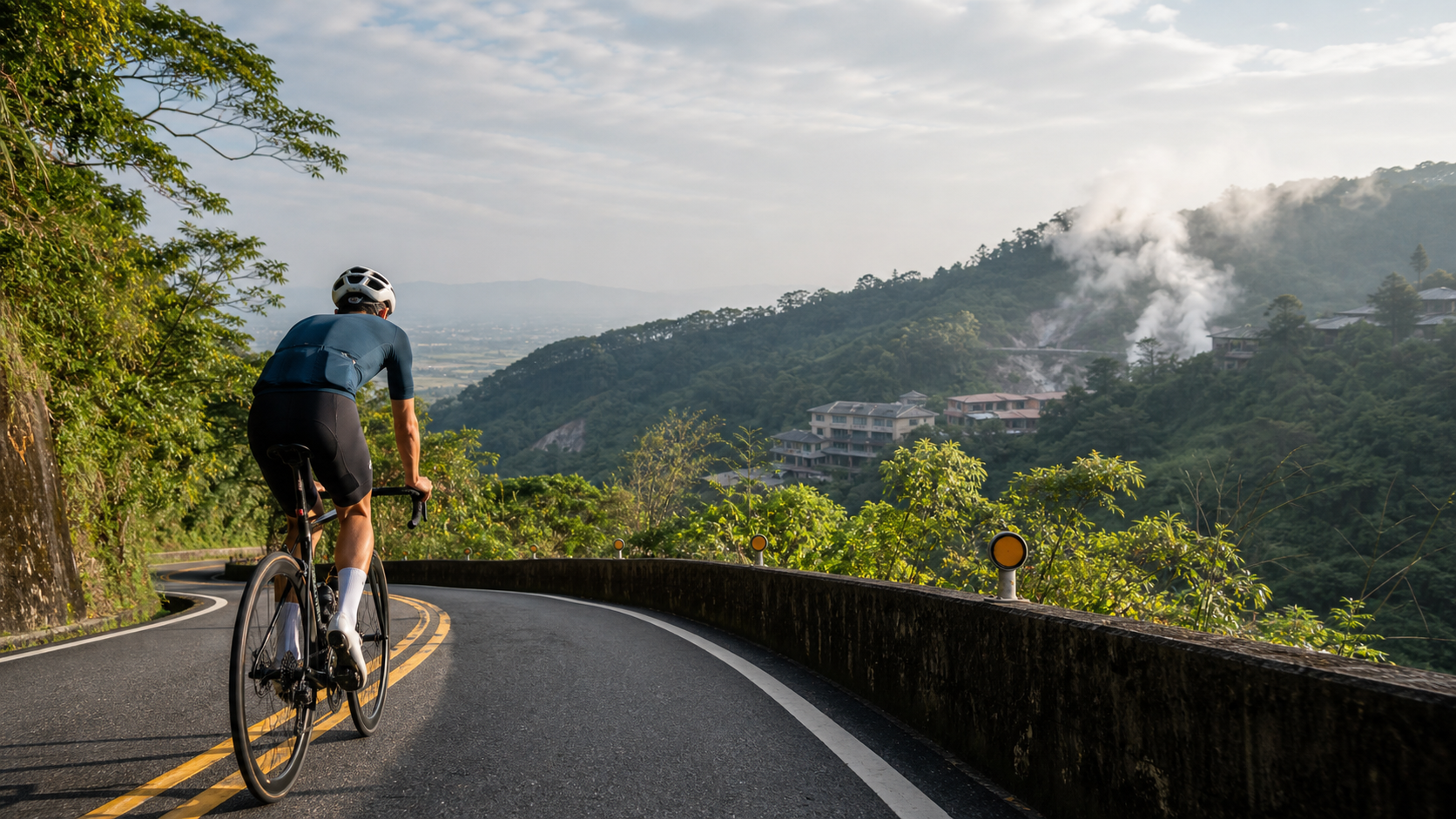
Over a hundred years ago, Japanese soldiers discovered hot springs bubbling up in these mountains; over a hundred years later, you are pedaling along the same terrain, slowly climbing toward this legendary place that witnessed the beginning of Taiwan’s hot spring culture.
1. The Hot Spring Whose Fate Was Rewritten by Radium
The story of the Guanziling hot springs begins in 1898. That year, Japanese soldiers accidentally discovered the existence of hot springs in this mountain area, opening the legendary chapter of this hot spring town that would span over a century. In 1904, the first hot spring inn was established here, officially bringing this spring source, hidden in the mountains, into Taiwan’s tourism map.
What truly made Guanziling famous was a research finding in 1913—after analyzing the spring water, scientists from the Taiwan Governor-General’s Office discovered it contained radium. In that era, when radioactive elements had just been discovered and were regarded as miraculous substances, this finding caused a huge sensation in society. In the same year, the government built a three-tier public bathhouse, officially opened on December 14, allowing more people to personally experience this legendary hot spring.
By 1916, Guanziling was listed alongside Beitou, Yangmingshan, and Sichongxi as one of the “Four Major Hot Springs of Taiwan.” This title, to some extent, cemented Guanziling’s unshakable importance in the history of Taiwan’s hot spring culture—even today, more than a century later, this hot spring town still attracts countless visitors who come specifically to experience this legend spanning a hundred years.
2. Taiwan’s Only Mud Hot Spring
The most distinctive feature of the Guanziling hot springs lies in its water quality—it is an alkaline carbonated spring, with a smooth texture and a faint sulfur scent, with a spring temperature of around 75°C. What sets it apart most is that the hot spring here often appears in a muddy form, making it Taiwan’s only mud hot spring, rich in various minerals. Folk tradition holds that such mud hot springs have a certain soothing effect on skin allergies, beauty, and rheumatoid arthritis (this is a long-circulated folk belief, not a therapeutic guarantee confirmed by rigorous medical research; actual experiences vary from person to person, and this is for reference only).
Imagine soaking in such a pool of warm mud—the grayish-white mud wrapping around your skin, the warm sensation spreading from your fingertips through your entire body. This unique bathing experience is exclusive to Taiwan, a precious experience that can only be felt in Guanziling. And before you step into the hot spring pool, if you choose to ride your bike up along Taiwan Route 3, that sense of satisfaction after enduring hardship first will make this hot spring time especially worth cherishing.
3. A Small Note on Administrative Divisions
When planning this cycling journey, it’s worth noting a small geographical detail: the official Strava location for this section of the Taiwan Route 3 climb shows it as Dapu Township, Chiayi County, but the Guanziling hot spring area as commonly understood actually falls under Baihe District, Tainan City. This discrepancy between the location and the administrative division of the destination reflects, to some extent, the complexity of Taiwan’s mountainous terrain crossing county boundaries—in this border area at the southern end of the Alishan range between Chiayi and Tainan, administrative boundaries do not necessarily align perfectly with actual living spheres and geographical features.
For riders, this section can be understood as: starting from the direction of Dapu Township, Chiayi, climbing continuously along Taiwan Route 3, ultimately heading toward the Guanziling hot spring area in Baihe District, Tainan. This cycling experience crossing county boundaries, to some extent, adds a unique sense of accomplishment of “riding through two counties in one go” to the journey.
4. First-Person Perspective: An Encounter with a Century-Old Hot Spring
Starting from Dapu Township, climbing gradually along Taiwan Route 3, the gradient in the early section is still relatively gentle, giving one the leisure to observe the surrounding mountain scenery. As the elevation gradually increases, a faint hint of sulfur seems to waft through the air—that distinctive smell of the Guanziling hot spring area, reminding the rider that the destination is not far off.
The sustained climbing in the middle section tests endurance and the management of breathing rhythm. Sweat slides down the cheeks, forming a curious echo with the hot spring water one imagines soaking in shortly—the sweat shed at this moment will ultimately be thoroughly washed away and soothed by that pool of warm mud hot spring upon reaching the finish.
Near the end, energy is largely spent, but a sense of anticipation wells up inside—thinking of the imminent arrival at this hot spring town that has witnessed a century of history, that complex emotion mixing fatigue and excitement gives the final few kilometers of pedaling extra motivation. Arriving at the destination, taking off the helmet, feeling the breeze through sweat-dampened hair—that moment of relief is a taste that can only be truly understood by those who have personally completed this long climb challenge.
5. Fire and Water Spring: Another Geological Wonder Worth Visiting Nearby
Around Guanziling there is also a famous geological wonder—the Fire and Water Spring (Huo Shui Tong Yuan), a unique phenomenon where natural gas and groundwater emerge simultaneously and can be ignited, sharing the region’s renown as a tourist resource alongside the Guanziling hot springs. This peculiar sight of natural gas and groundwater coexisting symbiotically, to some extent, echoes the geological characteristics of the Guanziling area itself, which harbors abundant geothermal and mineral resources.
If time permits, after completing the long climb challenge on Taiwan Route 3, it’s worth making a detour to visit the Fire and Water Spring, witnessing this rare natural wonder firsthand, adding richer layers to this journey combining athletic challenge with cultural history.
6. Surrounding Religious and Cultural Landscapes
Around Guanziling, there is also the Daxian Temple, a renowned religious historic site and one of the important centers of faith in this area. Although whether other landmarks commonly found in Guanziling tourism introductions, such as Biyun Temple and Hongye Park, are directly along this Taiwan Route 3 climb route remains to be confirmed on-site, these attractions together form the rich cultural resources around Guanziling, worth visiting in the same trip.
It’s worth noting that this route has relatively low association with Alishan high-mountain tea and indigenous tribal culture—Guanziling is a hot spring area at the junction of plains and low hills, fundamentally different in nature from the 162 County Road Ruifeng (Alishan tea region) introduced earlier. When writing and planning this trip, it is recommended to faithfully present Guanziling’s unique positioning centered on hot spring culture, without forcing in tea or tribal elements.
7. The Interweaving of Local Cuisine and Hot Spring Culture
Guanziling is famous for its mud hot springs, and hot spring food culture—such as hot spring eggs and free-range chicken restaurant dishes—is a common tourism impression of the area. Although no reliable public information exists for specific restaurant names, and it would be inappropriate to fabricate establishment names here, what can be confirmed is that after completing this long climb challenge, if you can enjoy a local meal incorporating hot spring elements in Guanziling, that satisfaction of exercising first and eating afterward would be an extra reward for this journey.
8. Thoughts on Seasons and Timing
The Guanziling hot springs are suitable for visiting year-round, with winter generally considered the peak season for hot spring tourism. If challenging this long climb on Taiwan Route 3 during this period, morning temperatures in the mountain area may be lower, so warm clothing preparation is advised—but precisely because of this, the comfort of soaking in the hot spring after reaching the destination will be especially memorable. For summer riding, be mindful of the risk of afternoon convective showers in the mountains, and it’s advisable to plan an early departure time.
9. Final Thoughts: A Century-Old Appointment of Sweetness After Toil
This 11.5-kilometer long climb on Taiwan Route 3, to some extent, resembles an invitation spanning a hundred years—over a century ago, Japanese soldiers discovered the hot spring source in these mountains; over a century later, you are using your own legs, along similar terrain, slowly approaching this legendary place that witnessed the beginning of Taiwan’s hot spring culture.
When you finally arrive at Guanziling, shed your fatigue, and immerse yourself in that pool of Taiwan’s one-of-a-kind mud hot spring, feeling the warm spring water enveloping your body, you will understand that this journey of sweetness after toil is precisely what makes this route most captivating—what you earn with sweat is not just the sense of accomplishment from completing a long climb challenge, but also a most profound and genuine connection with this century-old hot spring town.
10. The Era Atmosphere Behind the Radium Legend
That 1913 study discovering radium in the Guanziling hot springs, viewed through today’s scientific understanding, might no longer be regarded as such an astonishing finding. But if we rewind to over a hundred years ago, that era when radioactive elements had just been discovered by Marie Curie and were regarded as miraculous substances capable of curing all ailments, this finding undoubtedly cast a nearly legendary aura over this hot spring town.
People of that time could hardly have imagined that this spring source hidden in the mountains would become famous because of such a scientific discovery, and within just a few years rise to the ranks of the “Four Major Hot Springs of Taiwan.” This history reminds us, to some extent, that the value and meaning of a place often evolve continuously with the understanding and interpretation of each era—today we visit Guanziling, perhaps no longer in pursuit of the miraculous healing properties of radium, but rather for that mud hot spring experience that, spanning a hundred years, remains as warm as ever.
11. A Cycling Experience Crossing County Boundaries
Starting from Dapu Township, Chiayi, climbing along Taiwan Route 3, and ultimately heading toward Baihe District, Tainan, this cycling route crossing county boundaries, to some extent, echoes the complex characteristic of the mountainous terrain in south-central Taiwan itself, which does not entirely follow administrative boundary divisions. For riders, this experience of “riding through two counties in one go” is an extra little achievement worth savoring on this journey.
Because of this geographical characteristic, the landscapes and cultural scenes along this route may undergo subtle changes as one gradually approaches the Tainan direction—from the relatively pristine vegetation of the Chiayi mountains, gradually transitioning to the more mature tourism infrastructure around Baihe District, Tainan, developed through hot spring tourism. This gradual landscape transformation is also what makes this route richer and more multi-layered compared to routes within a single administrative district.
12. For Riders Visiting Guanziling for the First Time
If this is your first time planning a cycling trip to Guanziling, it is recommended to confirm in advance the actual start and end points of the route and the administrative divisions, to avoid misunderstandings in trip planning due to the discrepancy between Strava’s location and the commonly understood geographical position of Guanziling. At the same time, it is recommended to combine this cycling trip with a hot spring relaxation plan—first challenge this 11.5-kilometer long climb with your legs, then reward your hard-earned sweat with a pool of warm mud hot spring. This arrangement combining exercise and healing will make the entire Guanziling trip feel more complete and meaningful.
13. The Lives of Local Residents Living in Symbiosis with the Hot Springs
For residents who have lived around Guanziling for generations, this hot spring town is not just a tourist destination in visitors’ eyes, but part of their daily lives. Many families have run hot spring inns and related businesses for generations. This lifestyle of thriving together with the hot spring resources has, to some extent, shaped Guanziling’s unique local culture—a pace of life that is unhurried and harmonious with natural resources.
When you finish riding this long climb and walk into the streets of Guanziling, you may sense this atmosphere of life closely intertwined with the hot springs—a faint sulfur scent lingering in the air, hotel signs along the streets telling hot spring stories passed down through generations. Together, these details constitute another aspect of Guanziling worth savoring carefully—a cultural landscape beyond the hot springs themselves.
14. For Those Planning Your Trip
If you are planning a Guanziling trip combining cycling challenge and hot spring healing, it is recommended to arrange the overall schedule with some leisure, rather than compressing all time into the climb challenge itself. After completing this 11.5-kilometer long climb on Taiwan Route 3, leave ample time for soaking and relaxing, tasting local cuisine, and even visiting nearby attractions such as the Fire and Water Spring, making this journey not just a physical challenge, but a complete experience combining sport, history, culture, and healing.
When you finally soak in that mud hot spring passed down through a century, recalling the slopes and sweat of the climb just completed, you will understand that this arrangement of sweetness after toil is precisely the reason why the Taiwan Route 3 Guanziling route is most worth recommending and most worth revisiting.
15. Reflections on Time and Heritage
Standing by the hot spring pool at Guanziling, it’s hard not to imagine how those Japanese soldiers and researchers who first discovered this spring source over a century ago felt when they first set foot in these mountains. From the initial accidental discovery, to the opening of the first hot spring inn in 1904, to the radium research causing a social sensation and the completion of the public bathhouse in 1913, and finally joining the ranks of Taiwan’s four major hot springs in 1916—this sequence of historical developments took nearly twenty years to transform Guanziling from a spring source hidden in the mountains into a hot spring resort renowned throughout Taiwan.
Today, more than a century later, this hot spring town still stands unshaken, continuously receiving wave after wave of travelers from afar. Every rider who pedals up, sweating along the climb, is, to some extent, participating in this heritage spanning a hundred years—continuing, in their own way, that unchanging deep connection between this land and its hot springs.
16. Final Thoughts: Sweetness After Toil Is the Best Metaphor for This Route
This 11.5-kilometer long climb on Taiwan Route 3 at Guanziling, to some extent, perfectly embodies the true meaning of “sweetness after toil.” You must first honestly pay with your sweat and face the fatigue brought by the gradient before you can truly be qualified to enjoy that pool of mud hot spring, warm as ever, spanning a hundred years. This journey structure of needing to give before receiving reward is perhaps the core value that makes this route most worthy of repeated recommendation and repeated experience.
17. To the Next Rider Heading to Guanziling
If you have read this far, you may already have considerable anticipation and imagination for this long climb that spans a century of history and leads to one of Taiwan’s four major hot springs. What remains is to find a suitable day, bring out your bike, and actually embark on this journey from Dapu Township, Chiayi, along Taiwan Route 3 to Guanziling in Baihe District, Tainan. When you finally soak in that pool of warm mud hot spring, recalling the slopes and sweat of the 659-meter climb just completed, you will understand that this journey of sweetness after toil is precisely the warmest and most memorable gift this route leaves for every visitor.
18. Leaving This Memory for Your Future Self
Perhaps a few years from now, after you have accumulated riding experience on many more different routes, when you recall this 11.5-kilometer long climb at Guanziling, the images that surface in your memory may no longer be just the gradient and the sweat, but rather that sulfur scent faintly drifting in the air as you approached the hot spring area, and that indescribable relaxation and satisfaction when finally soaking in the mud hot spring. This profound memory existing in both body and mind is precisely what makes the Taiwan Route 3 Guanziling route richer and more moving compared to purely physical training segments.
19. To Every Rider Who Loves Exploring Taiwan’s Hot Spring Towns
Taiwan boasts abundant hot spring resources, from Beitou and Yangmingshan to Sichongxi and Guanziling—each hot spring town carries its own unique geological characteristics and historical stories. If, like many cycling enthusiasts, you enjoy combining riding challenges with hot spring healing in your trip planning, this long climb on Taiwan Route 3 at Guanziling is an excellent choice worth prioritizing on your list—it not only offers solid and reliable climbing training value, but also gives you the opportunity to personally experience this legendary hot spring town that witnessed the beginning of Taiwan’s hot spring culture and remains as warm as ever across a century.
20. Conclusion: A Complete Journey of Sweating First, Then Relaxing
What this 11.5-kilometer long climb on Taiwan Route 3 at Guanziling ultimately hopes to convey to every reader is perhaps not just a route guide or historical primer, but an ideal model of combining travel and sport—honestly paying with sweat through your legs, then thoroughly relaxing body and mind with hot springs. This rhythm of tension and release, of sweetness after toil, is precisely one of the most captivating and healing ways cycling exists. May you also find your own timing to personally embark on this journey to a century-old hot spring town, experiencing this beauty that transcends time and remains as warm as ever.
21. Afterword: A Story of Persistence and Reward
From the Japanese soldiers’ accidental discovery of this spring source in 1898 to officially joining the ranks of Taiwan’s four major hot springs in 1916, Guanziling took nearly twenty years to gradually accumulate the reputation and status it holds today. This process of needing time to refine and sustained investment to bear fruit, to some extent, echoes the very essence of cycling itself—there are no shortcuts to instant success; only through one solid pedal stroke after another can one gradually build strength and achievement that truly belongs to oneself. After riding this 11.5-kilometer long climb, you might carry this insight with you, continuing to persistently pursue landscapes of your own worth remembering in future riding journeys, and letting every pedal stroke become a solid foundation leading to the next beautiful memory. May this long climb journey from Dapu Township, Chiayi, to Baihe District, Tainan, spanning a century of hot spring history, become a precious chapter in your cycling career worth revisiting and returning to again and again—just like that mud hot spring that remains undiminished in warmth after a hundred years, quietly waiting for you on the other side of the mountain—waiting for you to knock with your sweat, to exchange persistence for that warmth that soaks through your entire body, and waiting for you to personally write your own chapter of the Guanziling story.
22. Final Reminders
Before departing, don’t forget to double-check your bike’s condition and supply preparations, and don’t forget to plan for a change of clothes and toiletries needed for the hot spring soak. This journey combines two completely different experiences—physical challenge and hot spring healing—and only with thorough preparation beforehand can the entire trip proceed smoothly and completely. May you, before setting foot on this Taiwan Route 3 long climb, carry an expectant heart and respect for this land and its history, and embrace your own Guanziling journey—a complete chapter written with sweat and hot springs, worth treasuring forever.
Related Reading
- Taiwan Route 3 Guanziling Practical Guide: An 11.5 km Mid-Distance Climb to One of Taiwan’s Four Major Hot Springs
- A Volcanic Road with 1,300 Years of Hot Spring History: Nasu-Tōge no Chaya’s Hot Springs, Legends, and Wilderness Riding
- Riding Where the Clouds Rise: Lushan Hot Springs to Provincial Highway 14’s Sea of Clouds, Sacred Springs, and Wushe Memories
- Riding Above the Three Famous Springs of the World: Tour de Kusatsu-Shiranesan, a Hot Spring Journey from the Yubatake Steam to the Snowy Highlands
嘉義大埔、阿婆灣挑戰賽,美到以為在日本!ft. 環騎5 Cool 西拉雅188 / 公路車 / CT Yeh
7 個月前
大武山20%魔王陡坡【JJSC南台灣遊騎Day2】!屁股真的要裂開了...凡士林抹滿也沒用?神秘金教堂還有超便宜夜市
3 個月前
新竹羅平 x 天湖部落 大禹嶺級變態陡坡! 4K超高畫質 空拍 | 公路車
5 年前
台北闊瀨陡坡 騎旅 / 日本單車雜誌編輯車友臨時加入!/ 髮香才是最強的 / feat. 北迴歸線小隊 / 公路車 CT Yeh
6 個月前
小野田真的存在!日本赤城山爬坡公路賽 台灣首發團完全實錄 | 頭文字D真實賽道! | 看完東奧自行車賽後好想再去騎一次啊! | 公路車 | CT Yeh
4 年前
秘境雪場 日本 八甲田 冰樹探險與滑雪體驗 ft. Q老師 & 運動生活
7 年前
暖東峽谷 姜子寮 台灣驚險山林秘境系列實記
7 年前
京都!99%人不知道的秘境玩法!租 E-Bike 騎進探訪宇治抹茶原鄉 刺激好玩絕美的山林古道 鬼滅之刃的場景探訪 / CT Yeh
14 天前