The Solitude and Self-Discovery of Cycling Travel: The Psychological Growth of a Solo Island Tour
Introduction
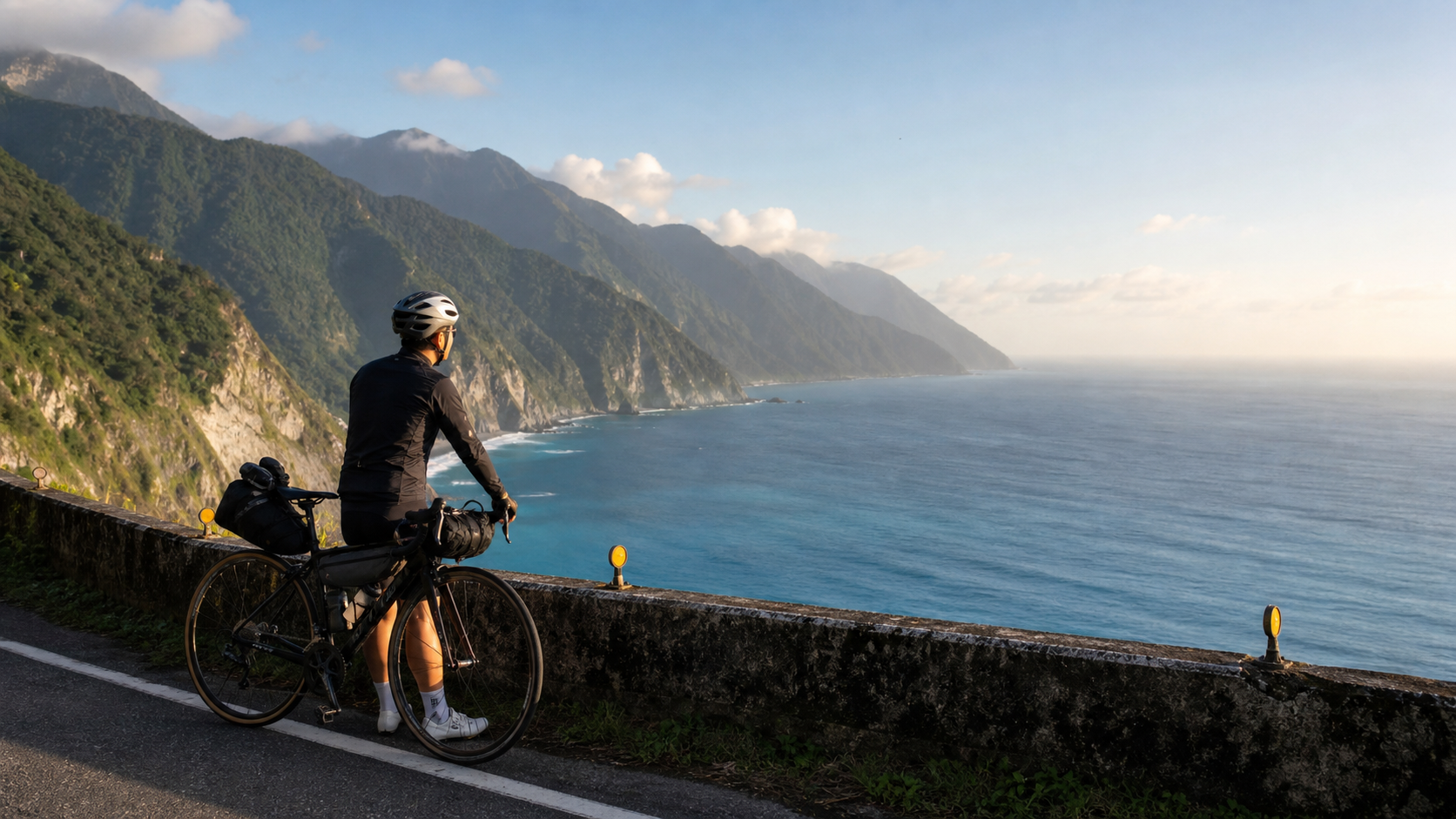
On the fifth day of cycling into Hualien, you stop at a lookout point along the Suhua Highway. The Pacific Ocean stretches endlessly before you, the wind is strong, and there are no companions—just you, your bike, and that expanse of blue. You suddenly realize that these days with no one to talk to have been the clearest moments you’ve had in years.
A solo cycling trip around Taiwan has become a modern rite of passage. Every year, thousands of people embark on this journey of roughly 950 to 1,200 kilometers, and many of them have rarely, if ever, experienced such solitude before setting off. What this trip leaves behind is not just workout data and photos along the way—more often, it’s a psychological transformation that’s hard to put into words.
I. The Two Faces of Solitude
Surface-Level Loneliness and Deep Solitude
On the first day of a solo island tour, excitement usually outweighs loneliness; by the third day, the feeling of having no one to share the sights with begins to surface; after the fifth day, if you’re still on the road, you start to truly face yourself.
Psychology distinguishes between “loneliness” (an unwanted state of isolation) and “solitude” (a deliberately chosen state of being alone). Long-distance cycling creates a unique condition: you are physically alone, but you have actively chosen it, so it has the potential to become a deep experience of solitude rather than just the pain of loneliness.
Solitude Is a Mirror
In daily life, we fill every spare moment with social interactions, social media, and work, leaving ourselves almost no opportunity to truly “be with ourselves.” Long-distance solo riding forcibly clears away these fillers, forcing you to confront the thoughts and emotions you usually avoid. This can be uncomfortable, but it is also the prerequisite for growth.
II. Common Psychological Journeys in Solo Island Tours
Different people have different journeys, but the psychological trajectories of many island-touring cyclists are strikingly similar:
| Stage of the Journey | Common Psychological State | Opportunity for Growth |
|---|---|---|
| Days 1–2 (Northern Taiwan) | Excitement, slight anxiety, adjusting to the rhythm | Letting go of plan-driven thinking |
| Days 3–4 (Eastern Taiwan) | Loneliness emerges, physical fatigue sets in | Accepting discomfort |
| Days 5–6 (Southern Taiwan) | Breaking through a psychological barrier, a sense of ease | Making peace with yourself |
| Days 7–9 (Western Taiwan) | Ambivalence about the end (reluctant to leave? Eager to get home?) | Recognizing your essential needs |
| Back at the starting point | A mix of accomplishment and loss | Integrating the meaning of the journey |
III. The Mechanisms of Self-Discovery in Solitude
The Natural Clearing of the Mind
Prolonged rhythmic pedaling, combined with sensory stimulation from the outdoors, has been shown in multiple studies to promote the positive form of “mind wandering”—allowing the brain to freely connect various ideas and engage in stress-free self-reflection. It is no coincidence that many island-touring cyclists report having figured out their career direction, relationship issues, or life priorities during the trip.
The Refinement of Interactions with Strangers
When traveling alone, every brief interaction with a stranger feels especially vivid—a word from the accommodation host, a greeting from a roadside stall owner, an exchange with another cyclist. These “pure encounters,” free of ulterior motives and social baggage, often reveal the most direct brilliance of human nature and make it easiest to regain faith in the goodwill between people.
The Body as an Anchor of Existence
Long-distance riding brings you back to your body—tired legs, a hungry stomach, a face weathered by the wind. Modern life leads many people to live “in their heads,” and cycling brings you back to bodily awareness, a grounding experience of being present.
Practical Advice
- Bring a blank journal: Spend 15 minutes each night writing down the day’s feelings and thoughts; these words may later prove more precious than your GPS track
- Set “digital silence periods”: Designate 2–3 hours each day to stay off your phone, making the quality of solitude higher
- Allow yourself to “think about nothing”: Not every stretch of riding needs deep reflection; sometimes just letting the scenery flow past is also a form of restoration
- Stay open to kindness from strangers: The warm locals along Taiwan’s roads are a unique treasure of this journey; don’t miss out due to introversion or defensiveness
- Prepare in advance for the “rough patch of loneliness”: Know that days three to four are usually the peak of difficult loneliness, and have a specific song or a letter to yourself ready to open at that moment
Conclusion
What you ultimately bring back from cycling solo around Taiwan is not just a completion sticker or a hundred beautiful photos. More often, what you bring back is a clearer understanding of yourself: what you fear, what you need, and what makes you feel life’s meaning. Solitude is not a flaw in the journey—it is the journey’s most profound gift.
Related Reading
- Riding 200 Kilometers Alone: The Loneliness That Distance Brings, and What Loneliness Brings
- Solo Riding vs. Group Riding: A Psychological Analysis of Solitary Challenge and Group Dynamics
- The Philosophy of Riding Alone: The Freedom and Solitude That Solo Riding Gave Me
- The East Coast Alone: A Seven-Day Solo Cycling Journey Through Eastern Taiwan
金門 ! 我騎過最棒的離島了 / 最後可以騎車上金門大橋的機會!?/ 公路車 / CT Yeh
1 年前
虎豹潭!日本老師來台一日約騎 台灣車友熱情招待私房路線 / CT Yeh
19 天前
「悲情男車友」創作單曲 爆笑MV / 公路車 / CT Yeh / 4K劇情版
7 個月前
單車 一日北高 ( 雙城 ) 肥宅雙人瘋狂行 紀錄片 REACTO
10 年前
日本自助單車旅,茨城絕景路線/ 新手也可以體驗 / 4K空拍絕景 / 機票省錢大法 / 單車友善旅館 / 國家級霞之浦180K自行車道 / feat. 緯緯 / CT Yeh
1 年前
JJSC南台灣單車走春三日行 DAY 1 / 強度 x 美食 x 節慶體驗 / 公路車 CT Yeh
5 個月前
高雄綠園道鐵路自行車道 / 外地人能輕鬆駕馭 還是整路崩潰? / 2025 全線開通 春節實地探索一次!(附GPS連結)/ 公路車 / CT Yeh
1 年前
微東進 太魯閣 蘇花 單車兩日遊 ! 颱風過後路況超刺激 行程大亂 | 最狂的鹹酥雞訂單 | CT Yeh | 4K 高畫質空拍絕景!
4 年前