Introduction
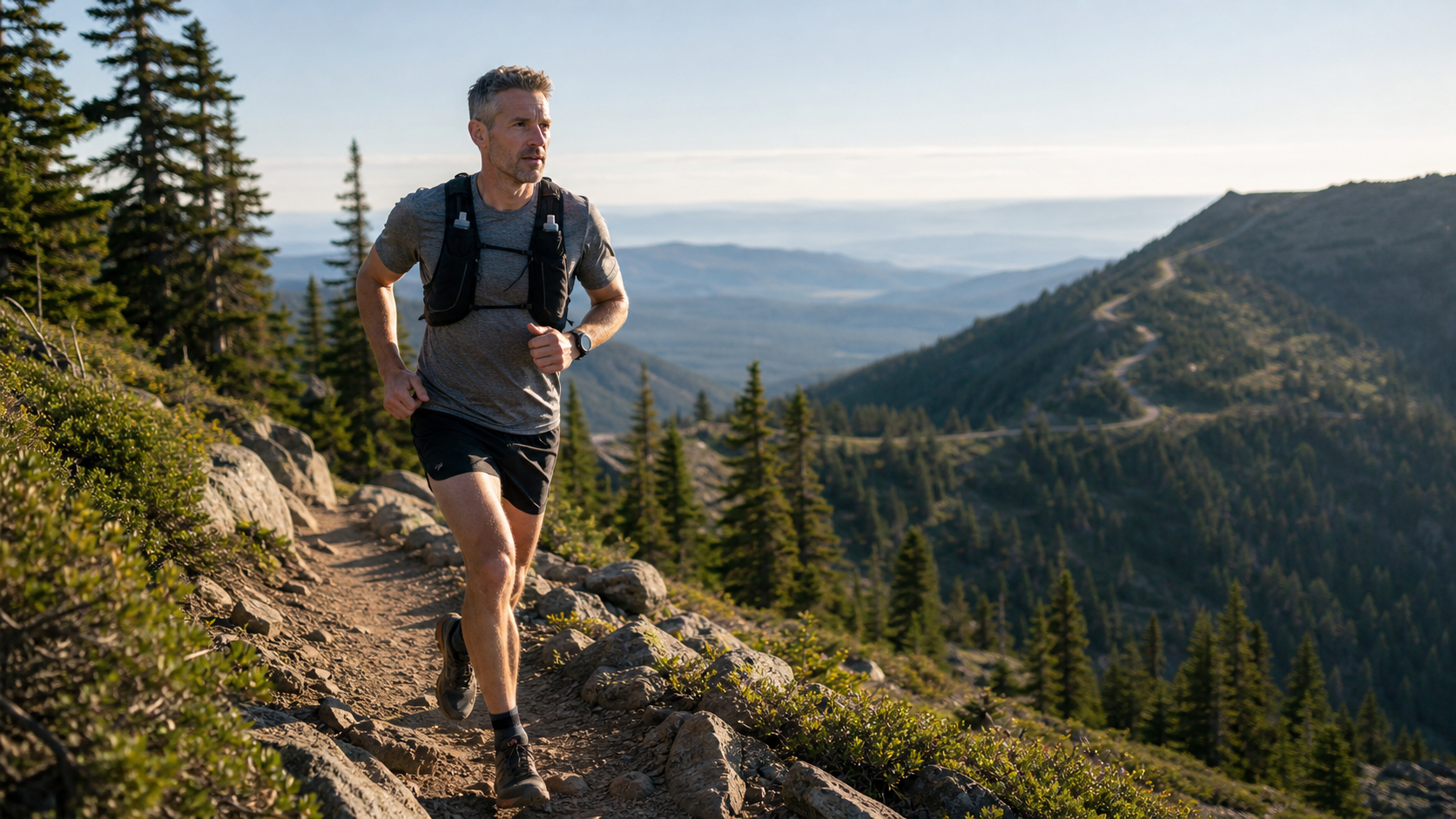
After finishing your first marathon, many runners begin to think: “A few more kilometers shouldn’t be a problem, right?” That thought is exactly where the ultramarathon journey begins. The 50K ultramarathon is the most accessible ultramarathon distance, roughly 8 kilometers longer than a standard marathon. It may sound like a small difference, but the training and racing challenges are fundamentally different in nature.
Crossing from marathon to 50K is not just about adding mileage—it’s a shift in training mindset: from chasing speed to building endurance, from paved roads to trail terrain, from aid stations to carrying your own gear. This article provides a clear transition guide for marathon finishers looking to take on the 50K distance.
The Fundamental Differences Between Marathon and Ultramarathon
The Leap in Distance and Time
Many assume 50K is just 8K more than 42.195K, but ultramarathons are typically held on trails with significant elevation gain and loss, and finish times are often 1.5 to 2 times longer than a marathon. This means your body needs to keep working for a much longer duration during the race, placing higher demands on energy replenishment, muscular fatigue resistance, and mental toughness.
| Item | Marathon | 50K Ultramarathon |
|---|---|---|
| Distance | 42.195K | 50K+ |
| Typical finish time | 3.5–6 hours | 5–10 hours |
| Terrain | Usually paved roads | Mostly trails |
| Aid strategy | On-course aid stations | Partially self-carried |
| Mandatory gear | None | Required for some races |
| Training cycle | 16–20 weeks | 20–28 weeks |
Changing Muscular Demands
Ultramarathon training places particular emphasis on the endurance of the quadriceps (front thighs), glutes, and core muscles. During long descents, these muscle groups endure tremendous eccentric contraction stress—which is exactly why many marathon runners experience unusually severe leg soreness when they first attempt an ultramarathon.
Safe Principles for Increasing Training Volume
The 10% Rule and Adjustments for Ultramarathons
The traditional training principle of “don’t increase weekly mileage by more than 10%” applies equally to ultramarathon preparation, but it needs to be executed more cautiously. Here is a recommended path for increasing training volume:
Base-Building Phase (Weeks 1–8)
- Maintain the base weekly mileage from marathon training (approximately 40–60K)
- Increase weekly mileage by 10% every 2 weeks
- Start incorporating 1 trail session per week to help your body adapt to rugged terrain
- Begin long runs at 25K, adding 2–3K every 2 weeks
Volume-Building Phase (Weeks 9–16)
- Weekly mileage target: 60–80K
- Schedule 1 back-to-back long run per month (two consecutive days of long running, e.g., Saturday 25K + Sunday 18K)
- Strengthen hill training; aim for no less than 500 meters of cumulative elevation gain per week
- Longest single session reaches 38–42K
Race Simulation (Weeks 17–20)
- Schedule 1–2 trail races or tune-up races as “test runs”
- Practice with race gear (vest, water bottles, etc.)
- Test your race-day fueling strategy
Warning Signs of Overtraining
If any of the following symptoms appear, reduce training intensity immediately or schedule rest:
- Resting heart rate consistently elevated by more than 5–7 beats above average
- Deteriorating sleep quality or difficulty falling asleep
- Loss of motivation for training or persistently low mood
- Unusual pain in lower-limb joints (especially knees and ankles)
- Feeling fatigued for multiple consecutive days without recovery
Early Development of Trail Skills
If you currently only run on flat ground, it’s recommended to start getting on trails 6 months before your race. Taiwan has many suburban trails suitable for beginners, such as Elephant Mountain, Erge Mountain, and the Datun Mountain range in Taipei—all excellent venues for trail training.
Recommendations for trail beginners:
- Start with short trail runs (3–5K) to get familiar with rugged terrain
- Slow down on descents to protect your knees
- Learn the “hike/walk” strategy—walking on steep climbs is a normal and smart tactic for ultramarathon runners
- Get trail running shoes for better grip
Practical Advice
Equipment purchase priority:
- Trail running shoes (grip and protection)
- Lightweight hydration vest (1–2L capacity is sufficient)
- Sports tape and first-aid kit
- Headlamp (even for daytime races, it’s mandatory gear for many events)
The importance of training partners:
Taiwan has an active ultramarathon running community. It’s recommended to join a local ultramarathon/trail running club—not only will you gain trail information, but you’ll also find training partners and experienced mentors for guidance.
Criteria for choosing your first 50K race:
- Cumulative elevation gain no more than 2000 meters (beginner-friendly)
- Generous cutoff time (8–10 hours or more)
- Well-stocked aid stations on the course
- Good race reputation and solid rescue/medical support
Recommended beginner-friendly 50K races in Taiwan include: XTERRA Taiwan Trail Triathlon (trail running portion), Miaoli Mountain Forest Trail Race, and others—their course designs are relatively accommodating for beginners.
Conclusion
Crossing from marathon to 50K ultramarathon is a journey that requires patience and strategy. The most important mindset shift is this: an ultramarathon is a game of endurance, not a race of speed. Give yourself enough time to build your foundation, learn the art of walking, and develop a feel for the trails. You’ll discover that this distance is not just an extension of your stride, but the beginning of a whole new understanding of your own limits.
Related Reading
- Ultramarathon Beginner’s Guide: Mileage Crossing Strategies from Full Marathon to 50K
- Ultramarathon for Beginners: Training Transition from Full Marathon to 50K/100K
- Ultramarathon Training Load: Recommendations for Weekly Mileage, Elevation Gain, and Long Run Distance
- 50K Ultramarathon Race-Day Strategy: Conservative in the First 30K, Steady in the Last 20K
半日 小台灣 極限單車路線挑戰實錄
7 年前
西進武嶺 免費訓練分析服務 Intervals | 練不夠還是練過頭?你哪一種類型選手?AI模型告訴你! | 備戰神器 | 公路車 訓練 | CT Yeh
4 年前
一日北高前的高裝檢 | 北高 360 | 挑戰11小時的裝備 | 一日雙塔 | 補給
6 年前
單車 一日北高 ( 雙城 ) 肥宅雙人瘋狂行 紀錄片 REACTO
10 年前
Live) 備戰2019彰化經典百K 賽前攻略 (已完賽請看新影片
7 年前
Never Stop 西進武嶺 前後雙機 完整全程錄影 訓練台 實境
8 年前
實景訓練台) 彰化經典百K 高強度喵團 90分鐘 跟著一起練功 2019 Indoor workout Changhua Classic 100 Taiwan
7 年前
靠單車減肥35公斤 心得分享與整理
7 年前