Gastrointestinal Issues in Ultramarathons: Preventing and Managing Digestive Discomfort During Prolonged Exercise
Introduction
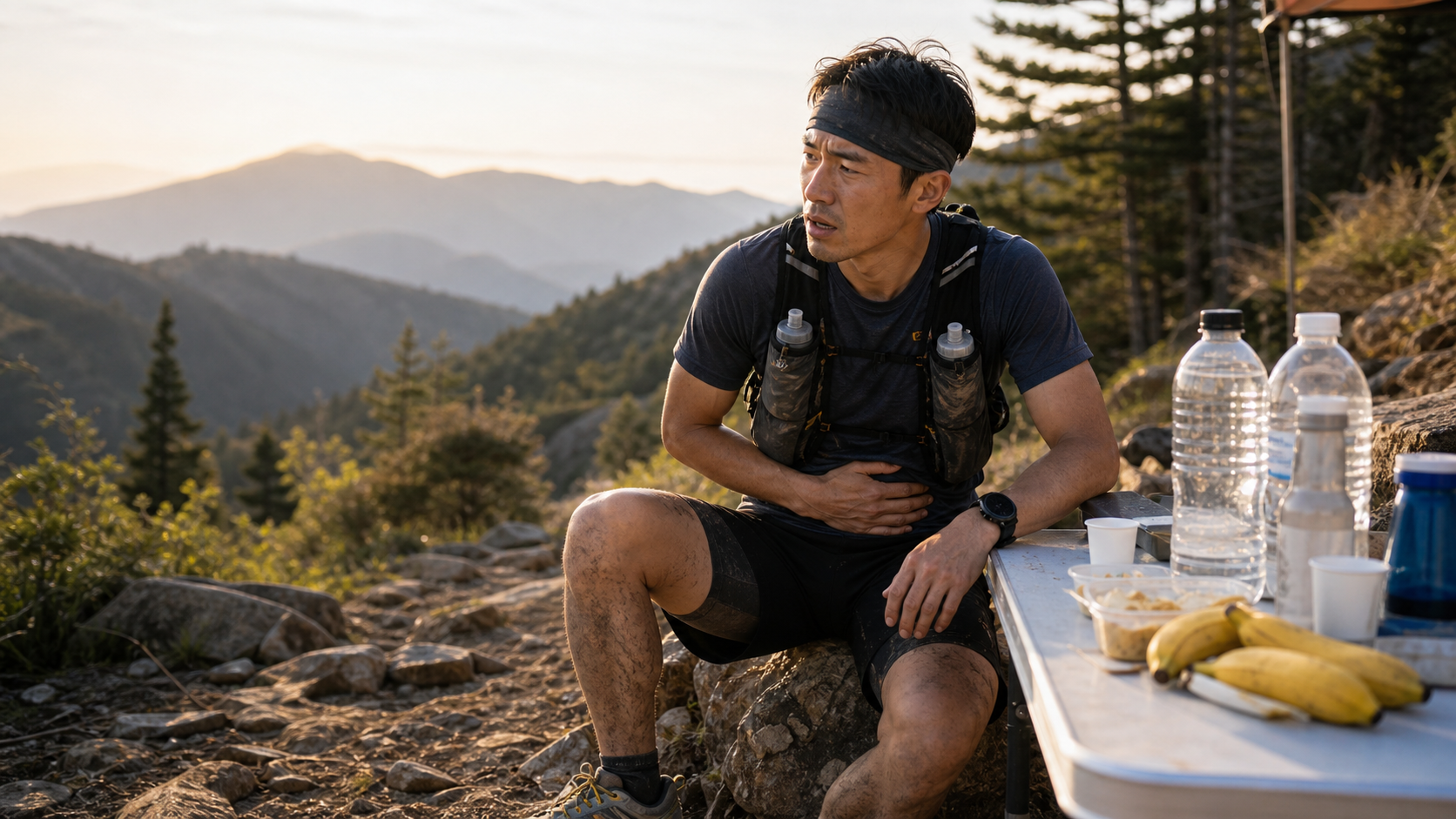
Ask any runner who has finished a 100K ultramarathon what nearly broke them during the race, and gastrointestinal issues will almost always rank near the top. Nausea, vomiting, diarrhea, bloating… these symptoms can range from mildly disrupting fuel intake to leaving a runner collapsed at an aid station, ultimately forcing them to drop out (DNF, Did Not Finish).
According to multiple ultramarathon studies, gastrointestinal issues are the most common symptoms experienced by ultramarathon runners during races, with an incidence rate as high as 30–90%. The longer the distance, the more severe the symptoms. However, most gastrointestinal problems can be prevented or managed. This article will provide you with a complete guide to protecting your gut in ultramarathons, from cause analysis to practical countermeasures.
Why Long-Duration Exercise Harms the Gut
Blood Flow Redistribution
During intense exercise, the body redirects a large amount of blood flow from the digestive system to the muscles and heart. Blood flow to the digestive system can decrease by 50–80%, leading to intestinal mucosal ischemia and a significant decline in digestive function. This is why food consumed during a run takes much longer to digest than when at rest.
The Impact of Mechanical Vibration
The continuous vertical impact of running is a significant physical stressor on the digestive tract. Stomach contents are more likely to trigger nausea under vibration, and intestinal motility may also accelerate due to the impact, leading to diarrhea.
The Problem with High-Osmolality Fuel
Many sports drinks and energy gels have high sugar concentrations (high osmolality). When intestinal blood flow is insufficient, high-osmolality foods draw water out of the intestinal wall and into the intestinal lumen, causing diarrhea and bloating.
Stress and Anxiety
The tension of race day itself can also affect gut function. “Pre-race bathroom runs” are a familiar experience for nearly every endurance runner—this is the direct effect of stress on the gut.
Prevention Strategies for Gastrointestinal Issues
Train Your Gut Like You Train Your Legs
“Gut training” is a concept that has gained increasing attention in the ultramarathon world in recent years. By systematically practicing fueling during training, you allow your gut to gradually adapt to digesting food while exercising.
Principles of Gut Training:
| Training Goal | Approach | Timing |
|---|---|---|
| Get used to eating while running | Take in fuel every 30–45 minutes during long runs | Throughout the entire training block |
| Test different foods | Try different types of fuel during each long run and record your reactions | 6 months before race day |
| Increase fuel intake | Start with small amounts and gradually increase fueling frequency and volume week by week | Mid-training block |
| Simulate race fueling | Execute a long run using the exact fueling strategy planned for race day | 2–4 months before race day |
Pre-Race Diet Management
One Week Before the Race:
- Avoid high-fiber foods (beans, cruciferous vegetables, whole grains) to reduce intestinal gas
- Avoid high-fat foods, as they are the slowest to digest
- Stick to your familiar daily diet; do not try new foods
- Ensure adequate hydration, but avoid excessive water intake (risk of hyponatremia)
The Day Before the Race:
- A carbohydrate-focused dinner (white rice, pasta, bread)
- Avoid spicy and fried foods
- Avoid alcohol
- Eat dinner early enough to allow ample time for digestion
Race Morning Breakfast:
- Eat 2–3 hours before the start
- Familiar, easily digestible foods (white toast, bananas, oatmeal)
- Avoid high-fiber, high-fat, and high-protein foods
Principles for Choosing Fuel
- Prioritize low osmolality: Choose sports drinks labeled “Hypotonic,” as they are better absorbed than isotonic or hypertonic options
- Diversify your fuel: Do not rely too heavily on a single fuel source; alternate between energy gels, real food (rice balls, bananas), and electrolyte drinks
- Avoid excessive sugar: Do not exceed 60–90g of sugar per hour (approximately 200–300 kcal). Beyond this amount, the gut typically cannot absorb effectively
- Supplement salt: Long ultramarathons require electrolyte replenishment. Electrolyte capsules can be used to prevent hyponatremia
Emergency Management of Gut Discomfort
When gastrointestinal symptoms arise during a race, do not panic. Take appropriate measures based on the type of symptom:
Nausea/Feeling like vomiting:
- Stop eating immediately; only take in plain water or electrolyte water
- Slow your pace to allow blood flow to return to the digestive system
- Try ginger candy (some runners carry it) or ginger sweets
- Rest at an aid station; sitting down for 5–10 minutes often provides relief
Diarrhea/Urgency:
- Handle it at an aid station or off the trail (carrying toilet paper is essential for ultramarathons)
- Replenish electrolytes to prevent dehydration
- Avoid solid food; switch to sports drinks or electrolyte water instead
Bloating/Digestive Stalling:
- This usually means you have over-fueled; pause fueling for 30–60 minutes
- Drink warm water and gently massage your abdomen
- Keep moving; light activity can help promote digestion
Practical Advice
Prepare an emergency gut kit: Carry a few pieces of ginger candy, spare electrolyte capsules, 1–2 packets of oral rehydration salts (ORS), and toilet paper in your pack. These items are extremely lightweight, but invaluable in an emergency.
Keep a gut log in your training diary: After each training session, record the day’s fuel intake and any gut reactions. After months of accumulated records, you will clearly see which foods are your “gut landmines” and which are safe options.
Never try new foods or fuel on race day: No matter how good someone else’s recommendation is, do not introduce untested new fuel in the 4 weeks leading up to the race.
Conclusion
Gastrointestinal issues in ultramarathons are not inevitable; they are a risk that can be significantly reduced through systematic preparation. Treat gut training as part of your training plan, with the same seriousness you apply to training your fitness. When you are in the final 10 kilometers of the race, still maintaining a good appetite and moving toward the finish line with ample energy, you will be glad you did the right gut homework during your preparation.
Related Reading
- Gut Training for Ultramarathons: Keeping Your Gut Able to Digest Solid Food at High Intensity
- Ultramarathon Gut Training: How to Train Your Gut to Accept Solid Food During Training
- Managing Nausea in Ultramarathons: On-the-Spot Responses and Fuel Adjustments for Gut Discomfort
- Post-Exercise Gut Issues: How to Avoid Gastrointestinal Discomfort While Cycling and Running
一日北高/長距離團騎 常見問題補充篇 / 組團或跟團的眉角 / 壯車友容易被瘦車友慢性拉爆 / 原來屁股痛可能是這個原因...? / 風場配速法 / 公路車 / CT Yeh
2 年前
約騎爆笑地獄梗 大腸怎麼了🤣 #公路車 #cycling
3 年前
一日北高常見問題大集合 | 攻略 | 路線 | 訓練 | 補給 | 自行車 單車 | 一日雙城 | 雙塔 | TWB北高360 | 屁股痛
6 年前
Never Stop 西進武嶺 前後雙機 完整全程錄影 訓練台 實境
8 年前
2026 輪霸西濱200K 挑戰VLOG / 第一集團 / 首次參加..經驗不足、膀胱不足 /死守6H內 / AI戰鬥力顯示系統 / 公路車 / CT Yeh
4 個月前
FTL 與 SYB 車隊專訪 西進武嶺 實用攻略分享! 2小時 如何練?!你不知道的眉角!新手準備武嶺必看 EP1 | 實力派女車友 | 精華版 | 公路車 | CTYeh
4 年前
CT暗黑廚房) 車友必備 宇宙無敵鮮蚵湯 幫助訓練恢復 天然食補 好市多 超肥鮮蚵 破PR
7 年前
CT 喇低賽) 單車 比賽總是沒照片? 攝影師的觀點大公開 姿勢就是力量! 請加速1.25倍收看
7 年前