Introduction
“The gut is the second system that needs training.” This is a long-standing adage in the ultramarathon world. In a full marathon, most runners can get through with just water and energy gels; but ultramarathons routinely last 6 hours or more, and liquid fuel alone cannot sustain energy supply—solid food is essential. The problem is that during high-intensity exercise, blood is shunted from the digestive system to the muscles, gut motility slows, and digestive capacity drops significantly. Many ultramarathoners drop out not because of their legs, but because of their gut. This article shares how to systematically train your gut so it becomes an asset for finishing, not a liability.
Why Do Ultramarathons Cause Gut Issues?
Exercise-Induced Gastrointestinal Syndrome (EIGS) involves multiple mechanisms:
- Blood flow redistribution: During intense exercise, intestinal blood flow decreases by 50–80%, significantly reducing digestive capacity
- Gut jostling: The impact of running physically shakes the intestines, irritating the intestinal wall
- Dehydration: Even mild dehydration can worsen gastrointestinal symptoms
- Heat stress: Rising core temperature affects intestinal mucosal integrity (increased intestinal permeability)
- Anxiety and stress: Pre-race nerves affect gut motility through the neuroendocrine system
| Common GI Symptoms | Possible Causes | Coping Strategies |
|---|---|---|
| Nausea/vomiting | Low blood sugar, overeating, heat stress | Eat salty foods, reduce intake per feeding |
| Bloating/gas | High-fiber foods, large amounts of carbonated drinks | Avoid high-fiber foods before the race |
| Diarrhea | Increased intestinal permeability, excess caffeine | Reduce caffeine, avoid lactose |
| GERD (acid reflux) | Hunched running posture, large volumes of liquid fuel | Improve posture, fuel in small frequent amounts |
Core Methods of Gut Training
1. Practice Eating While Running in Training
This is the most important and most direct method. The gut is a trainable system; by repeatedly digesting food during exercise, you can gradually improve its ability to function at high intensity.
- Early in training: Start taking in food during every long run (over 90 minutes), beginning with energy gels or soft, semi-liquid foods
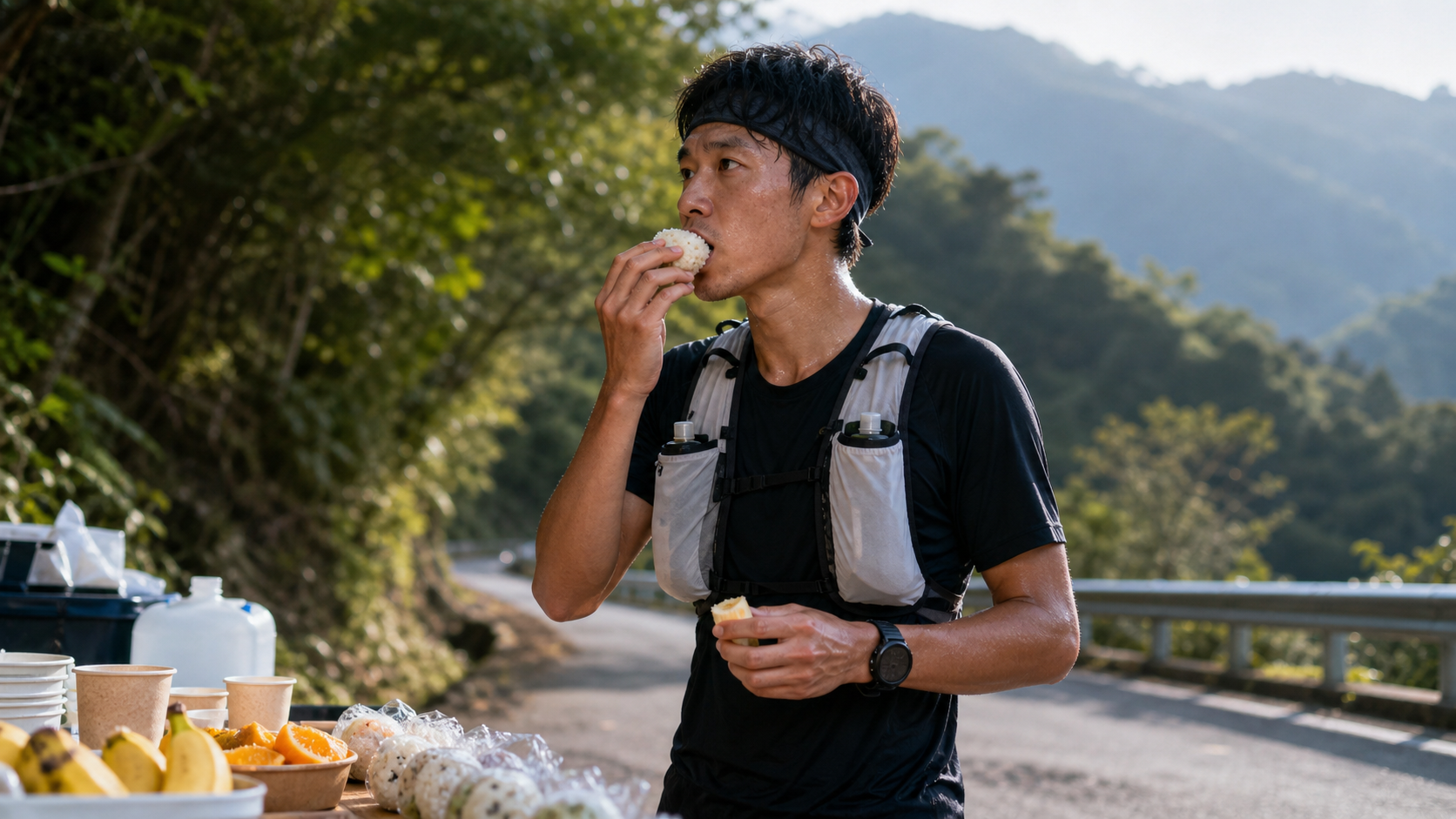
- Mid-training: Gradually introduce solid foods like bananas and energy bars
- Later in training: Try consuming more “real” foods (bread, crackers, rice) at 70–80% of max heart rate
- Principle: Test your fueling at every training session and record which food combinations cause no discomfort
2. Increase Your Hourly Carbohydrate Intake in Training
The gut’s ability to absorb carbohydrates can be improved through training. Research shows that consistently consuming high amounts of carbs during training can increase the number of intestinal glucose transporters (SGLT1), thereby raising the hourly carbohydrate absorption ceiling.
- The average person absorbs about 60g of carbs per hour (single sugar source)
- Mixed sugar sources (glucose + fructose) can raise this to 90g
- After 3–4 weeks of training, the ceiling can be further increased to 100–120g
3. Pre-Training Nutrition Strategy
What you eat in the 24–48 hours before a race has a major impact on gut status:
- Avoid high-fiber foods: Beans, whole grains, and cruciferous vegetables (broccoli, cabbage) ferment in the gut and produce gas
- Avoid high-fat foods: They delay gastric emptying and increase the digestive burden during running
- Avoid lactose: Many adults tolerate lactose even worse during exercise
- Choose easily digestible carbohydrates such as white rice, white bread, and potatoes
- Eat a digestible meal 2–3 hours before the race, then only take in small amounts of food afterward
4. Pairing Electrolytes and Fluids
A major trigger for gut issues is dehydration and electrolyte imbalance:
- Even mild dehydration (2% body weight loss) significantly affects gastric emptying rate
- Adding electrolytes (especially sodium) to your fluids can speed up intestinal water absorption
- Avoid drinking large volumes at once (150–200ml per intake is optimal)
5. Heat Acclimatization Training
Summer ultramarathons in Taiwan are hot, and heat stress is a major trigger for gut issues. Training regularly in hot weather can improve the gut’s tolerance to high temperatures:
- Train 2–3 times per week during the hottest part of the day (2–4 PM)
- Build heat adaptation gradually; it typically takes 10–14 days
Identifying Your Personal Gut Triggers
Everyone’s gut is different. Keeping a “personal gut log” is essential:
- Record your fueling content and gut reactions during every long run
- Identify your “symptom-free fueling combination”—a list of foods you can safely use at high intensity
- Identify “trigger foods”—which foods are guaranteed to cause discomfort during exercise
Practical Tips
- Never try new foods before an important race: Gut testing is done only in training; on race day, use only proven fueling products
- Carry anti-diarrheal medication as an emergency backup (e.g., Imodium), but only use it if you actually get diarrhea
- Sleep well the night before and avoid excessive pre-race nervousness: Stress hormones directly affect gut motility
- Ask experienced ultramarathoners what food is available at aid stations: Knowing in advance lets you test it in training
- Wait 60–90 minutes after a meal before starting high-intensity training: Give your stomach time to empty and reduce the digestive burden during training
Conclusion
Gut training is the most overlooked aspect of ultramarathon preparation, yet it can determine whether you finish. Treat every long run as an opportunity to test your fueling, systematically learn about your own gut, and build a reliable “race fueling checklist.” When you can still happily eat a banana and keep moving through the final 10K of a 50K, you’ll know your gut training has paid off.
Related Reading
- Ultramarathon Gut Training: How to Train Your Gut to Accept Solid Food in Training
- Gastrointestinal Issues in Ultramarathons: Preventing and Managing GI Discomfort During Prolonged Exercise
- Gut Training: How to Get Your Digestive System Up to Race Intensity
- Gut Training for Road Running: How to Get Your Gut Used to Digesting Fuel While Running
約騎爆笑地獄梗 大腸怎麼了🤣 #公路車 #cycling
3 年前
一日北高/長距離團騎 常見問題補充篇 / 組團或跟團的眉角 / 壯車友容易被瘦車友慢性拉爆 / 原來屁股痛可能是這個原因...? / 風場配速法 / 公路車 / CT Yeh
2 年前
FTL 與 SYB 車隊專訪 西進武嶺 實用攻略分享! 2小時 如何練?!你不知道的眉角!新手準備武嶺必看 EP1 | 實力派女車友 | 精華版 | 公路車 | CTYeh
4 年前
Never Stop 西進武嶺 前後雙機 完整全程錄影 訓練台 實境
8 年前
一日北高常見問題大集合 | 攻略 | 路線 | 訓練 | 補給 | 自行車 單車 | 一日雙城 | 雙塔 | TWB北高360 | 屁股痛
6 年前
CT 喇低賽) 武嶺牽車 才是王道 西進牽車四小時內秘訣 攝手位置 如何判斷 防抽筋小秘訣
7 年前
CT 喇低賽) 單車 比賽總是沒照片? 攝影師的觀點大公開 姿勢就是力量! 請加速1.25倍收看
7 年前
CT暗黑廚房) 車友必備 宇宙無敵鮮蚵湯 幫助訓練恢復 天然食補 好市多 超肥鮮蚵 破PR
7 年前